
Trump’s Iran War: Panetta Warns of ‘Rock and a Hard Place’ & Strait of Hormuz Crisis
Three weeks into a conflict sparked by the killing of Iran’s supreme leader, Ayatollah Ali Khamenei, Donald Trump is facing mounting criticism and a deteriorating strategic position, according to former defense and intelligence officials. The crisis, initiated with a surprise Israeli strike on February 28th, has seen the United States gain initial air superiority, but that advantage is now waning as Iran effectively closes the Strait of Hormuz, disrupting global energy markets.
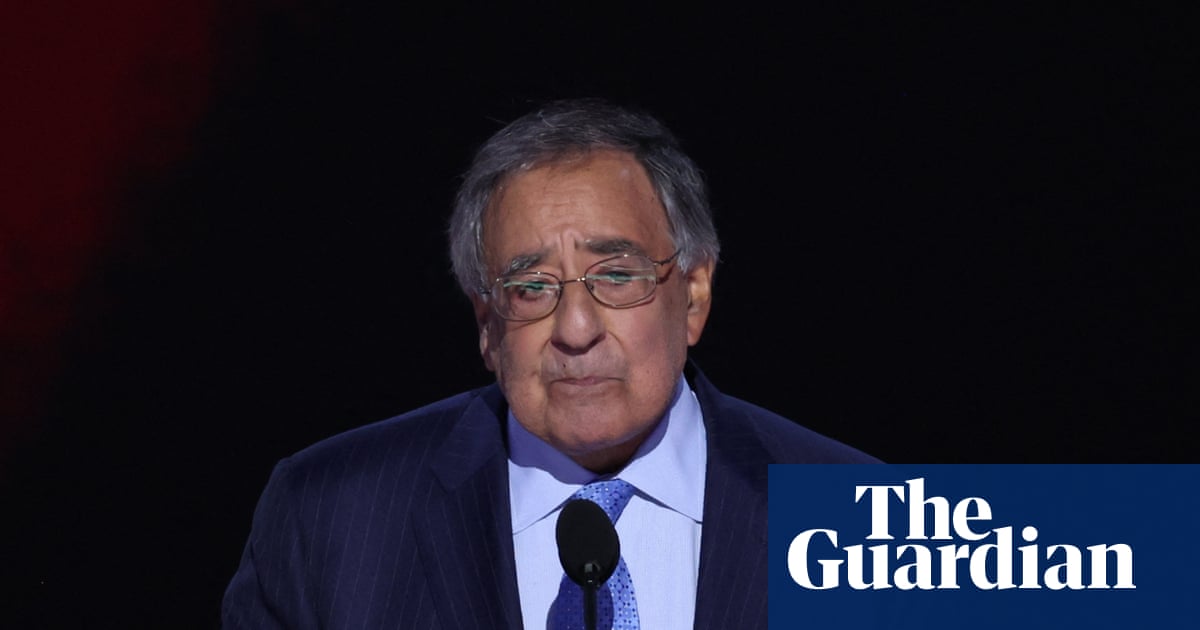
Leon Panetta, a former Secretary of Defense and Director of the Central Intelligence Agency, described Trump as being “between a rock and a hard place” and accused him of “sending a message of weakness” to the world. Panetta, who served under Presidents Clinton and Obama, highlighted the long-standing awareness within national security circles of Iran’s capacity to disrupt global oil supplies by blocking the vital waterway. “This is not rocket science to understand that if you’re going to conduct a war with Iran, one of the great vulnerabilities is the strait of Hormuz,” he told the Guardian.
The conflict began with what the Trump administration hoped would be a decisive blow, eliminating Khamenei. However, the situation has evolved, with the late leader’s son, Mojtaba Khamenei, assuming the position of supreme leader and proving to be a more hardline figure. According to Iranian health officials, over 1,400 Iranians have been killed, alongside thirteen U.S. Service members. Trump has struggled to garner domestic support for the war, as rising oil prices and declining poll numbers threaten his political standing.
Panetta criticized Trump’s approach as naive, suggesting a reliance on wishful thinking rather than strategic planning. “He tends to be naive about how things can happen,” Panetta said. “If he says it and keeps saying it there’s always a hope that what he says will come true. But that’s what kids do. It’s not what presidents do.” He argued that the administration failed to anticipate Iran’s response of closing the Strait of Hormuz, a vulnerability consistently discussed in national security council meetings.
The closure of the Strait of Hormuz, through which a fifth of the world’s traded oil passes, has thrown global energy markets into turmoil. Panetta believes Trump’s options are limited. He could attempt to reopen the strait militarily, escalating the conflict and risking further casualties, or he could attempt to declare victory and negotiate a ceasefire, a move that would likely be viewed with skepticism given Iran’s continued control of the waterway.
Trump has resisted deploying large numbers of U.S. Troops to Iran but has reportedly ordered thousands of Marines to the Middle East, potentially signaling a shift in strategy. He has as well reportedly considered occupying or blockading Iran’s Kharg Island to pressure the country to reopen the strait, a move he declined to confirm on Friday.
The administration’s handling of alliances has further complicated the situation. Trump has alienated key allies, keeping them largely in the dark about his war plans and publicly criticizing organizations like NATO, calling it a “paper tiger” without U.S. Involvement. Panetta noted the historical importance of alliances, recalling lessons learned as far back as World War II. “If you’re planning a war, it’s not a bad idea to talk to your allies,” he said. “Alliances are important to be able to support any kind of military effort.”
Panetta also expressed dismay at the White House’s use of unconventional communication tactics, including meme-style videos and fundraising emails that featured images of fallen soldiers. He argued that such actions project weakness rather than strength. He specifically cited the use of a photo from a dignified transfer of remains at Dover Air Force Base in a fundraising email as “tasteless.”
The administration’s initial response to the accidental bombing of a girls’ school in southern Iran on the first day of the conflict, which killed at least 175 people, most of them children, also drew criticism from Panetta. Unlike previous administrations, Trump reportedly blamed Iran for the incident, claiming their security forces were “exceptionally inaccurate” with munitions. “Any other president of the United States would have recognised the mistake and apologise for what happened,” Panetta remarked.
Panetta believes Trump’s only viable path forward involves using military force to secure the Strait of Hormuz, neutralize Iranian defenses, and provide safe passage for oil tankers, despite the inevitable loss of life and escalation of the conflict. He stated, “There’s no question there’s going to be lives lost and it’s clearly going to expand the war but I don’t witness the alternative.”