Trump Vows No Ukraine Decisions Without Zelensky After Putin-Xi Meeting
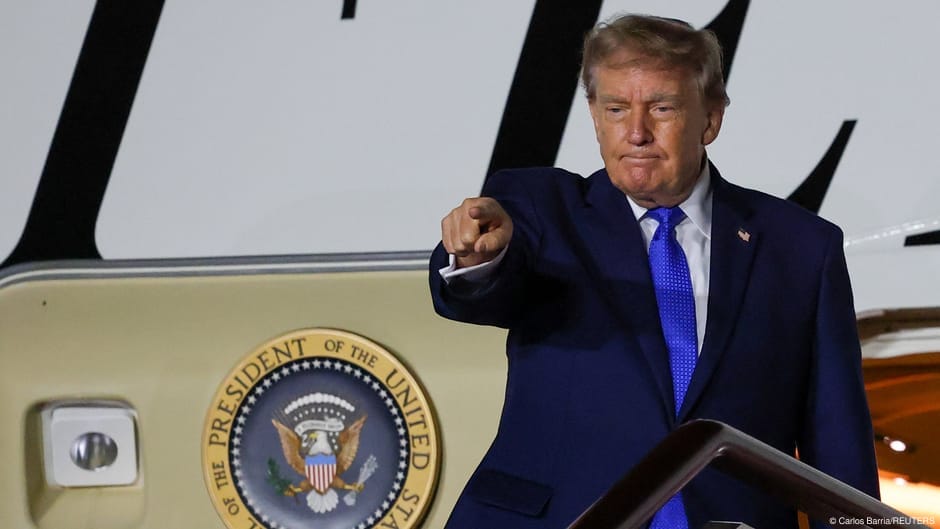
Donald Trump said on Thursday, November 19, that he would make no decisions about the war in Ukraine without Volodymyr Zelensky — hours after the US president met Vladimir Putin and Xi Jinping in Shenzhen without Kyiv in the room.
“I agree with him. I would not do anything without him — he is the head of that country, so I would not do it,” Trump told NBC journalist Gabe Gutierrez on Thursday evening. The statement answered Zelensky’s call for Washington not to decide Ukraine’s fate without Ukraine.
The timing matters. Trump’s pledge came the same day he sat down with Putin and Xi at a three-way meeting of the three leaders, held in the Chinese city of Shenzhen. The session lasted about an hour and a half, ended with no joint press conference, and produced a “Declaration on Peace” that did not mention the war in Ukraine at all.
For Kyiv and European capitals, that gap — a leaders’ declaration silent on Ukraine, paired with a presidential promise that Ukraine will not be bypassed — defines the problem this story now poses: who actually shapes the terms of any settlement, and on what timetable. Trump’s own envoys, Steve Witkoff and Jared Kushner, traveled to Berlin for talks with Zelensky and European leaders focused on binding security guarantees for Ukraine, RBC-Ukraine reported.
What Trump promised — and to whom
The NBC interview gave Trump’s clearest formulation yet. “I will not make any final decisions on the war in Ukraine without consulting Zelensky,” he said, per RBC-Ukraine. In a separate Fox News interview, cited by Ukrainian Novyny, he ruled out negotiating with Putin about Ukraine’s future without Ukrainian representatives present.

“These two hate each other, but they need to find common ground. And I get along well with both of them. They are very different people. If I had been president and the elections had not been falsified, this war would never have happened.”
Trump said in the Fox News interview, as reported by Ukrainian Novyny. He added that the full-scale war touches him personally, though in his view it does not affect the United States as a state, and called again for the fighting to stop as soon as possible.
Ukrainian state broadcasting, citing the channel FREEDOM, framed the same pledge as direct support for Zelensky’s position that no decisions about Ukraine would be made without Kyiv.
Trump to Xi: You're my friend, and we have a very special relationship. As long as you and I are in charge of things, we're never going to have a problem. pic.twitter.com/fVcqPOGstJ
Shenzhen: ninety minutes, no communiqué on the war
The meeting itself was heavy on symbolism and light on stated outcomes. Putin told his counterparts the three countries share “many overlapping interests in resolving regional conflicts, including the conflict in Ukraine.”
Afterward, Xi described the talks as “positive and constructive,” while Yuri Ushakov, an aide to the Russian president, called the atmosphere “good.” The published declaration covered UN reform, an assertion that the International Criminal Court had “not abused its powers,” and continued dialogue on reducing nuclear risks. Ukraine went unmentioned.
Trump says China also wants the war in Ukraine to end. pic.twitter.com/BEHimxnvlO
Trump rated the encounter generously. “I think it was a 12 out of 10. On a scale of 0 to 10. Everything went great. We managed to build tremendous relationships,” he told Gutierrez, who also said the president told him the Shenzhen talks centered on Ukraine but also touched on “the conflict around Iran.” Iran, Trump said, was being signaled to “in the most decisive form.”
Nuclear arithmetic behind the table
NV‘s aggregation of Fox News and CNN reporting supplies the numbers that explain European unease: three leaders all older than 70, controlling roughly 90 percent of the world’s nuclear weapons, meeting without a firmly agreed agenda while two wars — against Ukraine and Iran — continue.
Ahead of the summit, Fox News’ correspondent reported Trump was ready to discuss nuclear arms limits with China and Russia, wanted inspections in all three countries, and said of Beijing’s growing arsenal: “I would like them not to do that.”

The White House had said beforehand that nonproliferation was the planned subject and that Ukraine was not on the agenda. Putin and Xi had already held a two-hour bilateral meeting on November 18. Trump, Ukrainian Novyny reported before the summit, also wanted a one-on-one with Putin alongside the trilateral format.
Bloomberg, cited by FREEDOM, added a coda: after the meeting, Trump phoned participants of the “coalition of the willing,” told them the talks with Putin had gone well and would, in his view, help move the peace process on Ukraine forward.
How the day unfolded
- November 18 — Putin and Xi hold a two-hour bilateral meeting in Shenzhen.
- November 19 — Trump, Xi and Putin meet for about 90 minutes; a trilateral “Declaration on Peace” is issued without any mention of Ukraine.
- November 19, evening — Trump tells NBC he agrees with Zelensky that no decisions on the war will be made without Ukraine; Witkoff and Kushner head to Berlin.
Where the sources disagree
The outlets converge on Trump’s words but diverge on emphasis. Trump said that the Russian president was upset by Ukraine’s strikes on the Crimean bridge, which collapsed parts of its structure — a reaction Trump called “understandable.”
The Ukrainian outlets lead with what the pledge means for Kyiv’s seat at the table. NV’s grouping stresses the nuclear dimension and the absent agenda. None of the four contradicts another; the difference is which risk each flags first.
One contrast stands on its own: a declaration signed by three powers that omits Ukraine, and a US president who says Ukraine cannot be left out. Both are sourced facts from the same day.

The open question after Shenzhen
French President Emmanuel Macron has argued, per FREEDOM’s recap, that the right format is four-sided — Ukraine, the United States, Europe and Russia — with Ukraine negotiating from a strong position. Kushner has indicated Trump is open to security guarantees for Ukraine modeled on NATO’s Article 5, RBC-Ukraine reported.
Whether the Berlin talks convert Trump’s Thursday promise into a formal seat for Zelensky at any settlement table remains unanswered; the declaration in Shenzhen suggests the three powers’ own document did not yet assume it.
Shenzhen, the Chinese city chosen for the three leaders’ meeting, barely existed as a city half a century ago. Developed from a largely rural village area into a city in 1979, it became China’s first special economic zone under Deng Xiaoping’s reforms of the early 1980s, chosen for its closeness to Hong Kong.
In thirty years it boomed into a hub for technology, trade and finance, and is sometimes called China’s Silicon Valley — home to companies such as Huawei and Tencent. With 18.2 million people in 2025, it is China’s third-most-populous city, and its economy has since surpassed those of Hong Kong and Singapore.
As Trump put it to NBC: “I would not do anything without him.”
- Côte-d’Or residents get a packed three-day leisure programme this weekend, from November 20 to 22
- Red Cross Shelter Supports Farmington Resident After Flood Damage
- Trump Criticizes EU Billions for Ukraine in Call to Berlin Summit (newsy-today.com)
- Trump's Beef Quota Filled About 37% in Month One; Ground Beef Fell 13 Cents (daybreakwire.com)