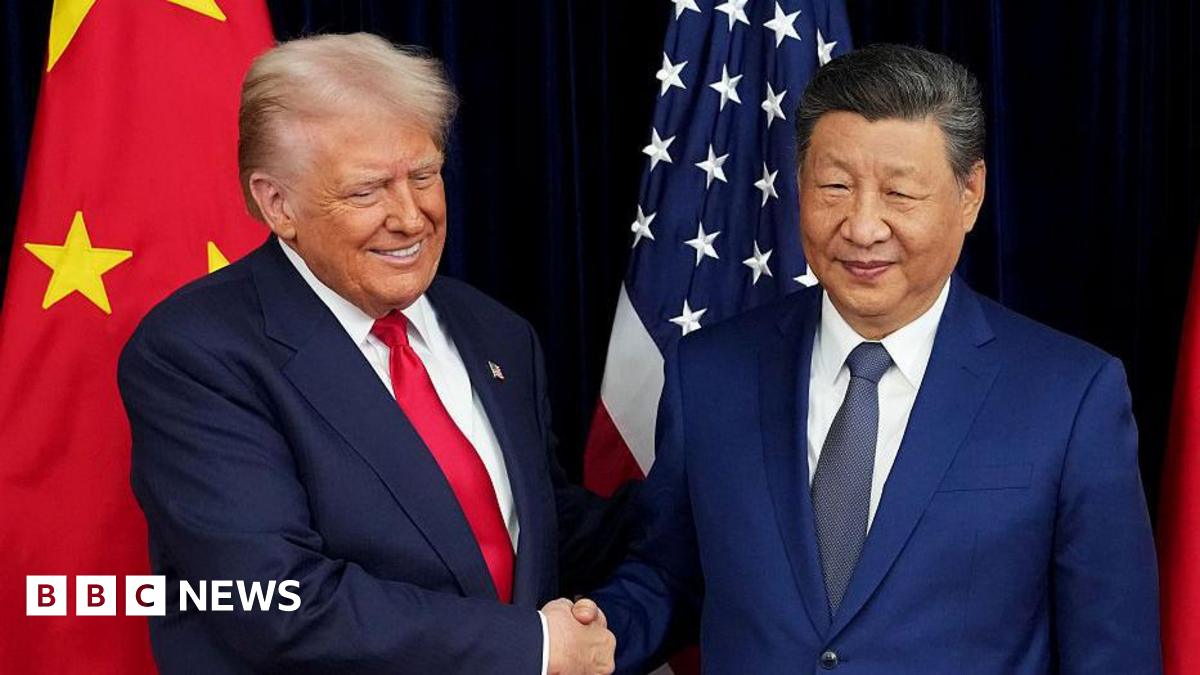
Trump to Visit China for Meeting With Xi Jinping
US President Donald Trump will visit China from May 13 to 15 to meet with President Xi Jinping. The summit aims to address ongoing tensions over tariffs and trade, seeking a resolution to economic frictions that have disrupted global supply chains and impacted international market stability.
This is not merely a diplomatic formality. It is a high-stakes negotiation over the financial arteries of the global economy.
For years, the relationship between Washington and Beijing has been defined by a cycle of tariffs and counter-tariffs. These levies are designed to protect domestic industries and punish unfair trade practices, but for the average business owner, they manifest as a sudden, sharp increase in the cost of goods. When tariffs fluctuate, the ripple effect hits every corner of the market, from the price of consumer electronics in New York to the cost of raw materials in the industrial heartlands of the American Midwest.
The Tariff Engine: How Trade Frictions Destabilize Local Economies
To understand why this summit is critical, one must understand the mechanism of the trade war. Tariffs are essentially taxes on imported goods. When the U.S. Imposes a tariff on Chinese steel, for example, the Chinese government doesn’t pay that tax—the American company importing the steel does. This creates an immediate inflationary pressure that is either absorbed by the company, shrinking its margins, or passed on to the consumer, raising prices.
This volatility creates a climate of uncertainty that freezes investment. Companies are hesitant to build new factories or sign long-term contracts when they don’t know if their primary inputs will cost 10% or 25% more next month.
The impact is most visceral in port cities. In hubs like Long Beach and Savannah, the shift in trade patterns causes logistical chaos. When tariffs make certain imports prohibitively expensive, shipping volumes plummet overnight, leaving warehouse operators and dockworkers facing sudden instability.
Navigating these shifting sands requires more than just a spreadsheet. Many firms are now relying on international trade consultants to diversify their sourcing and find “tariff-neutral” alternatives in other regions to maintain their margins.
The Macro-Economic Stakes
The dialogue between Trump and Xi will likely focus on the “trade imbalance”—the gap between what the U.S. Exports to China and what it imports. This gap has been a central point of contention for years, fueling the drive for aggressive tariff policies.
Historically, these disputes follow a predictable pattern:
- Escalation: One party imposes tariffs to force a concession.
- Retaliation: The opposing party responds with their own levies on key exports (often targeting politically sensitive agricultural products).
- Stalemate: Both economies suffer as trade volumes drop and prices rise.
- Negotiation: A summit, like the one scheduled for May 13-15, is convened to find a “phase one” agreement.
But the current landscape is more complex than in previous years. The world is now grappling with a fragmented global trade order. The World Trade Organization (WTO) has seen its influence wane as bilateral deals replace multilateral agreements. This shift leaves smaller businesses without a clear set of rules to follow.
“The danger of the current trade environment is not the existence of tariffs, but their unpredictability. Businesses can plan for a 20% tax; they cannot plan for a tax that changes based on a single diplomatic meeting.”
This unpredictability is a legal minefield. As tariffs are implemented or removed, the classification of goods becomes a primary battleground. A slight change in how a product is categorized can mean the difference between a 0% and a 25% duty. To avoid catastrophic fines and shipment seizures, corporations are increasingly hiring specialized trade attorneys to ensure their customs declarations are bulletproof.
Beyond the Headlines: The Localized Fallout
While the world watches the cameras in Beijing, the real story is happening in the warehouses of the “Rust Belt” and the tech hubs of Shenzhen. For a manufacturer in Ohio, a resolution to the tariff dispute could mean the difference between expanding a production line or cutting staff.
The friction also forces a radical rethink of “Just-in-Time” manufacturing. For decades, the goal was to keep as little inventory as possible to save costs. Now, the goal is “Just-in-Case.” Companies are stockpiling critical components, which ties up immense amounts of capital and requires a total overhaul of warehouse management.
This shift in strategy has created a surge in demand for global supply chain auditors who can identify the weakest links in a company’s procurement process and suggest more resilient, geographically diverse routes.
The stakes are further complicated by the role of the Office of the United States Trade Representative (USTR), which manages the actual implementation of these policies. The gap between a diplomatic handshake in Beijing and a change in customs law in Washington can be weeks or months, leaving businesses in a state of limbo.
The Path Forward
The May 13-15 summit represents a window of opportunity. If Trump and Xi can reach a meaningful agreement on tariffs, it could trigger a global relief rally in the markets and provide the stability necessary for long-term capital investment. However, if the meeting ends without a concrete framework, the “trade war” may enter a new, more aggressive phase of decoupling.

We must look at the data provided by institutions like the World Bank, which consistently highlights how trade barriers disproportionately affect emerging markets that rely on the US-China axis for stability.
The reality is that the era of seamless, frictionless global trade is over. We have entered an age of “geoeconomics,” where trade is used as a primary tool of national security and political leverage.
Whether this summit results in a truce or a new escalation, one thing is certain: the cost of ignorance is now too high. Businesses can no longer afford to be passive observers of geopolitics. The ability to pivot—to change suppliers, restructure legal entities and optimize logistics in real-time—is the only true competitive advantage remaining. For those struggling to navigate this volatility, the World Today News Directory remains the definitive resource for connecting with the verified professionals equipped to shield your operations from the next global shock.