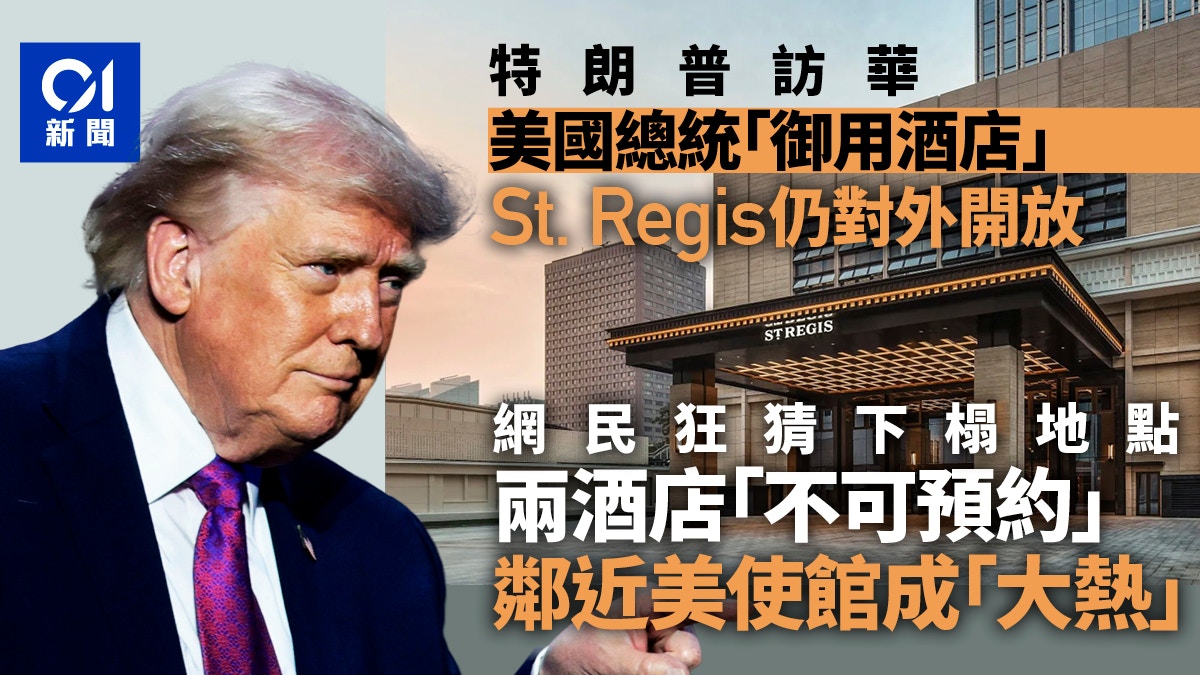
Trump Rumored to Stay at Four Seasons Beijing Amid High Security
President Donald Trump will visit Beijing in April 2026 following an invitation from President Xi Jinping, who in turn has been invited for a state visit to the U.S. Later next year. The visit is marked by a departure from traditional presidential lodging and a surge in high-level security measures.
In the theater of global diplomacy, there are no accidents. The choice of a hotel is rarely about the thread count of the sheets; It’s about the geometry of power. For decades, the St. Regis Beijing has served as the “presidential” sanctuary for visiting U.S. Heads of state. Yet, as the world prepares for this April summit, the St. Regis remains open for public bookings. The silence from the official channels, contrasted with reports of a massive security mobilization at the Four Seasons Beijing, suggests a calculated break from protocol.
Reports indicate that the Four Seasons has seen a surge in police presence, with approximately 20 police cars stationed outside, signaling a hardening of the perimeter. The rumored cost—a staggering 460,000 per night—underscores the premium placed on exclusivity and security in a city where every movement is monitored.
This shift in lodging is a microcosm of the broader, volatile relationship between the world’s two largest economies. When a leader deviates from established diplomatic norms, it often signals a desire to reset the terms of engagement. By eschewing the traditional “presidential” hotel, the administration may be signaling a refusal to play by the old rules of the Washington-Beijing consensus.
The Soybean Lever and the Trade War Pivot
The substance of the recent phone call between Trump and Xi reveals a pragmatic, almost transactional, approach to geopolitics. The discussions centered on Ukraine, fentanyl, and—crucially—the purchase of American soybeans. Soybeans are not merely an agricultural commodity; they are a geopolitical weapon. China’s appetite for U.S. Soy is the primary valve through which trade tensions are eased or tightened.
For multinational corporations, this volatility is a systemic risk. The sudden shift in trade priorities can render a supply chain obsolete overnight. As these two superpowers negotiate the flow of commodities, firms are increasingly relying on international trade attorneys to navigate the labyrinth of tariffs and quotas that fluctuate based on the mood of a single phone call.
The economic stakes are immense. The Bloomberg terminal often reflects these shifts in real-time, as soybean futures react to the perceived warmth or coldness of the Trump-Xi dialogue. This is “mercantilist diplomacy” at its most raw: trade volumes are traded for political concessions.
“The current U.S.-China dynamic has moved beyond traditional diplomacy into a phase of ‘strategic competition.’ Every gesture, from the choice of a hotel to the specific mention of agricultural exports, is a signal intended to test the other side’s resolve before formal treaties are signed.”
The Taiwan Red Line: A Clash of International Orders
While the U.S. Side highlighted “extremely strong” relations on Truth Social, the Chinese Foreign Ministry provided a starkly different focal point. President Xi explicitly told Trump that Taiwan’s return to mainland China is “an integral part of the postwar international order.”
This is not a mere diplomatic talking point; it is a fundamental challenge to the security architecture of the Indo-Pacific. By framing the annexation of Taiwan as a restoration of the “postwar order,” Beijing is attempting to rewrite the historical narrative to justify its territorial ambitions. This creates a precarious environment for foreign direct investment (FDI) in the region, particularly in the semiconductor industry.
The tension between the U.S. Commitment to a “Free and Open Indo-Pacific” and China’s “One China” principle ensures that any state visit is fraught with peril. The omission of Taiwan from Trump’s public posts suggests a tactical silence, but the reality on the ground—the 20 police cars and the locked-down hotels—tells a story of deep-seated mistrust.
For global enterprises operating in the Taiwan Strait, the risk is no longer theoretical. The potential for sudden escalation requires a level of foresight that exceeds standard corporate planning. Many are now onboarding global risk consultants to develop contingency plans for “black swan” events in the region, ensuring that assets can be liquidated or moved before a crisis peaks.
Macro-Economic Ripple Effects
The April visit is not an isolated event; it is a pivot point for the 2026 global economic calendar. The focus on fentanyl and Ukraine indicates that the U.S. Is attempting to leverage China’s influence over third parties to solve domestic and European security crises.
- The Ukraine Variable: If the U.S. Can secure a Chinese commitment to pressure Moscow, the conflict in Eastern Europe could enter a new, accelerated phase of resolution.
- The Fentanyl Crisis: The U.S. Is treating the precursor chemicals flowing from China as a security threat, effectively linking public health to diplomatic access.
- Currency Volatility: Market analysts at Reuters and other major agencies are watching for any mention of currency manipulation or exchange rate agreements during the state visits.
The logistical complexity of these visits—the “presidential” security bubbles and the diplomatic choreography—mirrors the complexity of modern global trade. Just as the U.S. President requires a secure, isolated environment to negotiate, global firms require secure, isolated supply chains to survive. This trend toward “friend-shoring” is driving a massive demand for supply chain strategists who can decouple critical infrastructure from geopolitical flashpoints.
The Architecture of the New Cold Peace
We are witnessing the birth of a “Cold Peace”—a state of affairs where the U.S. And China avoid total war not out of mutual liking, but out of mutual economic dependence. The visit to Beijing in April, and the subsequent state visit to the U.S., are the rituals used to maintain this fragile equilibrium.

The mystery of the hotel is the mystery of the relationship itself: opaque, expensive, and heavily guarded. Whether Trump stays at the Four Seasons or returns to the St. Regis is irrelevant to the macro-trend. What matters is that the dialogue remains open, even if the parties are speaking different languages of power.
As the world watches the 2026 summit, the lesson for the B2B sector is clear: stability is an illusion. The only real security lies in diversification and expert guidance. Whether it is navigating the Foreign Affairs of the South China Sea or the intricacies of U.S. Trade law, the winners will be those who treat geopolitics as a core business function, not an external variable.
The chessboard is shifting. To navigate these waters, firms must look beyond the headlines and find the specialized legal, financial, and security partners capable of operating in the gaps between superpowers. The World Today News Directory remains the definitive resource for connecting global enterprises with the consultants who turn geopolitical volatility into competitive advantage.