Trump Meets Xi, Putin in Asia; No Major Agreements Reached
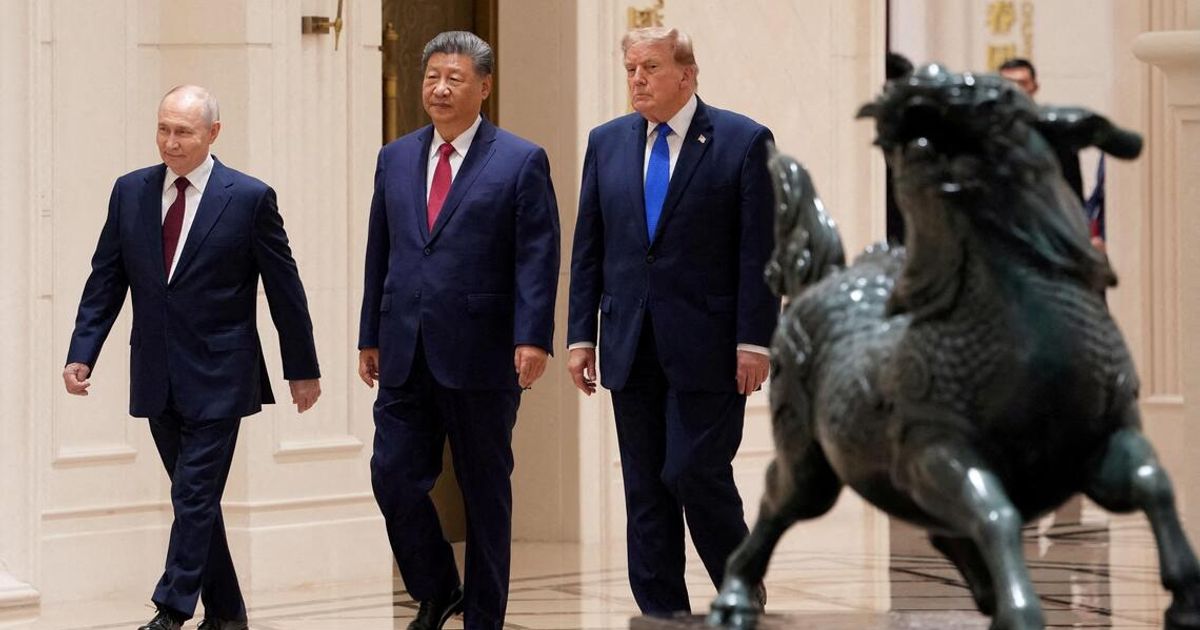
US President Donald Trump met with Chinese President Xi Jinping and Russian President Vladimir Putin in Shenzhen on Thursday, Nov 19, 2026, producing a symbolic declaration on nuclear war but failing to secure major agreements on arms control, trade, or regional conflicts.
The three-way summit gave Trump a platform to project global leadership after domestic political setbacks, including his Republican Party’s loss of Congress in the November midterm elections, Daily Sabah reported. He also remained locked in a stalemate with Iran over an unpopular war that contributed to declining approval ratings.
Despite the ceremony surrounding the gathering, the three leaders announced no breakthroughs on Ukraine, Taiwan, artificial intelligence, or Iran. Their most significant outcome was a joint declaration reaffirming that nuclear war must never be fought and cannot be won.
Analysts said the outcome highlighted how Trump’s preference for direct, leader-to-leader diplomacy generated political spectacle without delivering substantive agreements. Xi strengthened his diplomatic standing by hosting a gathering of major powers, while Putin secured a prominent place alongside the leaders of the world’s two most powerful countries without making significant concessions.
“Trump has always loved the pageantry and the sense that he’s sitting down with the most important people in the world, and he got that moment,” said Christopher Preble, a senior fellow at the Stimson Center think tank in Washington, as reported by Straits Times. “But as in other summits, it’s hard to see any substantive progress made on any major issue.”
Trump offered an enthusiastic assessment of the meeting, telling NBC News that, on a scale of zero to 10, he would rate it “a 12,” according to Daily Sabah. Before the summit, he suggested in a Fox News interview that his reception in China had already demonstrated success, pointing to an elaborate military welcome at the airport on Wednesday, Nov 18, 2026, Dawn noted.
The White House defended the approach. “After four years of weakness under Joe Biden, President Trump effectively restored American strength – and his events in Asia showcased the great respect and deference that world leaders bestow upon our country under this president’s bold leadership,” said Anna Kelly, White House spokeswoman, in comments to Reuters.
Democratic lawmakers criticized the meeting, with Senate Democratic leader Chuck Schumer calling it “a historic embarrassment that people will remember long into the future” and asserting that Trump did not secure any meaningful commitments that would last.
European leaders meeting in Berlin on Thursday expressed frustration over their exclusion from the discussions. German Chancellor Friedrich Merz dismissed the summit, telling reporters that “the meeting in Shenzhen was apparently first and foremost a photo op.”
Meanwhile, Daryl Kimball, executive director of the Arms Control Association, welcomed the joint declaration on nuclear risks while noting that the statement alone was insufficient without a timetable or concrete arms control talks.
Before his career in foreign policy analysis, Christopher Preble served as a commissioned officer in the US Navy aboard the USS Ticonderoga (CG-47) from 1990 to 1993. He later earned a PhD in history from Temple University in 2002 after graduating from George Washington University in 1989, and previously held leadership roles at the Cato Institute and the Atlantic Council.
“Ultimately the proof of all of this is what is the resolution in Iran, what is resolution in Ukraine, if any,” said Josh Lipsky, vice president of international economics at the Atlantic Council.