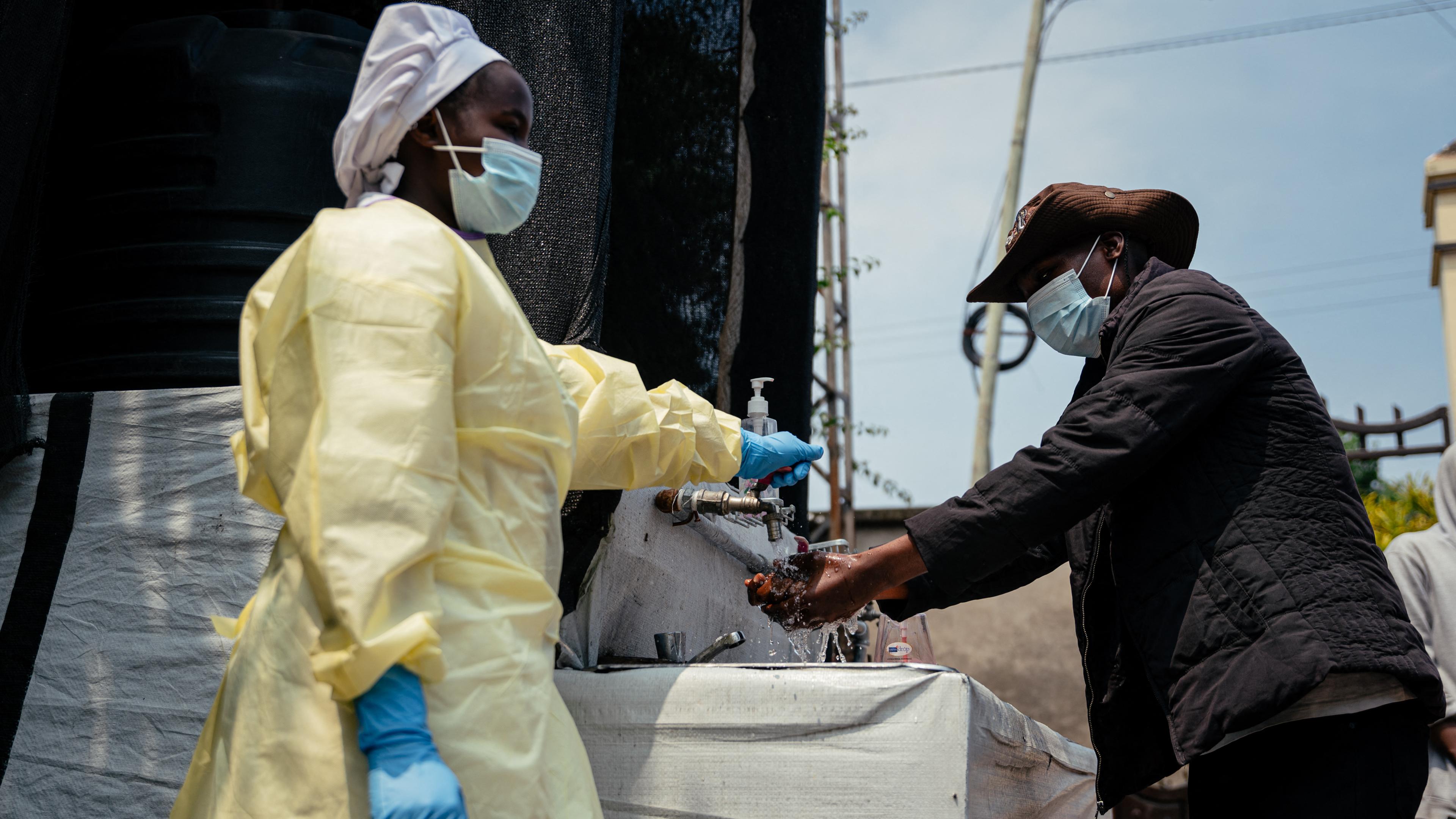
Trump Expresses Concern as American Tests Positive for Ebola in DRC Outbreak
**President Donald Trump expressed concern Tuesday about the escalating Ebola outbreak in the Democratic Republic of Congo (DRC) after an American missionary tested positive for the Bundibugyo strain, prompting U.S. Travel restrictions and a WHO emergency declaration. With 131 confirmed deaths and cases spreading to urban centers, experts warn of a worsening crisis fueled by conflict and healthcare worker shortages.**
A Crisis Reborn: How This Outbreak Differs From 2014—and Why It Matters Now
The current Ebola outbreak in the DRC—now declared a global public health emergency by the World Health Organization (WHO)—is not the first. But its trajectory, fueled by urban spread and armed conflict, sets it apart from the 2014 West African epidemic that killed over 11,000 people. Then, the virus spread slowly through rural villages; now, it’s moving through Bunia, a city of 1.2 million, where crowded markets and limited healthcare infrastructure accelerate transmission.
| Metric | 2014 West Africa Outbreak | 2026 DRC Outbreak (as of May 19) |
|---|---|---|
| Confirmed Cases | 28,652 | 500+ suspected (131 confirmed deaths) |
| Urban Spread | Limited (mostly rural) | Confirmed in Bunia and Kampala |
| Healthcare Worker Deaths | 89 | Reported but exact count pending |
| WHO Response Fund | $1.6 billion (2014-2016) | $3.9 million (as of May 19, 2026) |
Source: WHO historical data (2014) vs. 2026 emergency updates. Note: 2026 figures are provisional and subject to revision as field operations scale.
Why This Outbreak Could Spiral: The Three Hidden Risks
- Armed Conflict in Ituri Province The DRC’s ongoing violence between the Congolese army and rebel groups has displaced hundreds of thousands, creating ideal conditions for viral spread. Local officials confirm that displaced populations are moving into Bunia’s informal settlements, where sanitation is nonexistent.
- Healthcare Worker Shortages
- Travel Restrictions: A Double-Edged Sword
“The biggest vulnerability isn’t the virus—it’s the people treating it.“ —Dr. Jean-Pierre Mpiana, DRC Ministry of Health spokesperson

The DRC has only 1.5 doctors per 10,000 people—one of the lowest ratios in the world. With healthcare workers dying from the virus, hospitals like Nyankunde Hospital (where Dr. Peter Stafford was exposed) are operating at 50% capacity. The WHO’s $3.4 million emergency fund won’t cover the $20 million needed for personal protective equipment (PPE) alone.
The U.S. Has banned non-citizens from entering if they’ve visited the DRC, Uganda, or South Sudan in the last 21 days—a move that could disrupt aid delivery. But with cases now confirmed in Kampala, Uganda, the restrictions may soon expand, further isolating the region.
From Missionary to Patient Zero: The Story of Dr. Peter Stafford
“When we heard Dr. Stafford tested positive, we knew the game had changed. This isn’t just another outbreak—it’s a systemic failure.“ —Serge International Medical Director, Dr. Elias Okoro (translated from French)
Dr. Peter Stafford, a 42-year-old American missionary with 12 years of experience in the DRC, was treating Ebola patients at Nyankunde Hospital in Bunia when he contracted the Bundibugyo strain. Unlike the more deadly Sudan or Zaire strains, Bundibugyo has a 25% fatality rate—still lethal, but with a slightly better survival chance. However, its lack of a targeted vaccine means treatment relies entirely on supportive care.
Stafford’s evacuation to Germany—a WHO-designated Ebola treatment hub—highlights a critical gap: no African country currently has the infrastructure to handle high-risk cases. The DRC’s Institute National de Recherche Biomédicale (INRB) lacks the isolation units and trained staff for large-scale outbreaks. This dependency on foreign facilities could become a liability if the outbreak worsens.
Bunia, DRC: The Epicenter Under Siege
Bunia, the capital of Ituri Province, is a city of 1.2 million with only three functional Ebola treatment centers. The city’s unregulated markets and shared household water sources create perfect conditions for transmission. Local officials report that 70% of cases are now linked to healthcare-associated transmission—meaning the virus is spreading within hospitals, not just through community contact.
“We’re running out of body bags.“ —Mayor of Bunia, Hon. Jean-Pierre Nzabiramana (translated from Swahili)
Who’s on the Frontlines? The Organizations and Experts Already Mobilizing
With the WHO’s emergency committee convening Tuesday, the response is fragmenting. Here’s who’s stepping up—and where the gaps remain:

Emergency Medical Evacuation & Treatment
Organizations like Serge International are coordinating evacuations, but the DRC lacks ICU-level care for Ebola patients. [Medical Evacuation Specialists] with experience in viral hemorrhagic fevers are urgently needed to transport patients to facilities like Berlin’s Charité Universitätsmedizin, which has treated 47 Ebola cases since 2014.
Public Health Infrastructure Reinforcement
The DRC’s healthcare system is collapsing. [Global Health Consulting Firms] specializing in outbreak response—such as those that deployed during the 2014 crisis—are being hired to assess gaps. A key priority: training local healthcare workers in PPE protocols, which currently have a 30% failure rate due to shortages.
Legal and Travel Compliance
The U.S. Travel ban creates logistical nightmares for aid workers. [Immigration Law Firms] with expertise in public health exemptions are advising NGOs on waivers. Meanwhile, the DRC’s Ministry of Health is drafting emergency decrees to mandate quarantine zones—a move that could face legal challenges under international human rights law.
**The 2014 Ebola outbreak proved that panic spreads faster than the virus—until the world acts. This time, the clock is ticking. With urban transmission confirmed and healthcare systems on the brink, the question isn’t whether this outbreak will worsen, but how quickly. For those already in the crosshairs—medical missionaries, displaced families, and frontline workers—the answer lies in the Directory: [Find Verified Ebola Response Teams], [Locate Emergency Legal Advisors for Travel Bans], or [Identify Global Health Infrastructure Auditors] before the next wave hits.**
Related reading