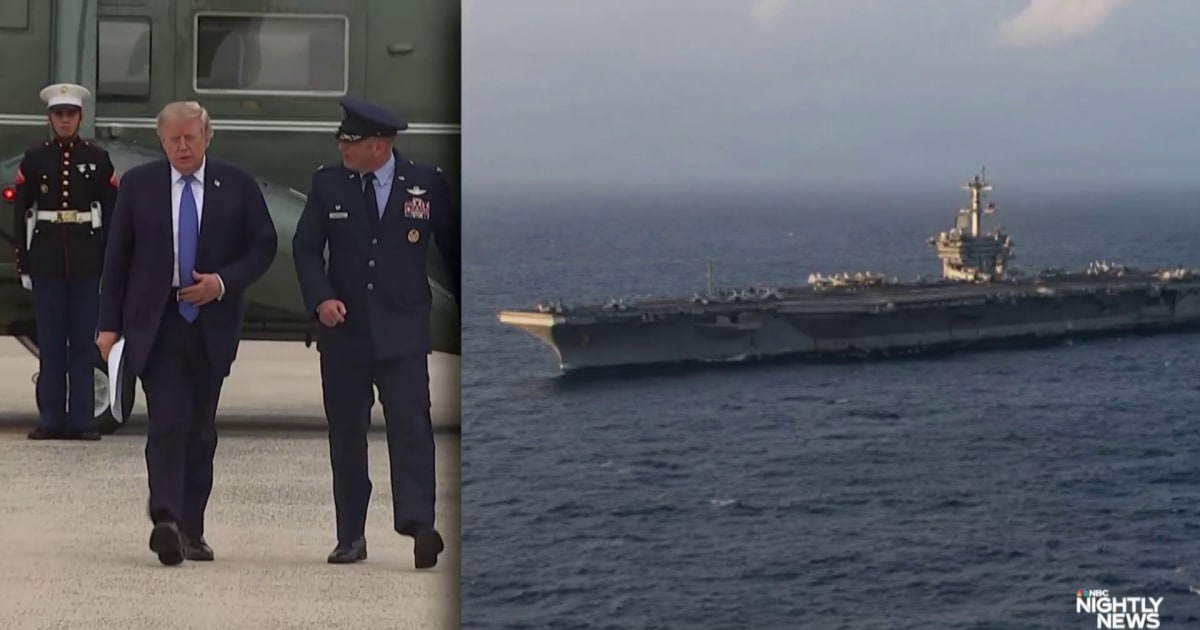
Trump Dismisses Sailor Families Concerns Over USS Abraham Lincoln Conditions
U.S. President Donald Trump dismissed concerns on Friday, August 14, 2026, regarding living conditions and service member mental health aboard the USS Abraham Lincoln, asserting that families are not worried and that the aircraft carrier will soon rotate out of its deployment.
The deployment of the Nimitz-class carrier has reignited scrutiny over military operational tempos. As families speak out about extended months at sea and strain on crew welfare, the situation highlights the complex logistical and human challenges facing the U.S. military during ongoing geopolitical stalemates.
Dismissal of Deployment Length and Crew Concerns
Speaking to reporters, President Trump rejected assertions that the USS Abraham Lincoln has spent too much time deployed. According to reporting from The Hindu, when asked if the ship had been at sea for too long, Mr. Trump stated, “No, no, no, not nearly enough.” Furthermore, when questioned about whether family members shared anxieties regarding the situation on board, Mr. Trump replied simply that “no, they’re not.”
The carrier departed California in November 2025 initially assigned to duty in the South China Sea. It was subsequently rerouted to West Asia ahead of U.S.-Israeli attacks on Iran that commenced on February 28. The ship is currently finishing its ninth month at sea amid a broader strategic standoff with Iran over control of the Strait of Hormuz and the nation’s nuclear program.
Deteriorating Living Conditions and Calls for Probes
U.S. media outlets and specialist military publications have documented mounting friction behind the scenes. According to CTV News, multiple relatives of crew members have reported that living conditions on the vessel have deteriorated during the prolonged mission. Reports of several suicide attempts among the crew have also surfaced, prompting Democratic politicians to demand probes into the ship’s operational environment.

These reports stand in contrast to standard naval planning guidelines. Jonathan Schroden, chief research officer at the Center for Naval Analyses, told AFP that carrier strike groups are generally designed for six-month deployments for multiple reasons, explicitly “including sailor welfare.” Exceeding this window places physical and psychological pressure on personnel.
Imminent Rotation and Strategic Relief
Addressing the relief timeline, President Trump confirmed that the USS Abraham Lincoln is scheduled to rotate out of the region imminently. “That ship is moving right now or very shortly and it’s being replaced with another very similar ship,” Mr. Trump told reporters, signaling an upcoming handoff in the operational theater.

The transition comes as naval logistics commanders grapple with maintaining a persistent deterrence posture in West Asia. Ensuring seamless administrative and operational handoffs during high-stakes maneuvers requires robust oversight.
As the USS Abraham Lincoln prepares to yield its station to a replacement carrier, the debate over the human cost of protracted naval deployments persists. The upcoming transition will test the Navy’s capacity to balance regional deterrence mandates with the fundamental welfare of its service members.