Trump Courts Joe Rogan With Psychedelic Drug Executive Order
President Donald Trump is actively courting podcast host Joe Rogan despite their public split over the Iran war, seeking to maintain Rogan’s influential platform among young male voters as his approval ratings in that demographic continue to decline, according to White House aides and administration officials familiar with ongoing outreach efforts.
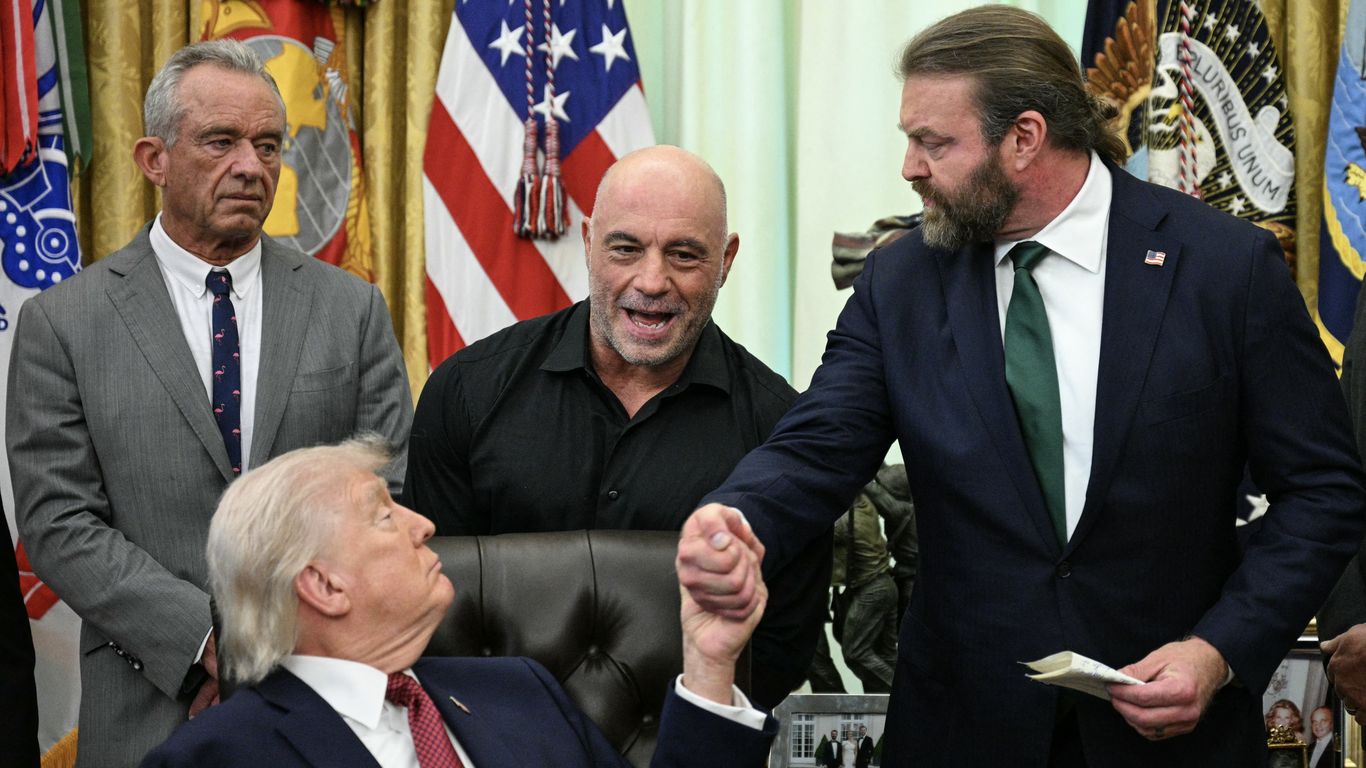
The effort intensified after Rogan’s surprise Oval Office appearance on April 19, 2026, where he praised Trump for signing an executive order accelerating federal review of psychedelic treatments for serious mental illness—a policy Rogan had personally advocated for in a text message to the president weeks earlier. While Trump acknowledged their ideological differences, calling Rogan “a little bit more liberal than I am,” both men have avoided rupturing their relationship, recognizing its mutual political and cultural value.
The Strategic Value of Rogan’s Audience in a Fragmented Media Landscape
Joe Rogan’s podcast remains one of the most influential platforms for reaching men aged 18–34, a demographic where Trump’s support has eroded significantly. A February 2026 Reuters poll showed only 33% of young men approve of Trump’s job performance, down 10 points from the previous year—a trend attributed in part to dissatisfaction with ongoing military engagements, including the Iran war. Rogan, who has consistently criticized U.S. Foreign policy interventions, voiced this sentiment bluntly last week: “You’re shooting missiles into towns and blowing things up…. What the f*** are we doing? Like, how is this still going on?”
Despite this friction, Trump’s team views Rogan as a pragmatic bridge rather than an ideological ally. Unlike Tucker Carlson, whose break with Trump over the Iran war became permanent and acrimonious, Rogan is seen by aides as less driven by partisan dogma and more motivated by personal connections—particularly through UFC President Dana White, who facilitated the president’s cageside greeting of Rogan at UFC 327 in Miami two weekends prior to the Oval Office meeting.
From Psychedelic Advocacy to Policy Influence: How a Text Message Shaped Federal Action
The executive order signed by Trump on April 19, 2026, which fast-tracks FDA review of psychedelic substances like ibogaine and allocates $50 million for research, originated from a direct exchange between the president and Rogan. According to sources familiar with the conversation, Rogan texted Trump information about ibogaine’s potential to curb opioid addiction, to which Trump replied: “Sounds great. Do you want FDA approval? Let’s do it.”
This interaction quickly mobilized administration officials. Health and Human Services Secretary Robert F. Kennedy Jr., a longtime advocate for psychedelic research, not only consulted with Rogan but appeared on his show in February 2026. Kennedy’s adviser Calley Means, who has promoted ibogaine therapy on multiple platforms, also appeared on the podcast that year and attended the executive order signing alongside Kennedy and Dr. Mehmet Oz, administrator of the Centers for Medicare & Medicaid Services.
Oz’s involvement was particularly consequential. After Trump reached out to him en route to the UFC fight in Miami, Oz collaborated with Kennedy to draft the policy framework that became the executive order—demonstrating how informal conversations between the president, celebrities, and agency leaders can directly shape federal health initiatives.
Local Impact: How Federal Psychedelic Research Funding Could Reshape Municipal Health Services
The $50 million in federal research funding designated by the executive order is expected to flow to academic medical centers and clinical trial sites nationwide, with early indications pointing to proposals from institutions in Austin, Texas; Miami, Florida; and Minneapolis, Minnesota—cities where Rogan has personal or professional ties and where local governments have begun exploring alternative treatments for veterans and individuals with treatment-resistant depression.
In Austin, where Rogan resides and where Vice President JD Vance met with him last month during a fundraising stop, city health officials have expressed interest in applying for grants to study ibogaine’s efficacy in treating opioid use disorder among homeless populations. “We’re seeing a surge in polysubstance use that traditional MAT programs aren’t fully addressing,” said Dr. Elena Márquez, Director of Austin Public Health’s Behavioral Health Division.
“If federal resources become available to study innovative therapies like ibogaine in controlled settings, we need to be ready to partner with researchers and ensure ethical, community-centered implementation.”
Similarly, in Minneapolis—the site of a 2026 shooting incident that Rogan referenced in his criticism of the Iran war—local advocates have pushed for municipal investment in mental health crisis response teams. Councilmember Aisha Patel, who chairs the City Council’s Public Safety and Health Committee, noted:
“Our officers are often the first responders to psychological crises, yet they lack tools beyond sedation or arrest. Federal investment in psychedelic-assisted therapies could eventually inform new models of care we pilot locally—especially for veterans struggling with trauma.”
These developments underscore how federal policy shifts, even those initiated through informal channels, can create ripple effects in municipal planning, law enforcement training, and public health infrastructure—particularly in cities grappling with overlapping crises of addiction, mental illness, and strained emergency services.
The Directory Bridge: Connecting National Trends to Local Solutions
As federal psychedelic research expands, communities will need verified professionals to navigate the complex intersection of healthcare innovation, regulatory compliance, and public safety. Cities like Austin and Minneapolis are already exploring partnerships with clinical research coordinators and licensed behavioral health therapists to prepare for potential trial participation.
Meanwhile, law enforcement agencies anticipating shifts in mental health crisis response may consult civil rights attorneys to ensure new protocols align with constitutional protections and state statutes—especially as debates grow over the legality and ethics of administering Schedule I substances in therapeutic settings, even under federal research exemptions.
For veterans’ organizations and nonprofit advocates seeking to influence how these funds are distributed, engaging with veterans’ service officers and health policy analysts will be critical to ensuring equity, transparency, and community input in the research process.
The evolving relationship between Trump and Rogan illustrates how celebrity influence, personal relationships, and informal advocacy can catalyze federal action—even amid public disagreement. But the true test lies not in the Oval Office or the podcast studio, but in whether cities across America can translate this momentum into safe, equitable, and locally grounded mental health innovation.
As one Austin-based recovery advocate put it off the record: “Policy starts with a text message. But healing starts in the neighborhood.”