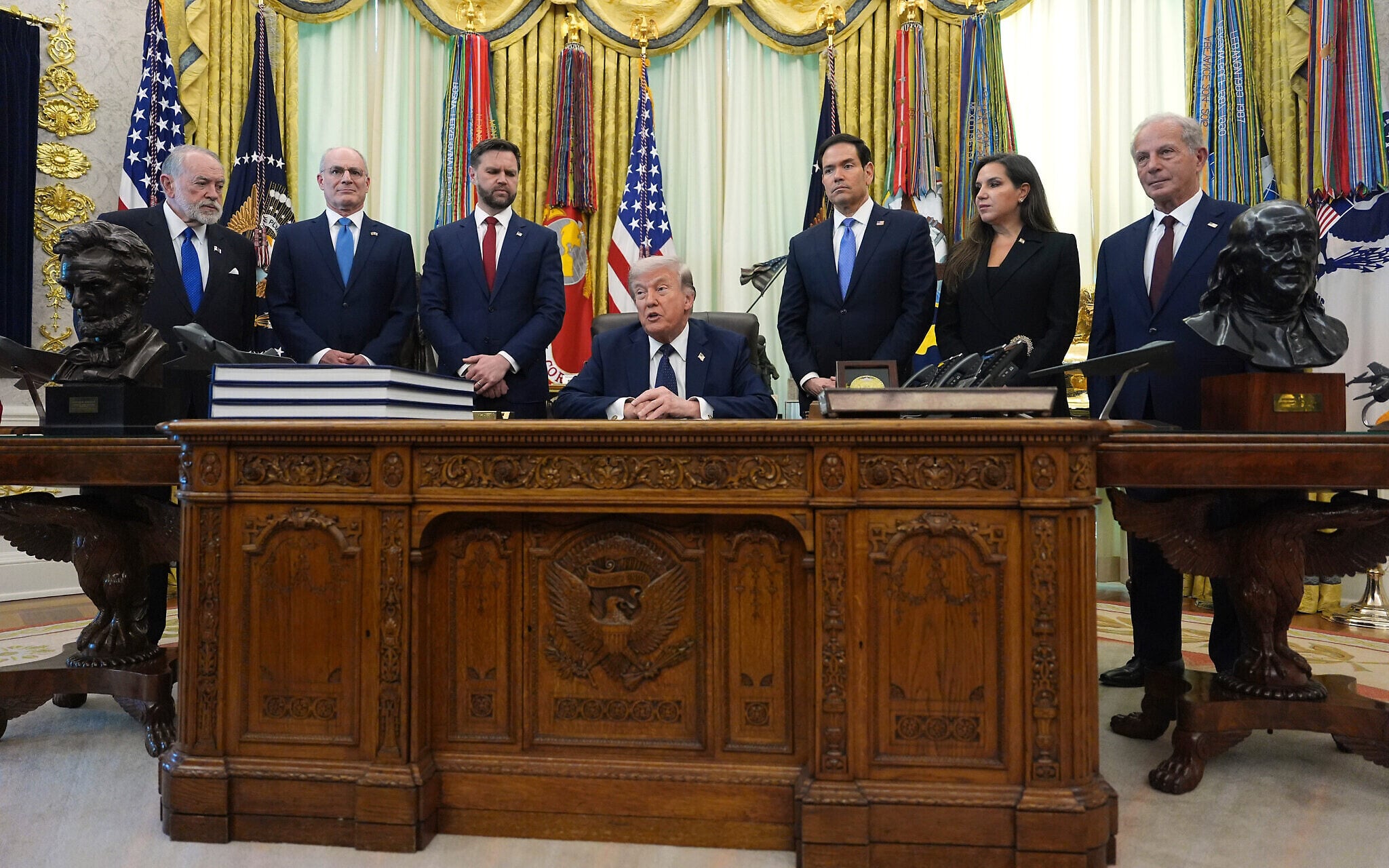
Trump Announces 3-Week Truce Extension as Netanyahu and Lebanese President to Meet in DC Amid Ceasefire Violations
On April 23, 2026, President Trump announced a three-week extension to the U.S.-brokered ceasefire between Israel and Lebanon, inviting Israeli Prime Minister Benjamin Netanyahu and Lebanese President Joseph Aoun to White House talks aimed at de-escalating tensions following Hezbollah’s first rocket fire into northern Israel since the truce began. This development arrives amid fragile diplomacy, with cross-border exchanges threatening to unravel months of negotiated calm and raising urgent questions about enforcement mechanisms, humanitarian access, and long-term border security arrangements.
The Truce at Risk: Why Hezbollah’s Rocket Fire Changes Everything
The April 2026 rocket salvo from southern Lebanon marked the first direct Hezbollah attack on Israeli territory since the ceasefire took effect in January, violating terms brokered by the U.S. And France under UN Resolution 1701. Israeli Defense Forces responded with precision strikes on Hezbollah observation posts near Marjayoun, triggering localized displacement in Lebanon’s Nabatieh Governorate where over 1,200 residents sought shelter in municipal schools, according to UNOCHA field reports. Lebanese caretaker Prime Minister Najib Mikati condemned the rocket fire as “a reckless provocation” but stopped short of disarming Hezbollah, citing internal political fragility.
This escalation exposes a critical flaw in the current truce: absent robust verification, non-state actors can exploit diplomatic windows to test red lines. The White House meeting seeks to close this gap by establishing real-time communication channels between Israeli and Lebanese military liaison officers, a mechanism absent in the original January framework. Success hinges on whether both sides accept third-party monitoring—something Hezbollah has historically rejected as infringing on Lebanese sovereignty.
Historical Context: From July War to Fragile Calm
To understand the stakes, one must glance back to the 2006 July War, when Hezbollah’s cross-border raid triggered 34 days of intense fighting that killed over 1,100 Lebanese and 165 Israelis, according to the Lebanese Ministry of Health and IDF archives. The ensuing UN Resolution 1701 called for Hezbollah’s disarmament and deployment of Lebanese Armed Forces (LAF) south of the Litani River—goals still unmet two decades later. Today, LAF presence in the south remains limited to 15,000 troops, far below the 30,000 envisioned, leaving security gaps Hezbollah exploits.

Economically, the instability threatens Lebanon’s fragile recovery. The World Bank estimates that renewed hostilities could slash GDP growth by 2.3 percentage points in 2026, disproportionately affecting Beirut’s port operations and southern agricultural zones where olive and tobacco farming employ 40% of Nabatieh’s workforce. Meanwhile, northern Israel’s Galilee region faces tourism cancellations, with hotel occupancy in Tiberias dropping 18% month-over-month since April 10, per Israel Central Bureau of Statistics data.
Directory Bridge: Who Steps In When Diplomacy Falters?
When ceasefires fray, communities need more than statements—they need operational support. Displaced families in southern Lebanon require urgent access to emergency shelter providers and trauma-informed mental health counselors experienced in conflict zones. In northern Israel, farmers facing rocket-damaged greenhouses are turning to crop loss adjusters and structural engineers specializing in blast-resistant infrastructure to assess claims and rebuild resiliently.
Legally, the ambiguity over Hezbollah’s status under international law creates jurisdictional challenges. Businesses with cross-border supply chains—particularly in chemicals and pharmaceuticals—are consulting international humanitarian law attorneys to navigate liability risks should hostilities resume. Municipalities along the Blue Line are as well engaging conflict-sensitive urban planners to redesign border-adjacent zones with dual-use shelters and early-warning siren networks.
Macro Implications: Beyond the Battlefield
The truce’s fate influences broader regional dynamics. Saudi Arabia, which has quietly backed Lebanese state institutions through the Riyadh Agreement framework, views stability in southern Lebanon as critical to preventing Iranian entrenchment—a concern echoed in private briefings by Gulf Cooperation Council officials. Conversely, Iran’s Islamic Revolutionary Guard Corps (IRGC) has increased financial transfers to Hezbollah via Syrian land routes, according to Treasury Department sanctions filings, using the ceasefire lull to replenish arsenals.

For global markets, the risk premium on Levantine bonds has risen 42 basis points since April 10, reflecting investor anxiety over potential escalation, per Bloomberg Emerging Markets data. Energy traders watch closely: any disruption to Iraqi crude shipments through the strategic Tripoli-Haifa pipeline corridor—though currently inactive—could trigger regional spillover effects affecting Mediterranean freight rates.
“Diplomacy without deterrence is just delay. The White House talks must couple dialogue with concrete consequences for violations—or we’ll be back here in three weeks facing the same choice.”
— Colonel (Ret.) Tal Becker, former IDF legal advisor and current fellow at the Washington Institute for Near East Policy, speaking on background to World Today News editors on April 22, 2026.
The coming weeks will test whether this extension builds toward a sustainable framework or merely postpones an inevitable reckoning. What’s clear is that the status quo—reliant on ad hoc U.S. Mediation and uneven local enforcement—has reached its limits. For businesses, NGOs, and border communities caught in the crossfire, the need for verified, on-the-ground expertise has never been more urgent.
As the White House prepares to host Netanyahu and Aoun, the true measure of success won’t be the length of the truce extended, but whether it creates irreversible incentives for all parties to choose restraint over retaliation. In a region where ceasefires have often served as interludes between wars, this moment demands not just diplomacy, but the courage to enforce it—and the directory of professionals ready to help communities endure, adapt, and rebuild regardless of what comes next.