
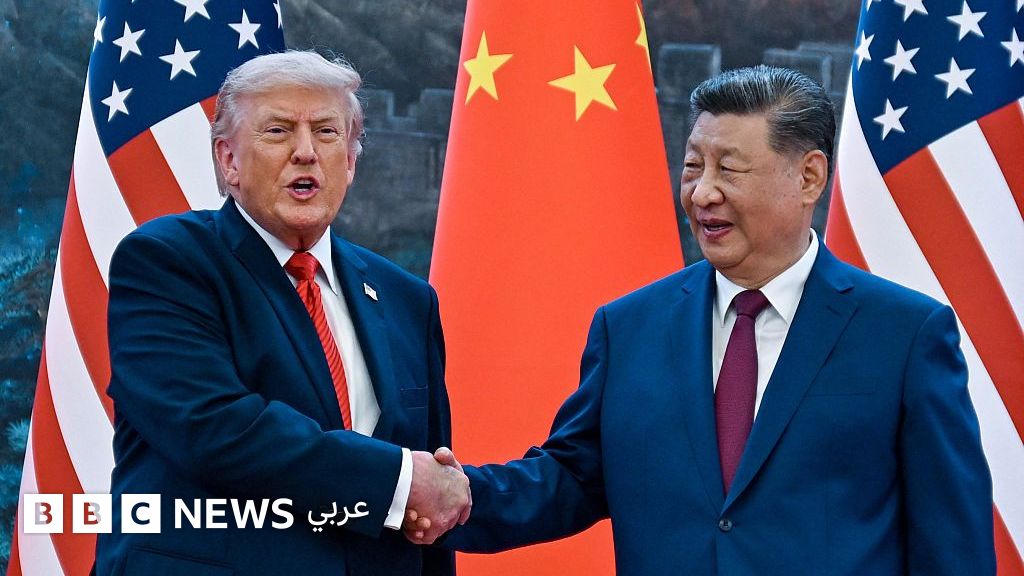
Trump and China Discuss Iran, Economic Cooperation Amid Summit
US President Donald Trump and Chinese President Xi Jinping met in Beijing to address escalating tensions in the Middle East. Xi reportedly offered to help reopen the Strait of Hormuz and pledged to withhold military support for Iran, signaling a strategic pivot to stabilize global energy corridors and mitigate systemic economic risks.
The global order is currently operating on a knife-edge. When the two largest economies on earth negotiate the fate of the world’s most volatile maritime chokepoint, the implications extend far beyond diplomatic pleasantries. We are witnessing a raw calculation of power: the United States seeking to contain Iranian influence and secure energy flow, and China leveraging its unique relationship with Tehran to position itself as the indispensable global mediator.
For the global enterprise, this is a volatility event. The potential for a sudden reopening or closure of the Strait of Hormuz creates immediate fluctuations in Brent crude and shipping insurance premiums. This is why multinational firms are no longer relying on internal forecasts, instead pivoting toward vetted geopolitical risk consultants to map out contingency plans for energy supply chain disruptions.
The Hormuz Gambit: Trading Influence for Stability
The core of the Beijing talks centered on a high-stakes concession. President Trump revealed that President Xi offered Chinese assistance in ensuring the Strait of Hormuz remains open. This is a profound shift. By offering to act as a guarantor of maritime transit, Beijing is effectively attempting to displace the U.S. As the sole security architect of the Persian Gulf.
The Strait of Hormuz is the world’s most critical oil artery. Any prolonged closure would trigger a global inflationary spiral that neither Washington nor Beijing can afford.
Equally significant is the pledge from China to cease military support for Iran. This commitment strikes at the heart of Tehran’s strategic depth. If China restricts the flow of military hardware or dual-use technology to Iran, the Islamic Republic’s ability to project power in the region is severely diminished. This creates a vacuum that the U.S. Intends to fill with a combination of diplomatic pressure and military deterrence.
“The China-Iran-US triangle is the most consequential geopolitical axis of the decade. If Beijing chooses stability over ideological alignment with Tehran, the operational risk for Western assets in the Middle East drops precipitously, but the long-term dependency on Chinese mediation increases.”
This shift in the security architecture forces a rethink of maritime insurance and logistics. Shipping conglomerates are now aggressively consulting with maritime logistics experts to restructure their transit routes and hedge against the possibility that “stability” in the Gulf now carries a Chinese signature.
The Tariff Paradox: AI and Agricultural Anchors
While the security talks focused on the Middle East, the economic dialogue revealed a striking contradiction. Despite the persistence of tariffs—a cornerstone of the current U.S. Trade posture—the two nations are nearing a massive agricultural deal. This suggests a “decoupling” of sectors: while technology and security remain battlegrounds, food and basic commodities are being used as stabilizers to prevent a total collapse of bilateral trade.
The presence of American business leaders in Beijing highlighted a growing fascination with China’s advancements in artificial intelligence. These executives praised the resilience of the Chinese economy and its rapid integration of AI into industrial processes. It is a pragmatic admission: the U.S. May wish to compete with China, but it cannot afford to be technologically blind to China’s progress.
This “Tariff Paradox” creates a nightmare for compliance officers. Companies are operating in a grey zone where some goods are welcomed under new deals while others face punitive duties. To navigate this, firms are increasingly onboarding international trade lawyers to ensure their import-export frameworks don’t trigger sanctions or unexpected levies.
The macro-economic ripple effects are clear. As the World Bank and other global monitors track trade flows, the trend suggests a move toward “selective engagement.” The U.S. Is not leaving China; it is surgically choosing which parts of the relationship to preserve and which to prune.
The Taiwan Red Line and the Long Game
Beneath the surface of the Iran and trade discussions lies the enduring tension over Taiwan. While the Beijing summit produced tangible offers regarding the Middle East, the status of Taiwan remains a non-negotiable flashpoint. The relationship between the U.S. And China is characterized by this duality: cooperation on global systemic threats (like the collapse of energy markets) and absolute friction over territorial sovereignty.

This tension ensures that the “stability” promised in Beijing is fragile. A single miscalculation in the Taiwan Strait could render the agreements on the Strait of Hormuz irrelevant overnight.
The strategic landscape is now a game of multi-theater hedging. The U.S. Is leveraging its alliance with NATO and Indo-Pacific partners to maintain a perimeter, while using these high-level summits to prevent a total diplomatic blackout with Beijing. For a deeper dive into the mechanics of this rivalry, the analysis provided by Foreign Affairs suggests that we are entering an era of “competitive coexistence.”
The global economy is no longer a flat playing field; it is a series of fortified silos. The ability to move capital, goods, and data between these silos now requires a level of geopolitical intelligence that was unnecessary a decade ago.
As the dust settles on the Beijing summit, the takeaway for the global executive is clear: the rules of engagement have changed. Stability is no longer a default state; it is a negotiated commodity, often traded between superpowers in a currency of concessions. Whether it is the reopening of a strait in the Middle East or the signing of an agricultural pact, every move on the board creates a new set of risks and opportunities.
Navigating this fragmented world requires more than just a business plan—it requires a geopolitical map. Those who fail to align their corporate strategy with these shifting alliances will find themselves on the wrong side of the next disruption. To secure your operations, the World Today News Directory remains the primary resource for connecting with the elite legal, financial, and security partners capable of navigating the complexities of the new global chessboard.