
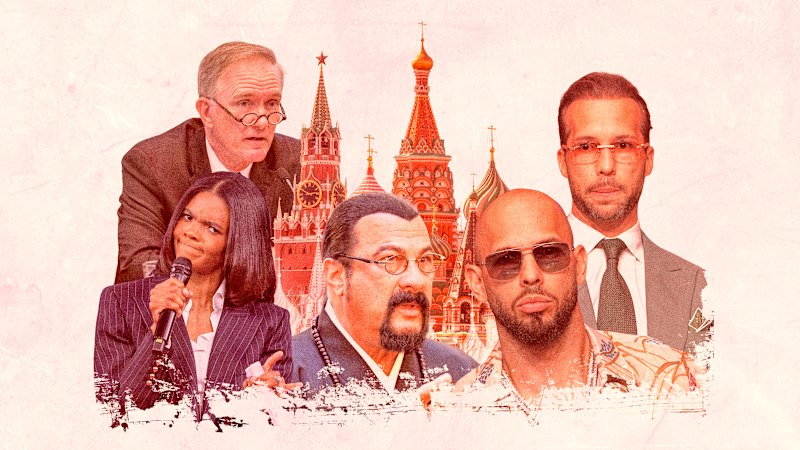
Trump Allies & Internet Celebrities Join Putin’s St. Petersburg Summit Amid Ukraine War & Economic Struggles
As of June 3, 2026, the St. Petersburg International Economic Forum serves as a curated stage for Vladimir Putin to project strength despite Russia’s ongoing military entrenchment in Ukraine and domestic economic stagnation. By leveraging a coalition of influencers and political allies, the Kremlin aims to project international legitimacy amidst isolation.
The veneer of a bustling, globalized economy is becoming increasingly tricky to maintain. While the forum—often dubbed Russia’s answer to Davos—is populated by a carefully selected cohort of international influencers and political sympathizers, the underlying fiscal reality tells a starkly different story. The Russian economy, heavily militarized and starved of high-end foreign investment, is currently grappling with the long-term consequences of structural isolation.
When the high-society receptions conclude, the participants return to jurisdictions where the legal and financial ramifications of engaging with sanctioned entities are severe. Business leaders and private investors are finding that the “opportunity” presented in St. Petersburg often masks a minefield of regulatory hazards.
The Illusion of Prosperity in a Sanctioned State
The reliance on non-traditional “diplomats”—social media personalities and peripheral political figures—is a strategic pivot. It serves to bypass the absence of legitimate institutional investors who have fled the Russian market since 2022. This shift in attendee demographics signals a move from substantive economic discourse to pure information warfare.
For multinational corporations still untangling their exposure to the region, this creates a volatile environment. The gap between the forum’s rhetoric and the Office of Foreign Assets Control (OFAC) guidelines is widening. Navigating this landscape requires more than political intuition; it requires rigorous oversight.
Corporations attempting to liquidate assets or manage supply chain disruptions in the region are increasingly turning to specialized international trade attorneys. The risk of secondary sanctions is not a theoretical threat; it is a live compliance concern for any entity with global operations.
The forum is no longer a barometer for market growth; it is a theater of defiance. Investors who view these high-profile appearances as a green light for engagement are fundamentally misreading the geopolitical climate and the permanence of current trade restrictions.
The Macro-Economic Toll of Industrial Autarky
The Russian state is currently operating on a wartime budget that prioritizes defense spending over sustainable civilian infrastructure. According to the International Monetary Fund’s recent assessments, the shift toward a military-industrial complex has created an artificial, short-term stimulus that masks a decline in productivity and innovation across the non-defense sectors.

This reality forces local governments and private enterprises into a corner. As civilian infrastructure suffers from a lack of imported components and technical expertise, businesses are forced to seek alternative, often grey-market, solutions. This is where the risk of legal liability escalates sharply.
- Supply Chain Fragility: Reliance on non-sanctioned intermediaries often leads to the acquisition of subpar or non-compliant parts.
- Regulatory Drift: Municipal laws in regions heavily dependent on state-run enterprises are becoming increasingly erratic to accommodate federal demands.
- Asset Seizure Risks: Foreign-owned entities remain vulnerable to sudden changes in domestic legislation designed to “nationalize” remnants of foreign investment.
Managing these risks requires a sophisticated approach to due diligence. Organizations that fail to conduct a thorough corporate risk assessment are effectively leaving their balance sheets vulnerable to sudden, state-mandated shifts in policy.
Expert Analysis: The Cost of Disconnection
Dr. Elena Vance, a lead analyst in Eurasian geopolitical risk, notes that the forum’s current iteration is a symptom of a broader strategic withdrawal from the global financial architecture.
The St. Petersburg event is designed to satisfy a domestic audience that needs to believe the world has not moved on. However, the absence of real capital and the presence of social media influencers merely highlight the vacuum. For the global business community, this event is a signal to intensify compliance audits, not to explore new ventures.
The disconnect between the spectacle in St. Petersburg and the actual needs of the global market is absolute. While the Kremlin attempts to court influencers, the serious, institutional capital that once drove the Russian economy remains anchored in more stable, transparent jurisdictions. The World Bank’s ongoing monitoring of the region continues to highlight the long-term erosion of human capital and technical capacity as the true cost of the current geopolitical standoff.
Mitigating Exposure in a Fragmented Market
For those still maintaining legacy interests or complex supply chains involving the region, the current climate is unforgiving. The “swank” of the forum is a distraction from the reality of tightening international monitoring. Companies are finding that the only way to protect their domestic operations is to decouple from the risks associated with sanctioned economic zones.

Whether you are a multinational firm divesting from the region or a logistics provider navigating the complexities of international maritime and trade law, the need for expert guidance is paramount. Relying on local contacts that may be compromised or misaligned with international standards is a recipe for catastrophic legal exposure.
Business leaders must prioritize secure, verified, and objective counsel. Connecting with global trade compliance consultants ensures that your organization remains shielded from the unpredictable legal fallout of geopolitical posturing.
As the forum concludes, the headlines will fade, but the structural damage to the Russian economy will persist. The influencers will move on to the next trend, and the political allies will return to their own domestic challenges. The true test for international firms will not be how they navigate the glamour of a staged economic event, but how they secure their legal and financial integrity in an increasingly bifurcated world. If your organization is currently re-evaluating its global footprint, now is the time to engage with vetted legal professionals to audit your liabilities and ensure your long-term stability.