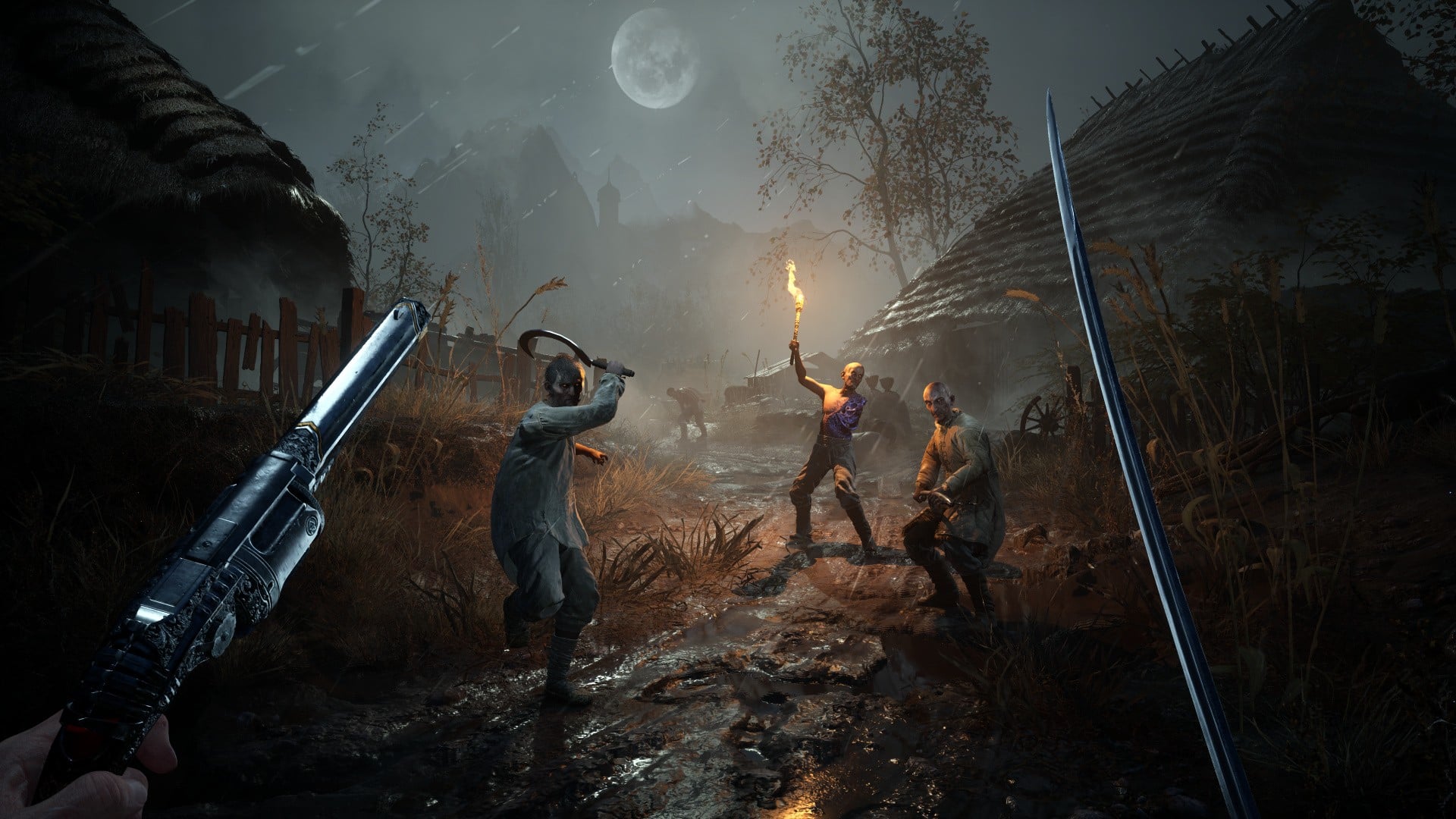
Triple-i Initiative 2026: Biggest Indie Game and Castlevania Reveals
The third Triple-I Initiative Showcase just wrapped, and while the PR machine is humming about “excitement,” the actual data suggests a calculated pivot in indie architectural trends. We aren’t just seeing more games; we’re seeing a systemic shift in how established indie studios are iterating on genre constraints to avoid the saturation of the roguelike market.
The Tech TL;DR:
- Genre Pivot: Castlevania: Belmont’s Curse explicitly rejects the roguelike label despite its Dead Cells-inspired kinetic experience, opting for a traditional 2D Metroidvania structure.
- Combat Overhaul: Temtem: Pioneers marks a fundamental shift for the franchise, ditching turn-based logic for real-time battles and survival crafting.
- AI Narratives: Prove You’re Human leverages the current AI discourse, implementing a gameplay loop centered on Turing-test-style social engineering and CAPTCHAs.
For those of us tracking the software development lifecycle of independent titles, the “indie” label is increasingly becoming a misnomer for high-fidelity production. The current bottleneck isn’t technical capability—it’s the risk of genre homogenization. When every third project is a procedurally generated dungeon crawler, the market hits a point of diminishing returns. The Triple-I showcase highlights a conscious effort by developers to break these loops, though the reliance on survival crafting—seen in both Don’t Starve Elsewhere and Temtem: Pioneers—suggests that developers are simply migrating from one saturated dependency to another.
Architectural Shift: Metroidvania vs. Roguelike
The headline act, Castlevania: Belmont’s Curse, is a case study in brand management and technical pedigree. Developed by Evil Empire and Motion Twin—the architects behind Dead Cells—and published by Konami, the game is visually reminiscent of its predecessors’ high-velocity action. However, the technical distinction is critical: it is not a roguelike. By stripping away the permadeath and procedural generation, the developers are returning to a deterministic, handcrafted world map set in Paris.

This move suggests a strategic retreat from the “infinite gameplay” promise of roguelites toward a more curated, narrative-driven experience. For studios managing these complex assets, the shift from procedural generation to static level design changes the entire QA pipeline. Instead of stress-testing algorithms for seed stability, the focus shifts to precise collision detection and trigger-based event sequencing. Companies specializing in software development agencies often uncover that porting these handcrafted experiences across PC and consoles requires significantly more rigorous manual regression testing than algorithmic generation.
The “Tech Stack” of Indie Innovation: Comparison Matrix
Looking at the world premieres and highlights, we can categorize the current design philosophies by their core mechanical “stack.”
| Title | Core Mechanic | Architectural Pivot | Funding/Source |
|---|---|---|---|
| Temtem: Pioneers | Real-time Survival | Turn-based $rightarrow$ Action | Kickstarter |
| Belmont’s Curse | 2D Metroidvania | Roguelike $rightarrow$ Deterministic | Konami/Evil Empire |
| Prove You’re Human | AI Social Sim | Puzzle $rightarrow$ Turing Test | 1000xResist Devs |
| Neverway | Horror-Life Sim | RPG $rightarrow$ Pixel-Art Sim | Indie Collaboration |
The AI Integration Problem: Prove You’re Human
While most games leverage AI as a buzzword for NPC behavior, Prove You’re Human treats the AI as the primary antagonist and the central mechanic. The game tasks the player with convincing an AI that it is not human, utilizing CAPTCHAs as a gameplay element. From a technical perspective, this is an interesting inversion of the current LLM (Large Language Model) trend. Instead of trying to make AI indistinguishable from humans, the game explores the friction of the “human verification” process.
This focus on verification and identity mirrors the real-world escalation in cybersecurity. As AI-generated content floods the web, the “Proof of Personhood” becomes a critical security layer. In an enterprise context, this is the same logic driving the adoption of cybersecurity auditors and penetration testers who must now differentiate between automated bot attacks and sophisticated human-led social engineering. The game essentially gamifies the struggle against automated verification systems.
Implementation: Mocking the Game Metadata API
For developers integrating these titles into launchers or tracking their deployment via CI/CD pipelines, the metadata structure for a diverse showcase like Triple-I typically follows a standardized JSON schema. If we were to query a hypothetical API for the status of these 2026 releases, the request and response would look like this:
# Querying the release status for the 2026 Triple-I cohort curl -X GET "https://api.triple-i-showcase.dev/v1/games?year=2026" -H "Authorization: Bearer ${API_TOKEN}" -H "Content-Type: application/json" # Expected Response { "cohort": "Triple-I 2026", "total_games": 40, "highlights": [ { "title": "Castlevania: Belmont's Curse", "genre": "Metroidvania", "release_window": "2026", "platforms": ["PC", "Consoles"], "is_roguelike": false }, { "title": "Temtem: Pioneers", "genre": "Survival-Crafting", "combat_system": "Real-time", "funding_status": "Kickstarter_Active" } ] }The Survival Crafting Saturation
The reveal of Don’t Starve Elsewhere and Temtem: Pioneers confirms that survival crafting remains the “safe bet” for indie developers. The loop—gather, craft, survive—is a proven retention mechanic. However, the pivot of Temtem from a traditional monster-catcher to a survival-centric open world indicates that the “Pokémon-clone” market has reached its ceiling. Crema is attempting to pivot the franchise toward the Palworld model, prioritizing real-time interaction over turn-based menus.
This transition introduces significant latency and synchronization challenges, especially if these titles aim for multiplayer stability. Moving from turn-based logic (where state updates can be asynchronous) to real-time combat requires a robust networking stack to handle packet loss and interpolation. For studios scaling these systems, implementing containerization via Kubernetes for backend scaling is no longer optional—it’s a requirement for maintaining a stable player experience during launch spikes.
The showcase also highlighted smaller, high-concept titles: Final Sentence, a battle royale typing game, and Windrose, an open-world pirate adventure. These represent the “long tail” of indie development—high-risk, high-concept experiments that rely on unique input methods (like typing speed) to carve out a niche in a crowded marketplace.
The Triple-I Initiative 2026 reveals a sector in transition. We are moving away from the “roguelike gold rush” and into an era of hybrid genres and AI-centric narratives. Whether these pivots will solve the discovery problem remains to be seen, but the technical ambition is scaling. As these titles move toward their 2026 production pushes, the focus will shift from “the reveal” to the brutal reality of optimization and deployment. For those managing the infrastructure behind these releases, the complexity of hybrid-genre games means a higher reliance on specialized managed service providers to handle the backend volatility.
Disclaimer: The technical analyses and security protocols detailed in this article are for informational purposes only. Always consult with certified IT and cybersecurity professionals before altering enterprise networks or handling sensitive data.