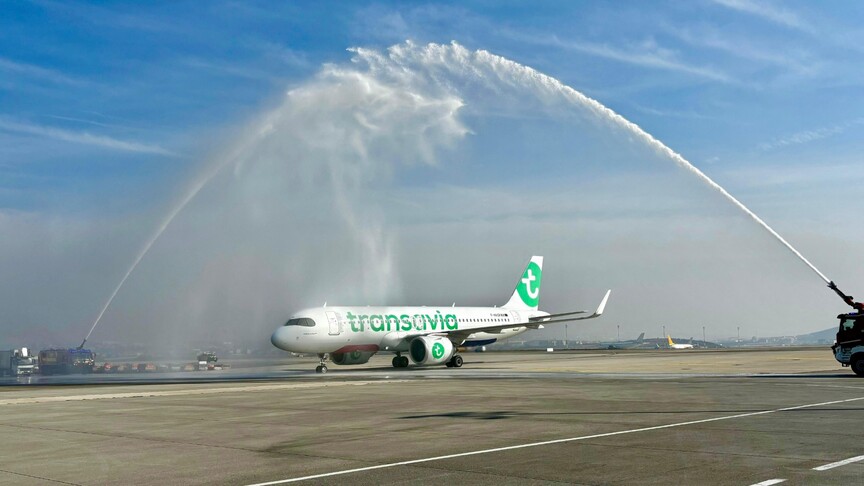
Transavia France Cancels Flights Amid Rising Fuel Costs and Middle East Conflict
Transavia France has cancelled dozens of flights for May and June 2026 as Middle Eastern geopolitical tensions drive jet fuel prices to 88 euros per barrel, a 40% year-on-year surge that threatens to erode Q3 EBITDA margins for low-cost carriers by up to 150 basis points if sustained, forcing airlines to either absorb costs or pass them to price-sensitive leisure travelers.
The Fuel Shockwave Hits Low-Cost Unit Economics
The immediate fiscal problem is clear: volatile fuel costs directly attack the contribution margin per available seat mile (CASM), the lifeblood of ultra-low-cost carriers like Transavia. With jet fuel constituting approximately 25-30% of operating expenses for European short-haul operators, a sustained price spike to 88 euros/barrel—up from 62 euros a year ago—translates into an incremental cost burden of roughly 3.5 euros per seat hour flown. For an airline operating at a 5% pre-tax margin, this pressure alone could swing quarterly profitability into negative territory without mitigating actions. Transavia’s proactive cancellations, while protecting near-term cash flow, signal a strategic retreat from marginal routes where load factors cannot support fare increases, effectively ceding market share to competitors with better fuel hedging or more flexible fleets.
This is not merely an operational hiccup but a structural test of resilience. Airlines lacking sophisticated fuel risk management are now exposed to basis risk between Brent crude and jet fuel cracks, which have widened to unprecedented levels due to regional refinery outages and speculative flows. The problem extends beyond Transavia. Ryanair recently warned that while kerosene supply for May and June appears “probable,” prices remain elevated, and any disruption could trigger similar cascading cancellations across the sector.
“When fuel volatility spikes like this, the airlines that survive aren’t necessarily the cheapest—they’re the ones with the deepest liquidity buffers and the most dynamic treasury teams capable of executing layered hedges across multiple time horizons.”
— Arnaud Feist, former CEO of Brussels Airlines, speaking at the IATA Fuel Symposium, March 2026
Hedging Gaps and the Liquidity Crunch
Transavia’s current predicament highlights a critical gap in its financial risk architecture. Unlike legacy carriers that often hedge 70-80% of fuel needs 18-24 months forward, many low-cost carriers adopt a more tactical approach, hedging only 40-50% on a rolling 12-month basis to preserve flexibility. While this strategy worked in the stable 2021-2023 environment, it leaves them vulnerable to sharp, sustained upticks like the current one. The airline’s Q4 2025 investor presentation showed fuel hedging coverage at just 45% for Q2 2026, leaving over half of its expected consumption exposed to spot prices—a position that becomes untenable when cracks exceed 20 dollars per barrel.
The resulting pressure on liquidity is measurable. Assuming a 10% increase in fuel costs versus budget, Transavia’s operating cash flow could decline by approximately 80 million euros over the next two quarters if no fare adjustments or cost offsets are made. This scenario would pressure its net debt-to-EBITDA ratio, currently at 2.1x, toward the 2.5x threshold that triggers covenant reviews with syndicated lenders. To avoid breaching financial ratios, the airline may need to tap undrawn revolving credit facilities or consider asset-backed financing—a move that would increase financing costs and dilute shareholder returns.
Herein lies the B2B solution set. Airlines facing such commodity volatility require specialized commodity risk management advisors to design multi-layered hedging programs that balance cost certainty with operational flexibility. These firms employ quantitative models to optimize hedge ratios across WTI, Brent, and jet fuel futures, incorporating volatility skews and basis forecasts. Simultaneously, enterprise treasury platforms provide real-time exposure tracking and automated margin call management, essential for navigating margin-intensive futures markets during periods of high volatility.
Passenger Demand Elasticity and the Fare Trap
Even if Transavia secures fuel supply, the secondary problem looms: passing costs to consumers without triggering demand destruction. Leisure travel, which comprises over 70% of Transavia’s revenue, exhibits high price elasticity—studies show a 10% fare increase can reduce volume by 12-15% on discretionary routes. With European consumers already strained by persistent services inflation and stagnant real wage growth, airlines face a narrow window to implement surcharges before demand shifts to alternative modes or delayed travel.

This dynamic creates a classic stagflationary squeeze: rising input costs meet falling pricing power. The airline’s only lever becomes ancillary revenue optimization—baggage fees, seat selection, and onboard sales—which now contribute nearly 30% of total revenue for leading LCCs. However, Notice diminishing returns; further ancillary hikes risk damaging brand perception and triggering regulatory scrutiny, particularly in France where consumer protection laws are stringent.
To navigate this, airlines increasingly turn to AI-driven revenue management systems that dynamically adjust fares and ancillary offers based on real-time demand signals, competitor pricing, and inventory levels. These platforms use machine learning to identify price-insensitive segments and micro-markets where fare increases can be absorbed without significant volume loss, effectively widening the contribution margin per passenger.
The Path Forward: Operational Agility as a Competitive Moat
Looking ahead to Q3 and Q4 2026, Transavia’s ability to weather this storm will depend less on fuel prices alone and more on the speed and precision of its operational and financial adaptations. The airline has begun reallocating capacity from marginal Mediterranean routes to higher-yielding North African and Southern European sectors where demand remains robust and fuel efficiency is better due to shorter stage lengths. Simultaneously, This proves accelerating negotiations with lessors for flexible return terms on A320neos, allowing faster fleet right-sizing if demand weakens.
This pivot toward operational agility underscores a broader industry truth: in an era of persistent geopolitical and commodity volatility, the winners will not be those with the lowest nominal costs, but those with the most adaptable cost structures. Airlines that invest in scenario planning, maintain strong lender relationships, and deploy advanced B2B tools for risk and revenue management will be best positioned to convert volatility into competitive advantage.
For corporations navigating similar supply chain and commodity risks, the World Today News Directory offers a curated gateway to vetted supply chain finance providers, energy procurement specialists, and financial restructuring advisors who specialize in building resilience against exogenous shocks. In markets where uncertainty is the only constant, partnering with the right advisors isn’t just prudent—it’s profit-protection.