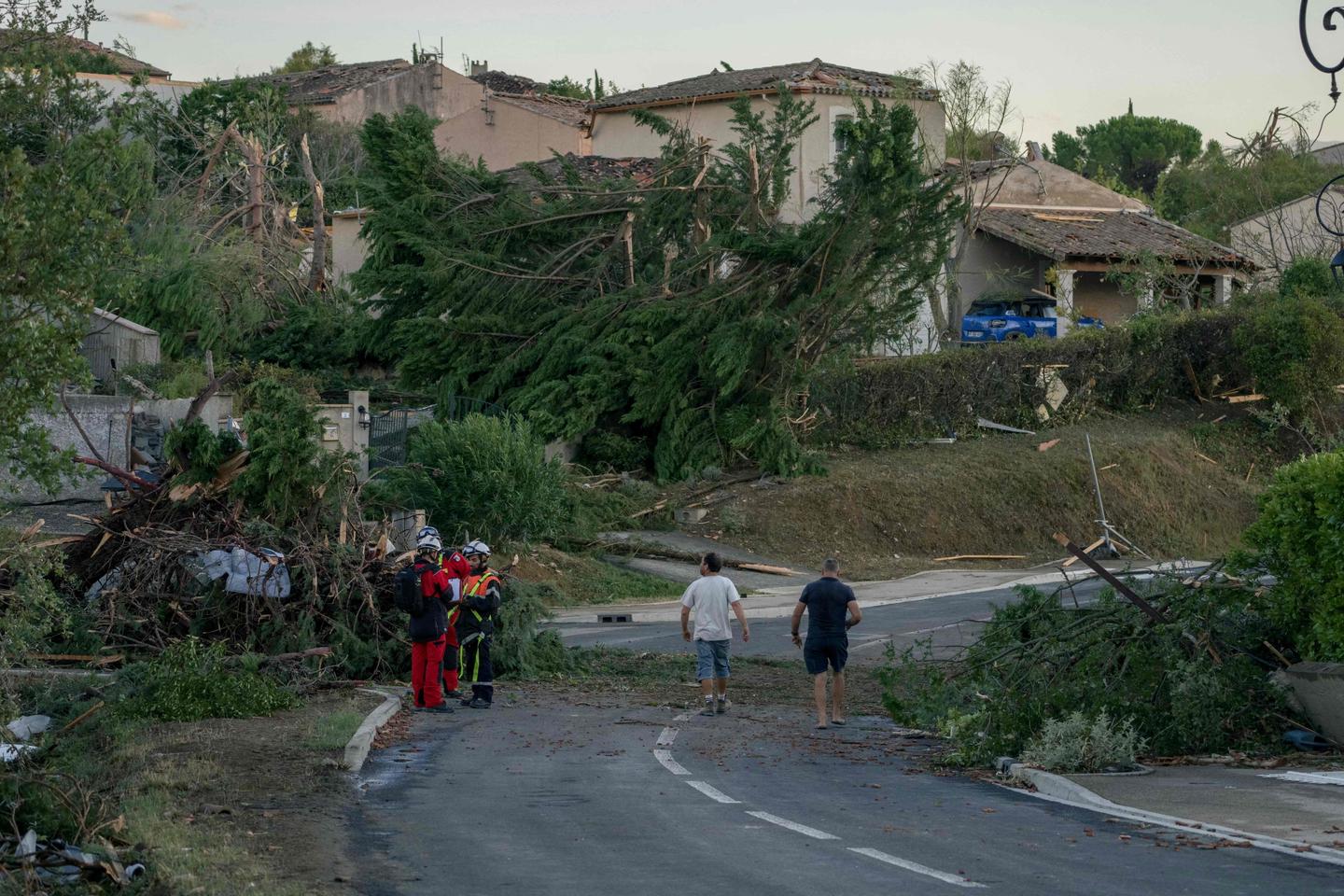
Tornado Devastates Pomas Village in Aude, France: 41 Injured and Hundreds of Homes Damaged
A powerful tornado struck the village of Pomas in France’s Aude department on August 24, 2026, leaving 41 people injured and damaging approximately 300 homes. The severe weather event, which hit at roughly 5:20 p.m., prompted an emergency response involving over 120 firefighters and specialized teams to secure the site.
The Impact on Pomas Infrastructure
The structural damage in Pomas is extensive. According to the regional prefecture, the tornado tore off numerous roofs and caused several houses to collapse. Among the injured, 15 people required hospitalization. One woman was trapped under the debris of her home but survived, reportedly protected by a piece of furniture as the walls caved in. Authorities have since deployed military personnel from the gendarmerie to secure the area, a measure intended to prevent looting in residences left exposed to the elements.
The scale of the destruction has created an immediate demand for specialized building assessment. Homeowners and local officials are currently grappling with the logistical challenge of securing properties against further collapse.
Regional Transport and Utility Disruptions
The severe weather did not limit its impact to Pomas. The storm system, which moved through the south of France, caused widespread disruption to national infrastructure. According to the French Ministry of Transport, rail traffic faced significant delays across multiple axes. Between Narbonne and Sète, rail operations were suspended starting at 6:30 p.m. on August 24, affecting approximately 20 trains, including six high-speed TGV services.
Further north, the LGV Atlantique line experienced a total interruption near Saint-Pierre-des-Corps following a power failure, leading to delays for TGV, Ouigo, and TER passengers. Air travel also saw cascading effects, with reports of delays and cancellations at major hubs, including Bordeaux, Toulouse, Marseille, Nice, and Paris-area airports. The volatility of these systems highlights the fragility of regional logistics during extreme atmospheric events.
Historical Context and Meteorological Drivers
Meteorologists describe the event as a supercell storm, a phenomenon characterized by a rotating updraft known as a mesocyclone.

Securing the Path to Recovery
The prefecture has established two emergency shelters to accommodate those displaced by the destruction. Because the structural integrity of many buildings remains in question, the process of returning to these homes is strictly regulated by safety authorities.
The road to recovery for a community hit by such a concentrated disaster involves more than just physical repairs; it requires a coordinated effort between municipal authorities, insurance providers, and specialized recovery services.
The events in Pomas serve as a reminder that the resilience of a community is tested not only by the storm itself, but by the efficiency of the systems in place to manage the aftermath.