Tobu Hikifune Station Redevelopment: Business Partners Selected for New Plaza and Parks
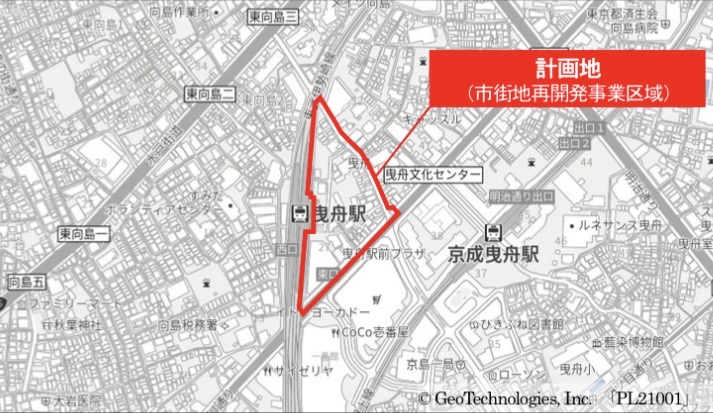
UR Urban Renaissance Agency and Hankyu Hanshin Real Estate are transforming the east side of Tobu Hikifune Station in Sumida, Tokyo. This “plaza-type” redevelopment replaces traditional building-centric models with a 14-story mixed-use tower and extensive public parks to enhance transit connectivity and disaster resilience by 2032.
The pivot from high-density construction to “plaza-type” urbanism signals a fundamental shift in how developers calculate land value. By prioritizing public space over maximum floor-area ratio, the project introduces a complex operational challenge: maintaining high-quality public assets without eroding the project’s internal rate of return. This gap creates a critical demand for commercial real estate management firms capable of blending public utility with private profitability.
The Strategic Pivot to Plaza-Type Urbanism
Spanning approximately 1.7 hectares in Higashi-Mukojima 2-chome, the project rejects the standard “tower-and-podium” approach. Instead, the design centers on a 2,250-square-meter traffic plaza designed to optimize bus and taxi throughput, coupled with a 4,000-square-meter urban planning park. This park isn’t just for aesthetics; it is engineered as a disaster evacuation hub.

The vertical component consists of a 14-story building reaching 45 meters. The financial architecture of the site allocates the first two floors to retail, while the remaining 12 floors house approximately 240 residential units.
Efficiency is the only metric that matters here.
The project’s success hinges on three macro-industry shifts:
- Intermodal Connectivity: By strengthening the pedestrian flow between Tobu Hikifune and Keisei Hikifune stations and exploring a new North Exit gate, the development transforms a fragmented transit point into a seamless hub.
- Resilience as a Value Driver: Integrating a 4,000-square-meter disaster shelter into the primary development plan increases the project’s social capital and regulatory appeal, often streamlining the approval process with municipal authorities.
- Post-Completion Operationality: The selection of Hankyu Hanshin Real Estate—a firm with a proven track record in area management in Osaka’s Umeda district—indicates that the “build and exit” model is dead. The focus has shifted to long-term asset appreciation through active district management.
The Execution Timeline and Regulatory Hurdles
Execution is a game of milestones. The project is currently navigating a rigid regulatory pipeline that requires absolute precision from urban planning consultants and infrastructure legal counsel to avoid costly delays.

The roadmap is clear: urban planning decisions are slated for the 2026 fiscal year, with official project approval expected in 2027. Demolition of existing structures and the commencement of construction are scheduled for the 2029 fiscal year, targeting a final completion date by the end of the 2032 fiscal year.
This timeline aligns with the “Tobu Hikifune Station Area Urban Development Policy” established by Sumida Ward in September 2025. The policy positions the area as a “wide-area base,” bridging the northern region of the ward via the Tobu Isesaki and Keisei Oshiage lines.
One slip in the 2027 approval phase could push the 2032 completion date into a different interest rate environment entirely.
The Bottom Line for Institutional Stakeholders
The Tobu Hikifune project is a litmus test for the scalability of “plaza-type” developments in Tokyo’s dense urban fabric. By leveraging the expertise of the Sumida Ward Urban Development Policy, the Urban Renaissance Agency is betting that public-centric spaces will drive higher residential premiums and retail footfall than a traditional high-rise would.
For B2B providers, the opportunity lies in the “operational support” phase mentioned in the partnership agreement with Hankyu Hanshin. The transition from construction to management requires a sophisticated stack of services, from smart-city IoT integration for the traffic plaza to sustainable landscaping for the urban park.
As Tokyo continues to decentralize its hubs, the ability to manage the intersection of public infrastructure and private residential assets will define the next decade of urban real estate. To find the vetted partners necessary to navigate these complex redevelopment cycles, explore the professional services directory at World Today News.