
Scientists Link Persistent Ear Ringing to Disrupted Deep sleep
OXFORD,UK – New research is revealing a surprising connection between tinnitus – the perception of ringing or buzzing in the ears – and the brain’s ability to achieve restorative deep sleep. Scientists at the University of Oxford and the RNID (Royal National Institute for the Deaf) are investigating how disruptions to sleep patterns may not just correlate with tinnitus, but actively drive its persistence, potentially offering new avenues for treatment.
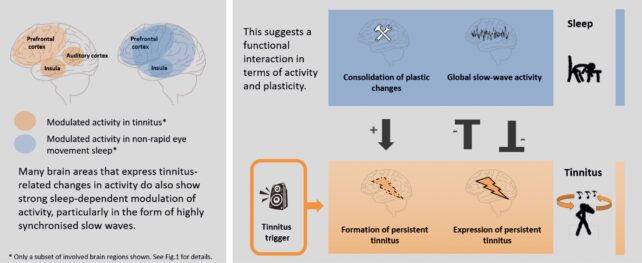
For decades, tinnitus has largely been attributed to peripheral issues like ear damage or age-related hearing loss. However, emerging evidence points to a more central neurological origin: cortical hyperactivity within the auditory cortex, fueled by abnormal neural feedback loops. Researchers are now proposing that tinnitus may represent “local wakefulness” during sleep – a state were specific brain regions remain active while the rest of the brain attempts to rest.
“The brain doesn’t switch off during sleep,” explains Professor Ingo Kurth of the RNID, whose work focuses on silencing tinnitus. ”It’s able to regulate itself, but in tinnitus, it seems that regulation is impaired.”
This mismatched brain state can prevent the crucial restorative benefits of deep sleep, allowing tinnitus-related neural activity to continue unabated. The research aligns with the broader neuroscience understanding of “phantom percepts” – sensations experienced in the absence of external stimuli – as stemming from dysregulated spontaneous brain activity and a “maladaptive brain prediction” continually generating sound.
A recent review published in Brain Communications suggests a potential therapeutic pathway: amplifying or supporting deep sleep to interrupt this pathological loop and rebalance auditory pathways. Enhancing slow-wave activity, either naturally or through non-invasive neurostimulation, is being explored as a possible treatment.
crucially, researchers believe early intervention – within hours or days of tinnitus onset, particularly with sleep support – could prevent the condition from becoming chronic. “Widening the scope in tinnitus research towards the brain’s natural dynamics will provide fruitful ground for understanding those of pathological nature,” stated Professor Kurth in a statement from Oxford.
Future research will focus on identifying neurophysiological markers of tinnitus during sleep and testing methods to reinforce deep-sleep brain activity, aiming to address the faulty feedback loop at its source rather than simply masking the symptoms.
