
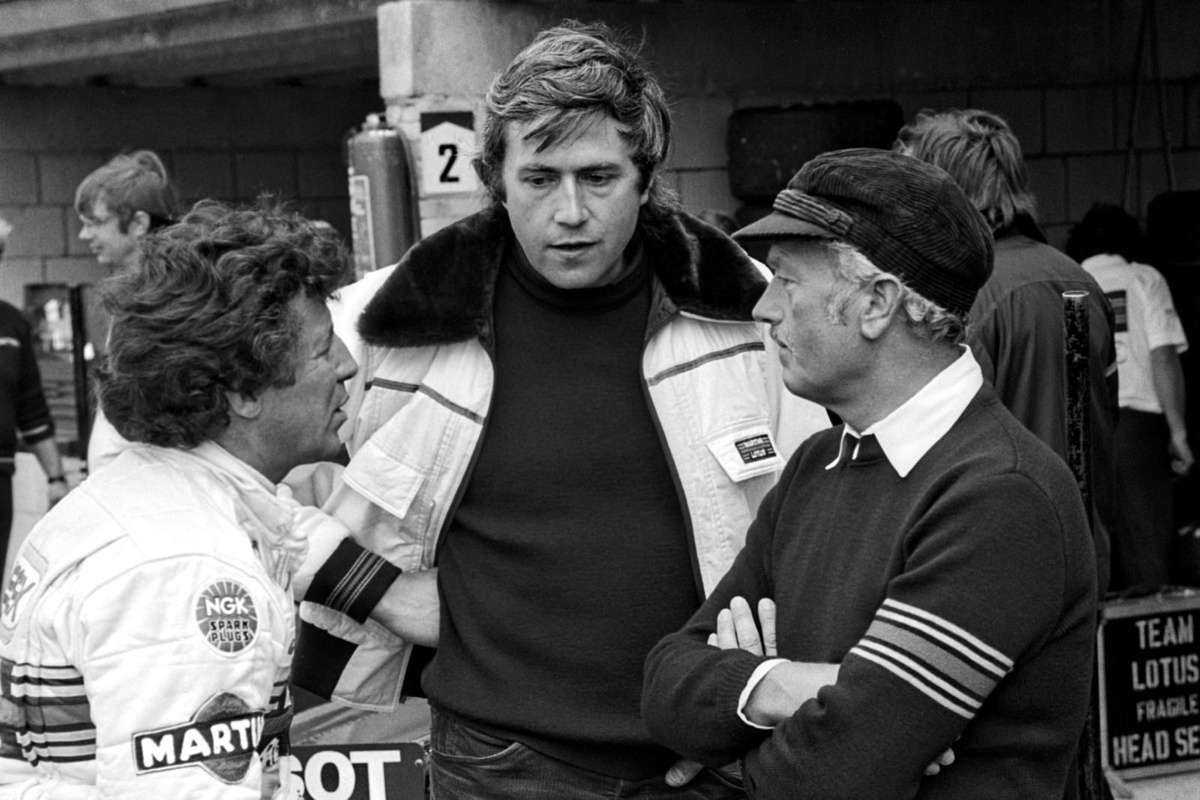
F1 Ground Effects Pioneer Peter wright Dies Aged 79
Peter Wright, the engineer instrumental in pioneering ground-effect aerodynamics in Formula 1 with Team lotus, has died aged 79.Wright’s innovations revolutionized the sport in the late 1970s and early 1980s,delivering a period of unprecedented performance gains and fundamentally changing car design.
Wright’s work with Lotus, especially during the tenure of drivers Mario Andretti and Ayrton Senna, established ground effects as a dominant force in F1. He later played a crucial role in improving safety standards following Ayrton Senna’s death in 1994, contributing too advancements still seen in the sport today.
Born in 1944, Wright joined Lotus in 1977 and quickly became a key figure in the team’s engineering department. He was the driving force behind the advancement of the Lotus 79, the car that truly unlocked the potential of ground-effect aerodynamics. By creating a low-pressure area under the car, the 79 generated immense downforce, dramatically increasing cornering speeds.Mario Andretti drove the 79 to the 1978 World Championship, and the technology quickly became ubiquitous throughout the F1 grid.
Wright’s systems evolved further with the Lotus 87, which featured active suspension.This allowed the ride height to be maintained consistently,maximizing the ground effect. Ayrton Senna won consecutive rounds in Monaco and Detroit driving the 87, demonstrating the system’s effectiveness. In Detroit,Senna didn’t need to pit for new tires,even while Nigel Mansell in his Williams did,and still set the fastest lap.
When Team Lotus faced financial difficulties at the end of the decade, wright assisted team manager Peter Collins in keeping the team operational and served as technical director until its departure from Formula 1 in 1994.
Following Senna’s tragic death at Imola in 1994,FIA president Max Mosley appointed Wright as a consultant to improve safety measures. Mosley believed that “a failure to apply basic science and scientific methods systematically had been a basic problem” and sought Wright’s engineering expertise.
Wright collaborated with professor Sid Watkins to develop new crash-testing methodologies, trackside safety precautions, and the adoption of the HANS tethers and halo safety device. He also initiated research into fuel-efficient engine technologies and energy-recovery systems a decade before their introduction in the 2014 hybrid formula.
Beyond his work in motorsport, Wright was a technical journalist and passionate about aviation, both powered and unpowered. He recently published his memoir, How Did I Get Here?
