
hidden Blood Clots and Immune webs might potentially be Key to Diagnosing Long COVID
New research reveals a striking link between microscopic blood clots, immune structures called NETs, and the persistent symptoms of Long COVID, offering a potential biomarker for diagnosis and a new avenue for treatment.
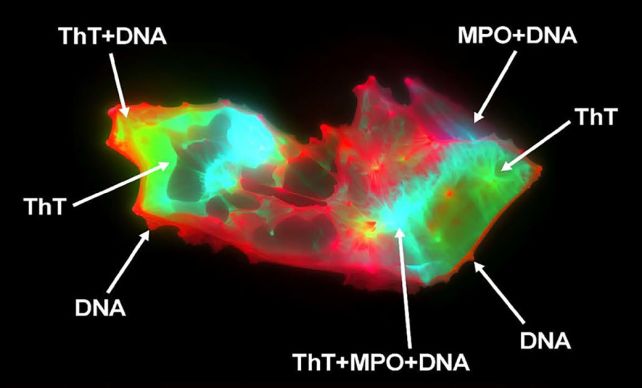
Scientists have discovered that abnormally high levels of microclots – tiny accumulations of blood material – are present in the blood of individuals with Long COVID. Crucially, these microclots appear to contain and be reinforced by neutrophil extracellular traps (NETs), web-like structures released by immune cells. While NETs naturally contribute to blood clotting, researchers found this interaction was considerably more pronounced in Long COVID patients, possibly making the clots more resistant to the body’s natural breakdown processes.
The study, published in the Journal of Medical Virology, observed this association in all samples tested – both from Long COVID patients and a control group – as NETs’ “sticky mesh facilitates clotting,” according to research cited in the study (https://doi.org/10.1038/s41598-021-81268-7).However,the effect was dramatically amplified in those experiencing Long COVID. This suggests a dysregulation in the interaction between microclots and NETs might potentially be a driving factor in the illness.
The findings are so distinct that an artificial intelligence agent was able to identify Long COVID patients with 91 percent accuracy when presented with anonymized samples. This raises the possibility of a diagnostic tool for the condition, which has “proven slippery to pin down using standard tests” (https://my.clevelandclinic.org/health/diseases/25111-long-covid).
“This finding suggests the existence of underlying physiological interactions between microclots and NETs that, when dysregulated, may become pathogenic,” explains researcher Thierry (https://www.su.ac.za/en/faculties/science/news/scientists-reveal-another-piece-long-covid-puzzle).
While further research is needed to establish a definitive causal link, understanding how these blood components contribute to Long COVID could pave the way for new therapies and relief for those affected. The discovery builds on previous research identifying persistent microclots in Long COVID patients, but represents a novel understanding of their composition and potential role in the disease.
