
Louisiana‘s Early Childhood Education Fund Faces Sustainability Challenge
Louisiana’s Early Childhood Education (ECE) Fund, launched in 2023 with a $40 million legislative appropriation, is demonstrating success in expanding access to early learning programs - but its long-term viability is now in question. While initial funding and subsequent dedicated revenue streams have fueled growth,increasing demand and enthusiastic local investment are rapidly depleting the fund’s resources.
The ECE Fund operates on a matching system, incentivizing local communities to contribute to early childhood education initiatives. This approach has proven remarkably effective. In just two years, the number of participating parishes has surged from four to fourteen, with local fundraising escalating from $3 million to nearly $30 million. This has directly resulted in over 1,800 additional children receiving vital early learning support, effectively doubling the state’s investment impact for these families.
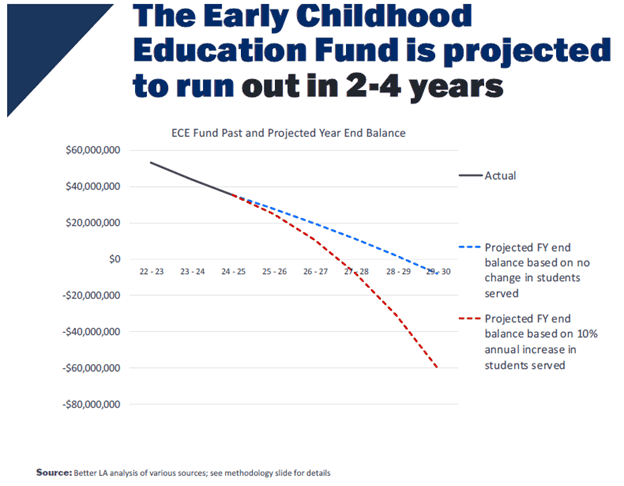
Though, this success is the core of the problem. Communities are now leveraging the full amount of annual dedicated revenue, and increasingly drawing down the remaining reserve from the original $40 million appropriation. Analysis by Better Louisiana projects a concerning future. If current growth trends - a modest 10% annual increase in children served – continue, the fund could be exhausted by the 2027-28 fiscal year. Even if participation remains static, the fund is projected to last only until 2029-30.
The issue is a widening gap between revenue and projected needs. Recurring revenue is expected to plateau around $21 million annually, while expenditure requirements are forecast to exceed $30 million per year by the end of the decade, potentially reaching $50 million with continued growth. Once the initial appropriation is spent, the recurring revenue will be insufficient to maintain current service levels.
This situation is particularly critical given the significant unmet need for affordable childcare in Louisiana.Currently, 57,000 children receive assistance, but an estimated 116,000 more remain without access. quality childcare,especially for younger children,is expensive,ofen comparable to college tuition,creating a substantial barrier for working families.
The state’s Early Childhood Care and Education Commission recognizes the scale of the challenge, recommending a $95 million annual investment over the next decade. While achieving this level of funding through state resources alone may be tough, the ECE Fund’s matching structure offers a powerful mechanism for leveraging additional investment.
As erwin,a spokesperson for Better Louisiana,emphasizes,”The dollar-for-dollar match…effectively makes the state funding go twice as far.” The organization is now urging policymakers to explore new funding options to ensure the ECE Fund’s sustainability and allow it to continue maximizing the impact of local investment, ensuring that every dollar raised by communities is matched by the state to serve more children.
