
Navigating Resistance: Indonesian Activism and the Power of Pop Culture
A growing trend in Indonesia sees citizens utilizing pop culture and social media as avenues for voicing dissent and raising awareness about critical issues. This approach emerges amidst a restrictive political climate, where traditional forms of protest face increasing scrutiny and potential legal repercussions.
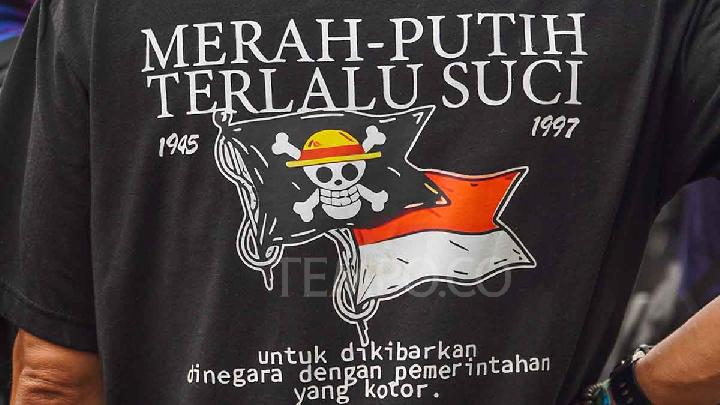
Recent government warnings against displaying the Jolly Roger flag – specifically citing its potential to provoke negativity around Indonesian Independence Day - highlight this tension. This directive, coupled with existing legislation like the Electronic Information and Transactions Law (UU ITE) and the Indonesian Criminal Law Code (KUHP), raises concerns about the suppression of free expression. These laws are frequently invoked to stifle dissent, often through accusations of defamation or hate speech leveled against protesters, both online and offline. The threat of doxxing and online harassment further exacerbates these risks.
Consequently, leveraging pop culture and trending topics on social media offers a potentially safer, albeit nuanced, method for expressing concerns. While often perceived as mere entertainment, pop culture can carry hidden meanings and serve as a powerful vehicle for disseminating information and mobilizing support. This strategy allows activists to reach broader audiences and encourage participation in social movements.
However, sustaining engagement in this form of “interest-based activism” presents its own challenges. Movements vary in their agendas and capabilities, and online participation is often criticized as superficial – labeled clicktivism or slacktivism.Critics argue that simply liking or reposting content lacks significant impact. Despite this, even these seemingly small actions can contribute to widening the movement’s reach, building momentum, and countering dominant narratives.
A key question remains: how effectively can these pop-culture-driven protests translate into tangible political change? What artistic and entertainment forms hold the greatest potential for driving meaningful social progress?
Understanding these evolving patterns is crucial for comprehending societal shifts and the adaptive nature of resistance. Pop culture has historically proven to be an effective tool for gathering support, appearing innocuous while harboring potent resistance. It is likely that Indonesians will continue to utilize, adapt, and transform pop culture to meet evolving societal needs and the ongoing need for resistance. As the author concludes, if pop culture is the dominant language of Indonesian society, then protest movements must become fluent in it. Symbols, like the Jolly Roger – recognized within the One Piece universe – are being reappropriated to represent a fight for freedom in the current Indonesian context, demonstrating this ongoing subversion of meaning in the face of repression.
(Disclaimer: Articles published in the ”Your Views & stories” section of en.tempo.co website are personal opinions written by third parties, and cannot be related or attributed to en.tempo.co’s official stance.)
