
New Battery Technology Promises 50% Increase in EV range, Faster Charging
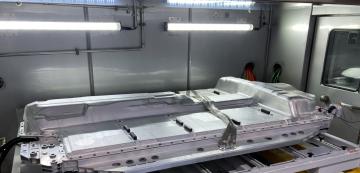
Boston, MA – A new battery technology developed by 24M could dramatically increase the range of electric vehicles by up to 50% and significantly reduce production costs, possibly accelerating the adoption of EVs worldwide. The technology, dubbed ETOP (Electrode-To-Overall-Performance), streamlines battery construction by eliminating many of the supporting structures found in conventional batteries, allowing for a greater concentration of energy-dense materials.
Currently, typical EV batteries utilize 30 to 60% of their volume for electrodes, the core component responsible for storing energy. 24M’s ETOP design allows for electrodes to comprise up to 80% of the battery’s volume, resulting in a considerable boost in energy density without increasing the battery’s overall size. This breakthrough applies to various battery chemistries, including NMC, LFP, NCA, sodium batteries, and traditional lithium-ion designs, offering flexibility for manufacturers.The company anticipates production could begin as early as 2027, with commercial availability following in 2028.
24M states that manufacturers using ETOP will be able to “achieve the highest possible energy density.” The simplified design is also projected to lower production costs and requires only “modest capital investment” for automakers to integrate into existing manufacturing processes. Prototypes have already been completed and are currently undergoing evaluation by an unnamed “prominent manufacturer of original equipment,” with several others engaged in advancement and testing.
This innovation arrives alongside other advancements in battery technology, such as CATL’s recently announced Shenxing battery, which promises a 1 million km lifespan and 10-minute charging capabilities. These developments signal a period of rapid progress in EV battery technology, addressing key consumer concerns around range, charging time, and affordability.
