
Einstein’s Relativity Expands Potential for Habitable planets Around White Dwarfs
Recent research suggests that Einstein’s theory of general relativity may significantly broaden the range of planets capable of sustaining habitability around white dwarf stars, challenging previous assumptions. Earlier studies, based on Newtonian gravity, indicated that even slight deviations from a perfectly circular orbit would inevitably lead to a planet’s destruction through extreme tidal heating.
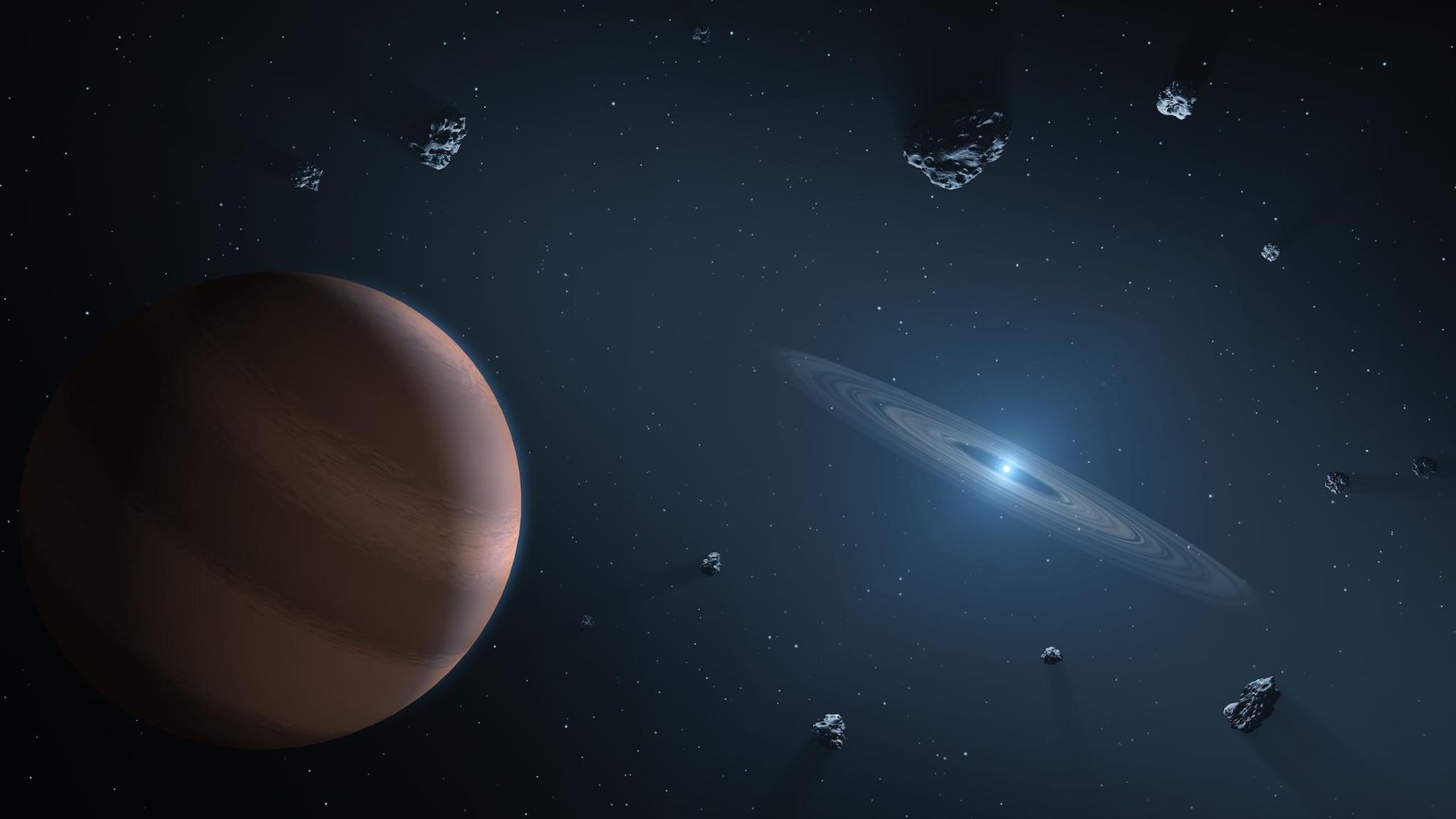
White dwarf stars, the dense remnants of sun-like stars, exert a strong gravitational pull. A planet drawn into orbit around one would initially experience gravitational stretching and squeezing – a process known as tidal heating. This effect is observed in the icy moons of the outer solar system, where it generates internal liquid oceans. Though, around a white dwarf, this same heating would likely render a planet uninhabitable.
Previous calculations, relying on Newtonian gravity, painted a bleak picture for planetary survival.But Newtonian gravity isn’t always precise, notably in the strong gravitational fields near dense stars. A key success of Albert Einstein’s theory of general relativity – which describes gravity as a curvature of spacetime – was its ability to accurately explain anomalies in Mercury’s orbit, something Newtonian physics couldn’t achieve. Mercury’s orbit slowly rotates,or precesses,around the sun in a manner inexplicable by the simpler Newtonian model.
A new analysis, published September 30th to the preprint database arXiv, tackled the problem using the more complex framework of general relativity. Researchers found that accounting for relativistic effects reveals a considerably wider range of potentially habitable orbits than previously estimated.
The study demonstrates that the precession of a planet’s orbit around a white dwarf acts as a stabilizing force, preventing it from being pulled into the highly elliptical paths that trigger runaway tidal heating. While tidal heating remains unavoidable in certain scenarios – such as the presence of a large, close-in companion planet – the researchers found that a notable number of orbital configurations allow for stable, potentially habitable conditions.
(the paper has not yet undergone peer review.)
This finding suggests that the potential for life around white dwarf stars may be far greater than previously thought, and that understanding the intricacies of general relativity could be crucial in identifying habitable worlds beyond our solar system. In fact, the researchers note that any alien civilization developing on such a planet might independently discover general relativity, and owe their existence to its protective effects.
