
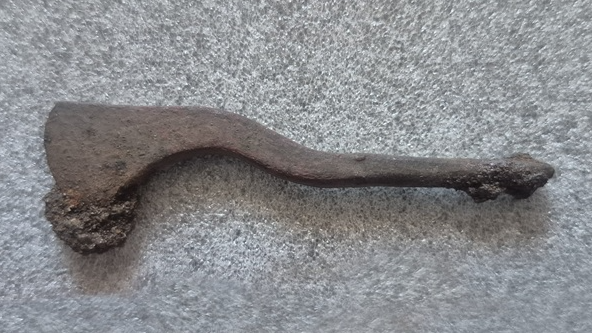
2,300-Year-Old Surgical Tool Reveals Advanced celtic Practices in Poland
Łysa Góra, Poland – Archaeologists have unearthed a remarkably well-preserved iron scalpel at the Celtic settlement of Łysa Góra, suggesting the practice of trepanation – surgical drilling into the skull – was undertaken by Celts in the region over 2,300 years ago. The revelation points to a level of specialized medical or ritual knowledge within the celtic community, alongside the skilled metalworking necessary to create such an instrument.
The find,detailed by archaeologist Dr. Piotr Kaczyński to Science in Poland, challenges previous understandings of Celtic life adn indicates Łysa Góra was a significant centre for both trade and perhaps, advanced healing practices. Trepanation, while practiced across various cultures throughout history, requires considerable anatomical understanding and surgical skill. The presence of the scalpel suggests the Celts weren’t simply warriors and traders, but also possessed individuals capable of performing complex procedures.
Excavations at Łysa Góra reveal the site was fortified prior to the celts’ arrival in the fourth century BCE. Though, it was following their settlement that the location flourished, becoming a hub for commerce. Evidence of bronze and iron metallurgy, alongside imported goods and amber artifacts, underscores its importance on regional trade routes.
“Traces of bronze and iron metallurgy, unique imports, fragmented bronze and amber objects all indicate that the settlement was a key center of trade,” Kaczyński stated. Amber, highly valued in the Mediterranean world at the time, likely played a crucial role in the settlement’s prosperity. Kaczyński explained to Live science in 2024 that the Celts may have fortified Łysa Góra specifically to protect their position along the lucrative “amber trail.”
The discovery of the trepanation scalpel adds a new dimension to this understanding, suggesting Łysa Góra may have also been a center for healing or spiritual practices requiring such a specialized tool. Further research is planned to investigate the potential reasons for trepanation within this Celtic community and to uncover more details about the individuals who practiced this ancient procedure.
