
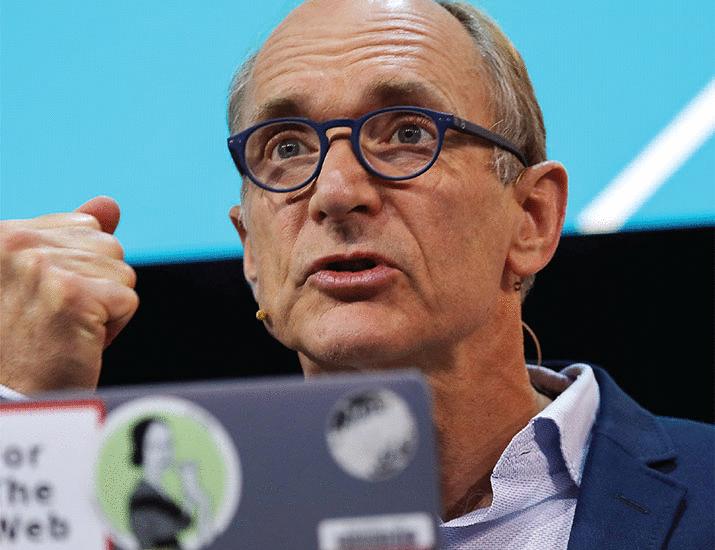
“`html
The Web at 30: Tim Berners-Lee on His Life-Altering Creation
Table of Contents
The World Wide Web, a technology now so integral to daily life it’s almost invisible, began as a modest proposal in 1989. Its inventor, Tim Berners-Lee, recently reflected on the journey from that initial idea to the global network connecting billions. The web’s creation wasn’t driven by a desire for profit, but by a basic need for better information sharing among researchers.
Berners-Lee,while at CERN,the european Organization for Nuclear Research,faced the challenge of disparate information systems.researchers struggled to access data across different computers and platforms. I wanted to create a space where information could be linked together in a flexible way,
he explained. This led to the development of three essential technologies: HTML (HyperText Markup Language), URL (Uniform Resource Locator), and HTTP (Hypertext Transfer Protocol).
A Technological gamble
The initial proposal, titled “Information Management: A Proposal,” outlined a system for distributed information access. It wasn’t immediately embraced. Many saw it as a niche solution for a specific problem. However,Berners-Lee persevered,building the first web server and browser,and making the technology freely available in 1993. This decision to not patent the web was crucial to its rapid adoption and growth.
Did You Know? …
The first website, info.cern.ch, went live in 1991 and explained the World Wide Web project itself.
The early web was a far cry from the multimedia-rich experience of today. It was primarily text-based, focused on sharing research papers and data. But its potential was clear. The web quickly expanded beyond CERN,attracting users from universities and research institutions worldwide.
The Web’s Evolution and Current Challenges
Over the decades, the web has undergone a dramatic change. The rise of social media, e-commerce, and mobile devices have reshaped how we interact with it. However, this evolution has also brought new challenges. Concerns about misinformation,privacy,and the concentration of power in the hands of a few large tech companies are now central to the debate about the web’s future.
Berners-Lee has been a vocal advocate for a more decentralized and user-centric web. He founded the World Wide Web Consortium (W3C) to develop open standards and ensure the web remains accessible to all. His current project, Solid, aims to give individuals greater control over their data.
Pro Tip: …
Explore the W3C website (w3.org) to learn more about web standards and accessibility guidelines.
| Year | Event |
|---|---|
| 1989 | Initial proposal for the World Wide Web |
| 1990 | Development of HTML, URL, and HTTP |
| 1991 | First website goes live (info.cern.ch) |
| 1993 | Web technology released into the public domain |
| 1994 | Founding of the World Wide Web Consortium (W3C) |
| 2018 | Launch of Project Solid |
Berners-Lee acknowledges the web isn’t perfect.The web has done many good things, but it also has flaws,
he stated. He believes that by addressing these flaws, we can create a web that truly serves humanity. The future of the web, according to berners-Lee, lies in empowering individuals and fostering a more equitable and open online surroundings.
“The Web is for everyone, and we must ensure it remains that way.” – Tim berners-Lee
The story of the World Wide Web is a testament to the power of open innovation and the importance of a shared vision.
