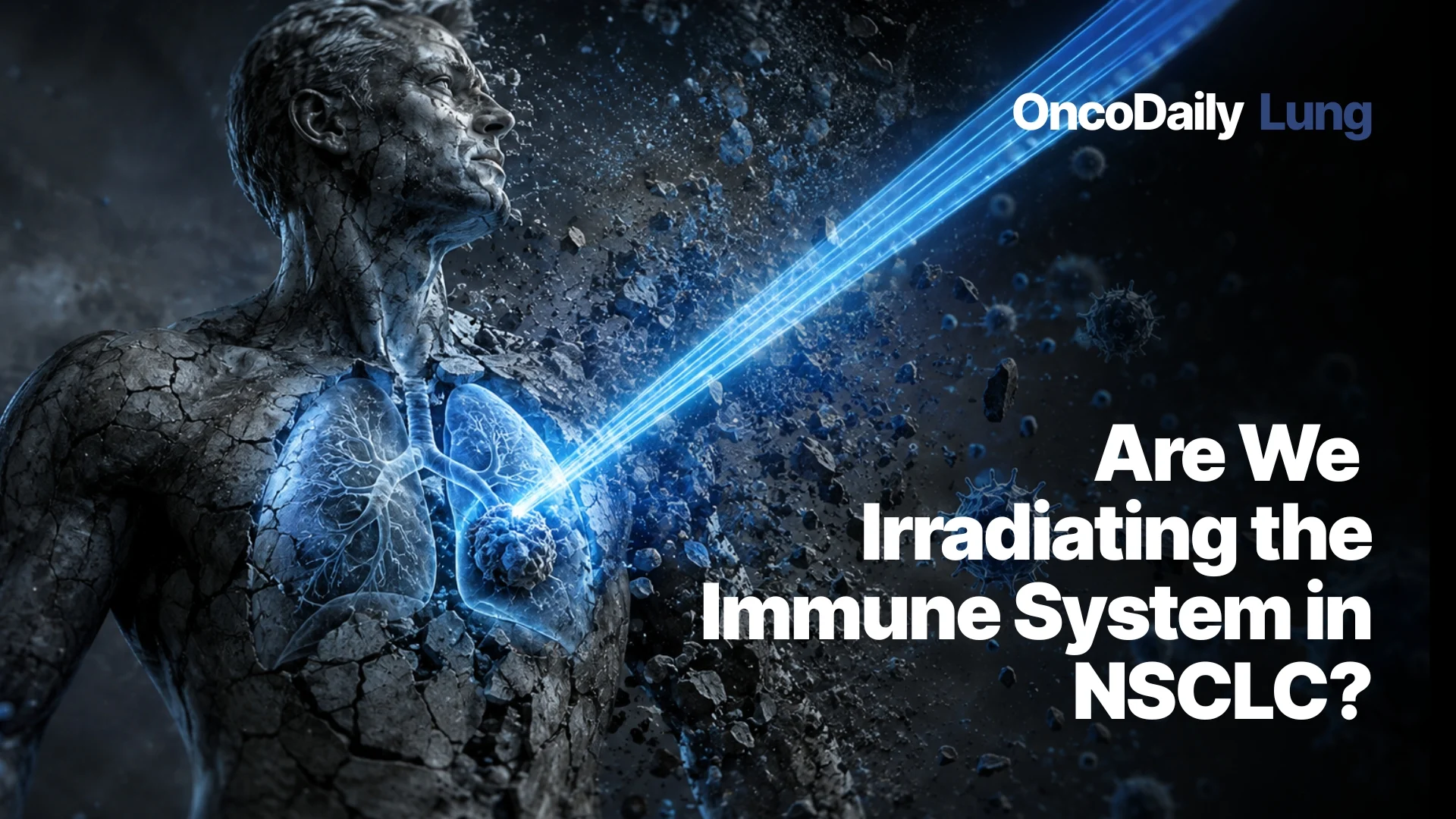
Thymic Radiation Exposure Linked to Worse Outcomes in NSCLC Radiotherapy
Radiation therapy protocols for non-small cell lung cancer historically shield critical organs like the heart, lungs, and spinal cord, yet a multicohort analysis published in the Annals of Oncology reveals that incidental doses to the thymus may be associated with a greater risk of distant metastasis and, in several analyses, worse overall survival outcomes. Evaluating 1,107 patients across three independent cohorts, investigators found that higher mean thymic doses correlate with an increased risk of distant metastasis, challenging standard thoracic radiotherapy planning paradigms.
- Higher incidental radiation exposure to the thymus in non-small cell lung cancer patients is associated with a greater risk of distant metastasis.
- The multicohort study evaluated 1,107 patients, incorporating data from the Phase 3 RTOG-0617 trial and independent real-world treatment cohorts.
- Researchers utilized a deep-learning imaging biomarker called Thymic Health to estimate functional thymic status from routine thoracic computed tomography scans.
The Paradigm Shift in Thoracic Radiotherapy Planning
Precise radiotherapy techniques successfully minimize toxicity in surrounding tissues. However, the thymus gland, situated in the anterior mediastinum within routine thoracic radiation fields, has traditionally escaped inclusion as an organ at risk. This omission stems from the historical medical assumption that the adult thymus has limited clinical relevance due to functional thymic tissue being progressively replaced by fat with aging. Recent investigations contradict this notion, indicating that residual thymic function persists into adulthood and may influence immune competence, cancer outcomes and response to immunotherapy.
When high-energy beams target thoracic malignancies, the therapeutic goal centers on immunogenic tumor-cell death. Concurrently, radiation can also damage lymphocytes and immune structures. According to data from the RTOG-0617 trial and real-world clinical sets, preserving the structural integrity of the thymus may prove vital for maintaining the patient’s endogenous antitumor immune response.
Cohort Characteristics and Deep-Learning Assessment
The study spearheaded by Prudente and colleagues examined a total of 1,107 patients diagnosed with locally advanced non-small cell lung cancer. The evaluation framework divided participants into three distinct populations: 460 individuals from the prospective Phase 3 RTOG-0617 trial, 422 patients managed with standard chemoradiotherapy without consolidation immunotherapy, and 225 patients receiving chemoradiotherapy followed by durvalumab.
To quantify exposure, researchers deployed an automated deep-learning segmentation system. This technology identified the thymic bed on treatment-planning computed tomography scans to compute the mean thymic dose. Furthermore, investigators categorized baseline functional status using the Thymic Health imaging model. This model analyzes radiographic features to assign a standardized value from 0 to 1, effectively stratifying patients into preserved or impaired thymic health categories.
Clinical Implications for Combined Immunotherapy
The primary clinical endpoint of the analysis focused on distant metastasis rather than localized thoracic morbidity. Results demonstrated that patients receiving elevated radiation doses to the thymus experienced poorer distant control and diminished overall survival rates. This correlation appeared most pronounced among individuals who initiated treatment with preserved thymic health.

These findings carry weight for modern treatment algorithms that combine definitive chemoradiotherapy with immune checkpoint inhibition. Protecting the adult immune system from unnecessary scatter radiation may determine whether a patient mounts an effective systemic defense against metastatic relapse.
*Disclaimer: The information provided in this article is for educational and scientific communication purposes only and does not constitute medical advice. Always consult with a qualified healthcare provider regarding any medical condition, diagnosis, or treatment plan.*