
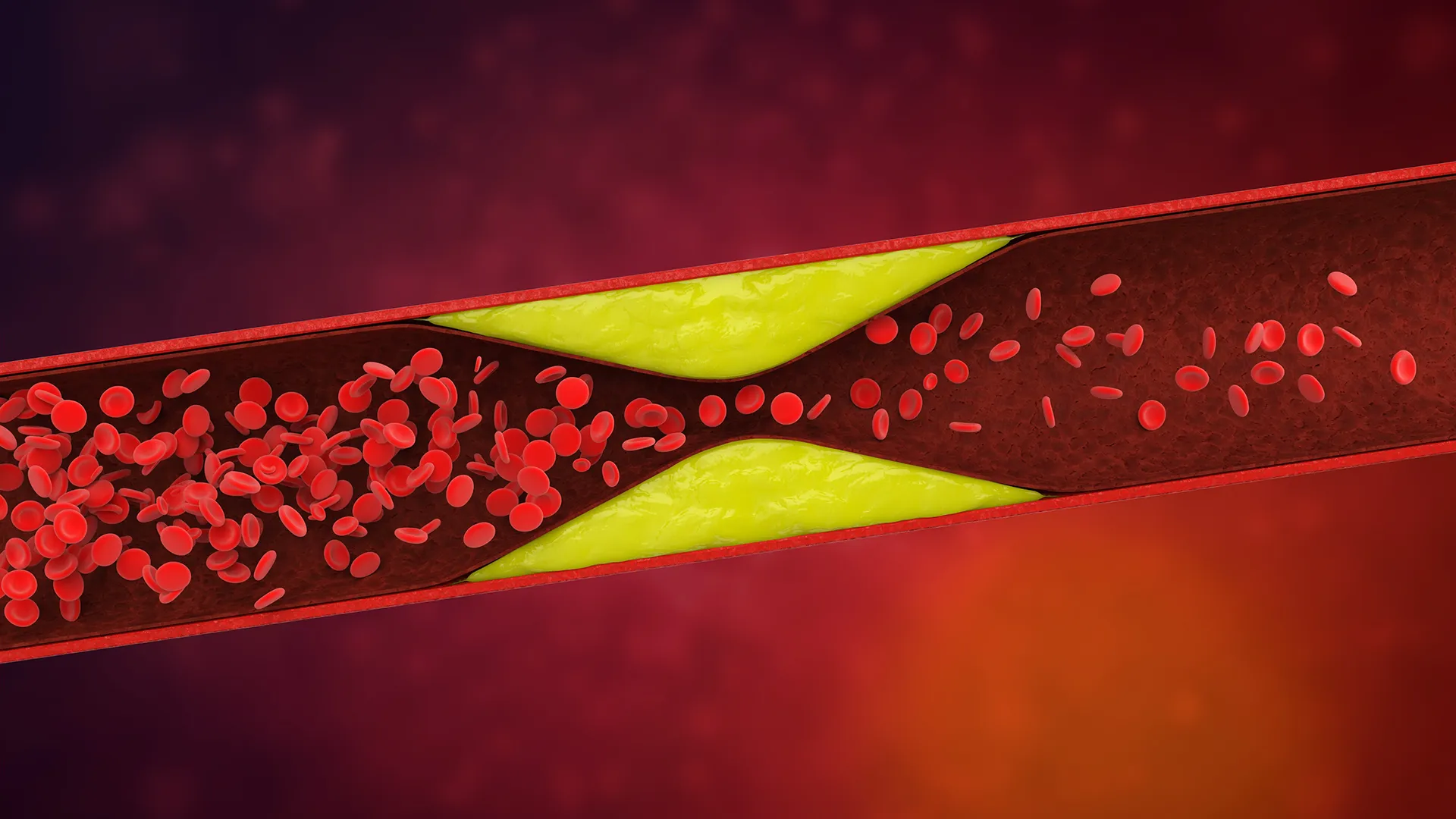
Blood clots can form in both arteries and veins. However, the reasons behind them differ, as do the consequences and the chances of preventing them. In Sweden, almost half of all cases of venous thrombosis have a genetic explanation. A team of researchers from Lund University in Sweden has now discovered three gene variants that increase the risk of blood clots in the leg by up too 180 percent.
There’s a difference between arterial and venous blood clots.Blood clots in the arteries form when plaque in hardened vessels bursts, and the body sees it as an injury. This activates platelets, which clump together and form a clot. In the worst case, it can lead to a stroke or heart attack.A venous thrombus, on the other hand, usually forms in the leg when blood doesn’t flow well enough. This can activate the body’s clotting system, blocking blood flow. If the clot breaks loose and travels to the lungs, it can cause a pulmonary embolism, a life-threatening condition.
“Venous thrombosis is actually one of the most common causes of death worldwide. It’s a common disease that’s often overshadowed by arterial blood clots,” says Bengt Zöller, a specialist in general medicine at Skåne University Hospital and professor of general medicine at Lund University.
In Sweden, more than 10,000 people suffer from venous thromboembolism each year, and that number seems to be increasing. Several factors contribute to this increase. One of the strongest is age; as Sweden’s older population grows, so does the number of clots.Ten percent of 80-year-olds experience a blood clot at some point. The risk also increases if you’re overweight or tall.
“Muscles help control blood flow in the veins, and legs become like columns of fluid where gravity is strong. Too much sitting and inactivity is harmful. Only the valves in the veins prevent backflow, and if these are damaged, the risk of blood clots can increase. That’s why taller people are more prone to clots – their larger veins provide less blood flow, and blood has to travel a greater distance back to the heart.”
The heart pumps blood into the arteries, creating much higher pressure than in the veins, which can contribute to atherosclerosis. High blood pressure, high cholesterol, and smoking are all risk factors for atherosclerosis of the arteries. But because veins are a low-pressure system, they don’t become atherosclerotic. Thus, high blood pressure or cholesterol aren’t linked to venous clots, and smoking is considered only a weak to moderate risk factor.Being overweight,however,is a significant contributor. Obesity negatively impacts venous circulation, especially when combined with inactivity. some clotting factors are also affected by obesity.
“Regarding diet, there are fewer studies, but ultra-processed foods have been linked to a slightly increased risk of blood clots, while plant-based, healthy foods are associated with a reduced risk.In our studies,we’ve also seen that commercial fishermen have a lower risk,possibly due to a higher omega-3 content in their diet.”
Certain situations also carry a particularly high risk of venous blood clots. The risk increases when blood flow is reduced, like during long flights or when you’re bedridden for days. Surgery or inflammation that damages the vessel wall can also increase the tendency to clot. Pregnancy also increases clotting factors and can decrease protective proteins.
“In these risky situations, preventative blood thinners might potentially be particularly critically importent if other risk factors are present.”
other risk factors are genetic variants that affect the blood’s clotting ability. In sweden, a high prevalence of APC (activated protein C) resistance is due to an inherited mutation in the gene for coagulation factor V, called Factor V Leiden. About 10 percent of swedes have this mutation, the most common clotting mutation among Indo-Europeans.
“Evolutionarily, bleeding less was an advantage, but in our modern, sedentary society, APC resistance is becoming a risk factor.”
Bengt Zöller and his team have now identified the strongest genetic risk factor since Factor V Leiden was discovered. They used data from the Malmö Kost Cancer study, involving 30,000 Malmö residents.By examining 27 genes linked to clotting disorders, they found three variants – ABO, F8, and VWF – that, together, were as significant a risk factor for venous blood clots as Factor V Leiden. Each increased the risk by 10 to 30 percent.
“And the more of these variants a person has – the higher the risk. Someone with five of these gene variants has a 180 percent higher risk of venous thrombosis. Unlike Factor V Leiden,which is only found in Indo-Europeans,these three mutations are found in between five and fifty percent of various populations worldwide.”
Because these genetic variants are present in all populations, the next step is to investigate how the number of risk genes affects the duration of treatment with anticoagulants after a blood clot.
“I think tailoring treatment based on risk assessment will become increasingly critically important,” concludes bengt Zöller.
What you can do to prevent blood clots:
- Movement: Avoid sitting still for long periods. stand up and move around on long flights.
- Support stockings: Can help blood flow when you must stand or sit for long periods.
- Blood-thinning medicines: Can be given preventatively in high-risk situations like surgery or cancer.
- Contraceptive pills containing estrogen: Avoid these pills or hormone replacement therapy if you have a strong family history of venous thromboembolism or a history of blood clots.
- Lifestyle changes: stop smoking, eat healthier, lose weight, and exercise.
- Get vaccinated: infections can activate the clotting system.
Blood clot
A blood clot is coagulated blood lodged in a blood vessel. Clots can form in the oxygen-rich blood in arteries as it’s pumped from the heart, or in the low-oxygen blood in veins (usually in the legs) as it returns to the lungs and heart.
