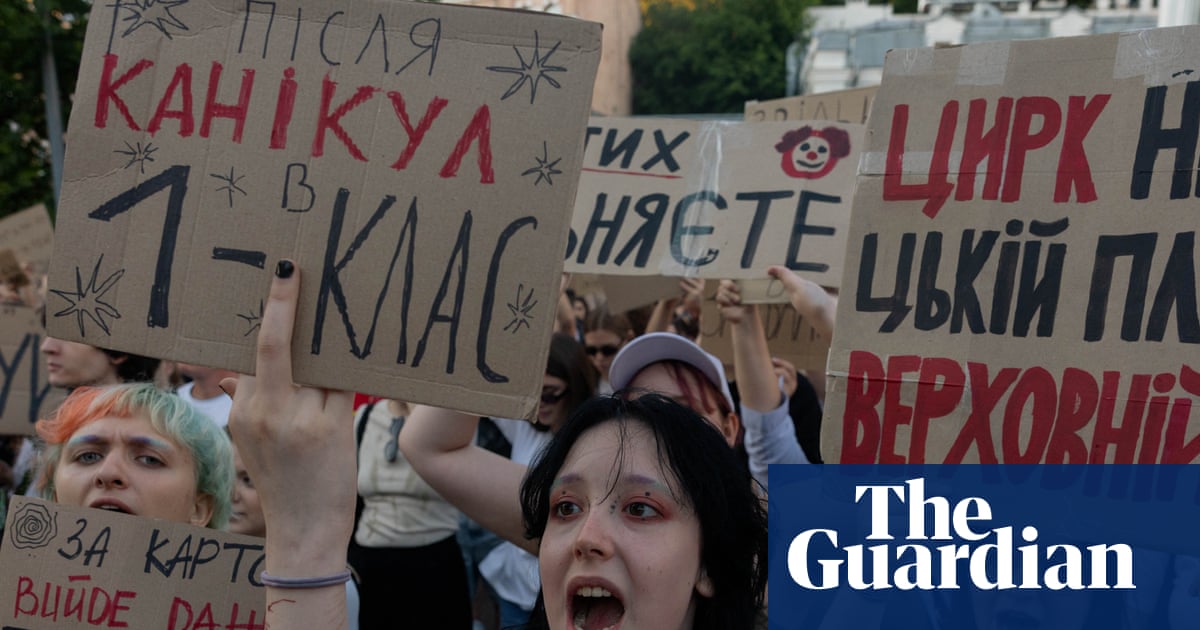
Thousands Protest Ukraine Government’s Sudden Defence Minister Removal
Thousands of protesters gathered outside the presidential office in Kyiv for a second consecutive day following the surprise dismissal of Defense Minister Mykhailo Fedorov. President Volodymyr Zelenskyy defended the personnel shift as a move toward unity, even as the decision creates friction with military leadership and international partners.
The Fedorov-Syrskyi Divide and the Tech-War Disruption
Fedorov, widely credited with pioneering an improvisational, tech-driven framework for modern combat—specifically through the deployment of advanced drone and missile systems—found himself increasingly at odds with the conventional military doctrine championed by Chief of Staff Oleksandr Syrskyi. According to reports from the Guardian, the conflict between these two figures had become an inevitable byproduct of their opposing operational philosophies: the traditional, attrition-focused command style of the military establishment versus the agile, Silicon Valley-inspired disruption of the defense ministry.
Repairing the Warsaw-Kyiv Axis
Beyond the domestic fallout of the reshuffle, President Zelenskyy is aggressively attempting to mitigate geopolitical damage. On Friday, the administration signaled a pivot toward mending ties with Poland, a key ally that had grown frustrated by recent historical disputes. Specifically, the tension stemmed from a May decision by Kyiv to name a military unit after fighters from the Ukrainian Insurgent Army, a group implicated in the deaths of Polish citizens during World War II.
In a move to restore diplomatic alignment, Zelenskyy pledged to expand investigations into these historical actions and open relevant intelligence archives. Polish Prime Minister Donald Tusk noted on X that Poland remains open to “serious and friendly dialogue” regarding the issues currently dividing the two nations.
Market Volatility and the Black Sea Corridor
The operational instability in Kyiv coincides with an intensification of Russian aggression in the Black Sea. On Friday, Russian strikes targeted port infrastructure in Mykolaiv and Odesa, resulting in three fatalities and significant damage to international shipping interests. Regional prosecutors confirmed that a drone attack in Mykolaiv damaged three foreign-flagged vessels, while a separate strike in Odesa hit a Marshall Islands-flagged ship, injuring four of its 17 crew members.

As traders and analysts track the suspension of port terminal purchases, the economic outlook remains precarious.
Dissent and Control in the Russian Political Landscape
While Kyiv navigates a government reshuffle, the Kremlin continues to fortify its internal control ahead of the September parliamentary elections. Russian authorities detained blogger Ilya Remeslo on suspicion of spreading “false information” about the army, while anti-war politician Boris Nadezhdin was fined 1,000 roubles for displaying “extremist symbols.” These moves serve as a clear warning to any potential opposition attempting to challenge the current administration, which remains under pressure from a slowing domestic economy and fuel shortages caused by Ukrainian strikes on oil refineries.
The intersection of military strategy, diplomatic reconciliation, and economic survival suggests that the coming months will be a test of resilience for the Ukrainian government. Whether the administration can successfully pivot to a new defense strategy while maintaining international support will depend on its ability to manage both the domestic narrative and the hard realities of the battlefield.
Disclaimer: The views and cultural analyses presented in this article are for informational and entertainment purposes only. Information regarding legal disputes or financial data is based on available public records.