
This new phone might be the best for video capture
The Vivo X300 Ultra: Engineering a “Pro” Workflow or Just More Glass?
Vivo dropped the X300 Ultra in China this week, and if the spec sheet is to be believed, they aren’t just chasing iPhone video dominance—they’re trying to obsolete entry-level cinema cameras. The headline feature isn’t the Snapdragon 8 Elite Gen 5, but the integration of a 200MP Sony LYT-901 sensor paired with a modular external lens ecosystem. For the enterprise developer or the mobile-first content strategist, this represents a shift from “capture” to “computational cinematography.” But does the thermal envelope of a smartphone actually support 4K/120fps Log recording without throttling?
- The Tech TL;DR:
- Sensor Dominance: The 1/1.12-inch Sony LYT-901 main sensor outclasses the Samsung ISOCELL HP series found in the Galaxy S26 Ultra, offering superior light gathering for low-latency video.
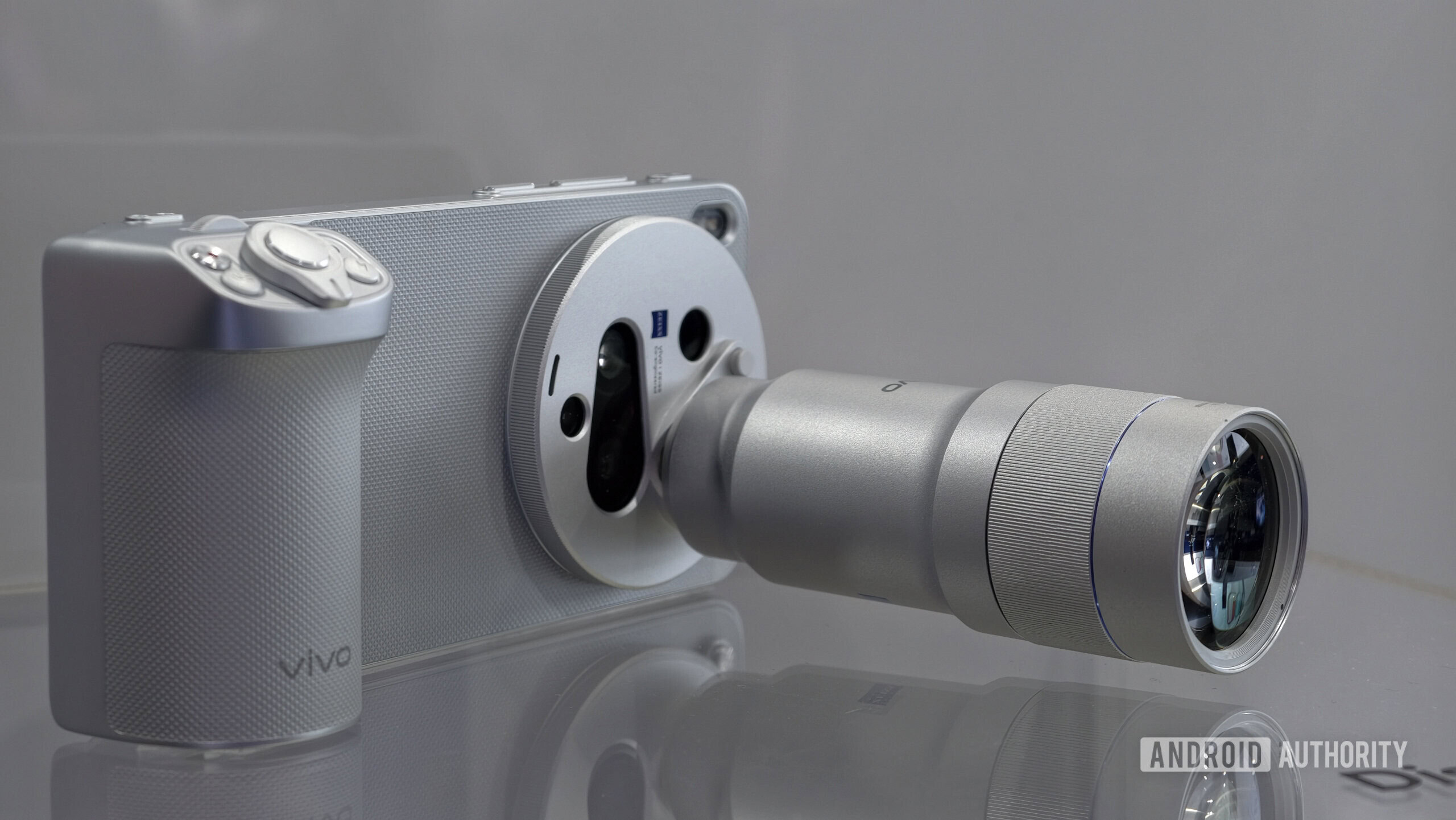
- Modular Optics: Vivo introduces the “Cannon 400” external lens, enabling ~17x native optical zoom, bypassing the digital degradation typical of periscope crops.
- Enterprise Readiness: Support for the APV codec and 4K Log video suggests a pivot toward professional post-production workflows, requiring robust MDM solutions for asset management.
The core bottleneck in mobile video has always been thermal throttling and sensor readout speed. Vivo claims the X300 Ultra solves this with a latest cooling architecture, but the real story is the silicon. The Snapdragon 8 Elite Gen 5 utilizes Qualcomm’s custom Oryon CPU cores and an upgraded Hexagon NPU. According to Qualcomm’s developer documentation, this SoC is optimized for on-device generative AI and real-time video upscaling. This isn’t just marketing; it’s a necessity for handling the data throughput of a 200MP sensor running at 60fps.
From a cybersecurity and data integrity perspective, the shift to Log video and RAW capture introduces new attack vectors. Uncompressed video streams are massive, creating potential bottlenecks in enterprise networks if these devices are deployed for field reporting or surveillance. IT directors need to consider the bandwidth implications of syncing 4K Log footage to the cloud. This is where Mobile Device Management (MDM) specialists become critical, ensuring that data transfer policies don’t choke the corporate WAN when a fleet of X300 Ultras starts uploading terabytes of raw footage.
Sensor Architecture and Stabilization Metrics
The decision to stick with a 35mm equivalent focal length for the main camera is a bold move for a “video phone.” Most competitors default to 24mm for a wider field of view. Vivo’s 35mm choice mimics full-frame cinema lenses, reducing the “smartphone look” of wide-angle distortion. However, the stabilization ratings are where the engineering claims need scrutiny. Vivo lists CIPA 6.5 for the main sensor and a staggering CIPA 7.0 for the 200MP periscope telephoto.
For context, CIPA ratings are based on still photography shake reduction. Translating this to video requires analyzing the gyroscope data latency. If the OIS (Optical Image Stabilization) loop has high latency, you get the “jello effect” in 4K video. The inclusion of a dedicated “True Color” camera (50MP, 12 spectral channels) suggests Vivo is attempting to solve white balance consistency across lenses—a notorious pain point in multi-camera smartphone arrays.
| Component | Vivo X300 Ultra Spec | Competitor Benchmark (Galaxy S26 Ultra) | Architectural Impact |
|---|---|---|---|
| Main Sensor | Sony LYT-901 (1/1.12″) | Samsung ISOCELL HP2 (1/1.3″) | ~25% larger surface area for better low-light SNR. |
| Telephoto | 200MP Periscope (85mm) | 50MP Periscope (111mm) | Higher resolution allows for lossless digital crop beyond optical limits. |
| Stabilization | CIPA 7.0 (Telephoto) | CIPA 6.5 (Typical Flagship) | Claims to enable handheld 4K/60fps at 10x zoom without gimbal. |
| Battery | 6,600mAh (Silicon-Carbon) | 5,000mAh (Li-Ion) | Higher energy density required to sustain NPU video processing loads. |
The battery capacity is a critical differentiator. Video encoding is power-intensive. The jump to 6,600mAh using silicon-carbon anode technology (confirmed for European variants) suggests Vivo anticipates sustained high-load scenarios. This aligns with the “Cannon 400” external lens strategy. By attaching a 400mm lens, the user is effectively turning the phone into a spotting scope. Without the battery headroom to process that 17x zoom stream in real-time, the feature is useless.
The “Vaporware” Check: External Optics and Workflow
Vivo is following Huawei and OPPO into the realm of clip-on optics. The “Lipstick 200” and “Cannon 400” lenses attach via a proprietary cage. While this sounds like a gimmick, the physics holds up. A 400mm equivalent focal length on a 1/1.4-inch sensor is optically superior to a digital crop from a 24mm lens. However, this introduces a mechanical failure point. The alignment of the external lens with the phone’s internal periscope must be perfect to avoid vignetting or chromatic aberration.
“The shift to modular smartphone optics is inevitable, but the connector standardization is the real hurdle. We are seeing a fragmentation of the ‘prosumer’ mobile ecosystem that complicates accessory compatibility.” — Dr. Aris Thorne, Senior Hardware Analyst at TechInsights
For the developer, the captivating layer here is the API access to these external lenses. Does the Camera2 API expose the focal length change correctly to third-party apps? If Vivo locks this behind their proprietary camera app, the “pro” workflow is dead on arrival for developers building custom capture solutions. We need to witness open documentation on how the phone reports these optical changes to the OS.
Implementation Mandate: Verifying Camera Capabilities
Before deploying this hardware in a production environment, engineers should verify the camera stream capabilities and supported codecs via ADB (Android Debug Bridge). The following command queries the logical camera devices to confirm the availability of high-resolution streams and YUV formats necessary for computer vision tasks.
adb shell dumpsys media.camera | grep -A 20 "Camera device [0-9]" # Look for 'availableStreamConfigurations' to verify 4K/120fps support # Check for 'android.request.availableCapabilities' to confirm RAW and LOG supportIf the device reports `android.request.availableCapabilities` including `RAW` and `MONOCHROME`, it confirms the sensor is operating in a mode suitable for high-dynamic-range post-production. If these flags are missing, the “Log video” marketing is likely just a software filter applied to a standard Rec.709 stream, which limits color grading potential.
Directory Triage: Maintenance and Security
The complexity of the X300 Ultra’s camera module—stacking a 200MP sensor with a periscope prism and OIS actuators—makes it a nightmare for standard repair shops. A drop that misaligns the periscope prism will ruin the telephoto video stabilization permanently. Enterprises deploying these for field work should establish contracts with specialized electronics repair services that have the calibration equipment to realign optical image stabilization units.

the “True Color” camera and spectral analysis features raise privacy questions in corporate environments. A device capable of identifying materials via spectral channels could theoretically be used for industrial espionage or unauthorized scanning of secure documents. Security teams should audit these devices using cybersecurity auditors to ensure the spectral data isn’t being exfiltrated or used for unauthorized biometric profiling.
The Editorial Kicker
The Vivo X300 Ultra is a testament to the fact that smartphone photography has hit a plateau in resolution, so the industry is pivoting to focal length and workflow. The “Cannon 400” lens is a clever hardware hack to bypass diffraction limits, but it relies entirely on the software pipeline to deliver. If Vivo opens up the APV codec and external lens APIs to the developer community, this could be a genuine tool for indie filmmakers. If they keep it walled off, it’s just an expensive toy. For the CTO, the takeaway is clear: mobile video is becoming a heavy compute workload that demands better thermal management and stricter data governance.
Disclaimer: The technical analyses and security protocols detailed in this article are for informational purposes only. Always consult with certified IT and cybersecurity professionals before altering enterprise networks or handling sensitive data.