TheWrap Review: ‘Focker-in-Law’ Is Tired, Cruel; Ariana Grande Is Brightest Presence
In a review for TheWrap, critic Robert Abele argues that “Focker-in-Law” extends a franchise built on mean-spirited jokes at its protagonist’s expense, and that Ariana Grande’s performance is the only element keeping the film from total collapse.
- “Focker-in-Law” opens in theaters Nov. 25, 26 years after the original “Meet the Parents.”
- Abele calls the comedy tired and cruel, saying Gaylord Focker sabotages his son’s happiness.
- Grande, as Olivia, is described as the film’s “brightest presence by several hundred watts.”
- Stiller, now 60, is older than De Niro was in the 2000 original.
Abele frames the series around bullying humor
Abele writes that the core joke across four films remains Gaylord Focker’s name and his career as a male nurse, which he says invites the audience to laugh at the character rather than with him. “How is laughing at Gaylord Focker any different from laughing when a bully trips another child and makes them faceplate on the asphalt?” he asks. He argues the new installment doubles down on this cruelty by making Gaylord the antagonist to his son Henry’s fiancée, Olivia.
Abele writes that the franchise’s humor relies on the idea that Gaylord’s first name contains the word “gay” and his last name sounds like a swear word, and that his career as a nurse rather than a doctor is presented as inherently laughable because he is a man. He asks why the character’s pathological insecurity and desperate need for approval are treated as comedy.
Plot recycles earlier dynamics with roles reversed
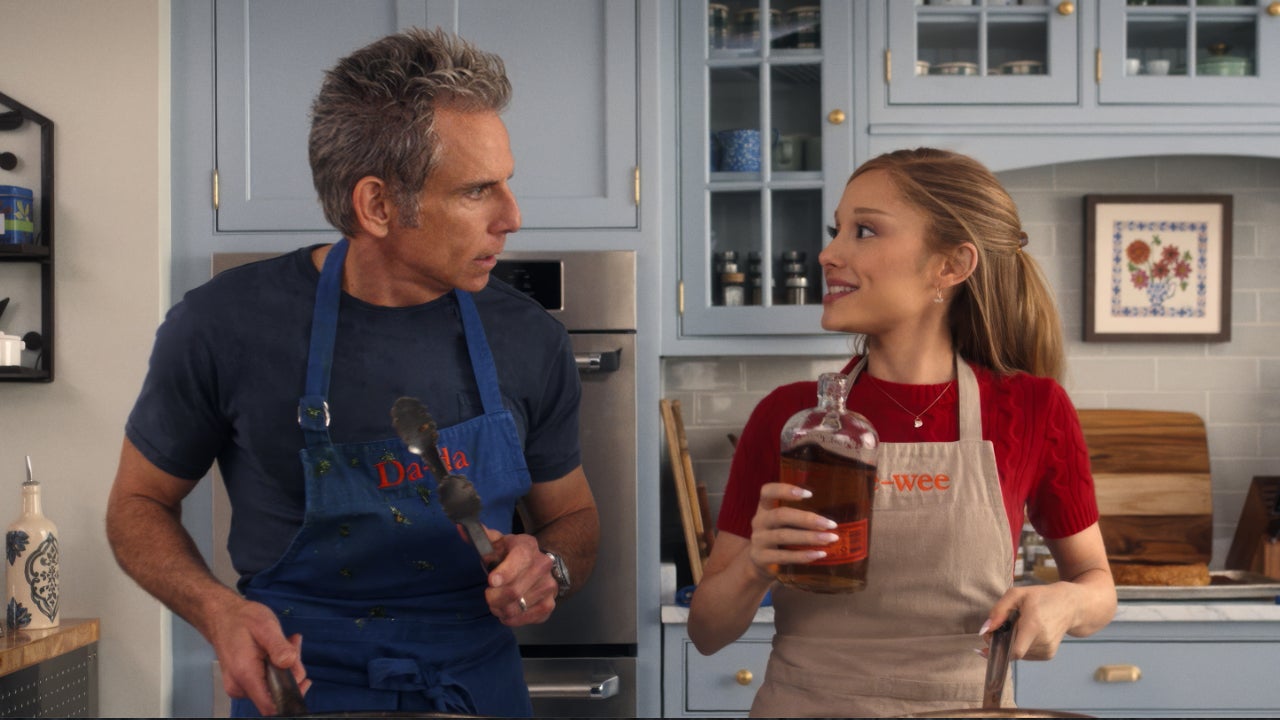
The story sends the Focker family to Jack Byrnes’s 80th birthday. A travel misunderstanding leads Olivia — a former FBI hostage negotiator turned leadership coach, played by Grande — to believe Gaylord is a dangerous creep. When she is revealed as Henry’s girlfriend, Gaylord attempts to sabotage the engagement out of possessive insecurity. This inverts the original “Meet the Parents” dynamic: Gaylord now occupies the suspicious-patriarch role once held by De Niro’s Jack, while Olivia occupies the eager-to-please outsider role once held by Stiller.
The trip to celebrate Jack’s birthday is derailed when an awkward misunderstanding on the flight leads Olivia to think Gaylord urinated in her handbag and stole her birth control.
Even after the formal introduction, Gaylord proceeds to prove Olivia’s worst impressions through a strained parade of competitive scenarios, including a vegan-versus-carnivore cookoff, a power play in a party-supply store, and a calamitous bicycle race for no reason at all.
Grande’s performance singled out amid exhausted cast
Both outlets highlight Grande as the film’s saving grace. Abele writes she is “confident, engaging, and decent,” and that the film “doesn’t deserve her.” Grande is reported to be “the only star who looks remotely glad to be here,” propping up proceedings with “peppy charisma” despite a script that gives her little comic material.
Abele adds that Teri Polo is “criminally underserved,” Beanie Feldstein has “tragically little to do,” and Skyler Gisondo is “fittingly meek” as Henry. He describes Stiller as “hurtling” through the material “oblivious or apathetic to its underlying grotesquery,” while De Niro “barely needs to show up, but he showed up anyway.” Lots of people in my theater laughed at “Focker-in-Law.” More power to them, I suppose.
Before landing the role of Olivia in the 2025 film “Focker-in-Law,” Grande’s transition from music star to film actress included a part in the 2021 political satire “Don’t Look Up” and the portrayal of Glinda in the 2024 fantasy musical “Wicked,” which earned her an Academy Award nomination.
Her acting foundation traces back to teenage years on Broadway in “13” (2008) and the Nickelodeon series “Victorious” (2010–2013), though “Don’t Look Up” marked her return to live-action film after a years-long focus on music.

Critics question the film’s reason for existing
Abele concludes the sequel refuses “to come to any new conclusions about these characters, other than making them learn the same lessons they already learned years ago.” Abele writes, “It’s not my job to relay other people’s taste in comedy. It’s my job to explain my own… to some of us, these Fockin’ films aren’t funny.”