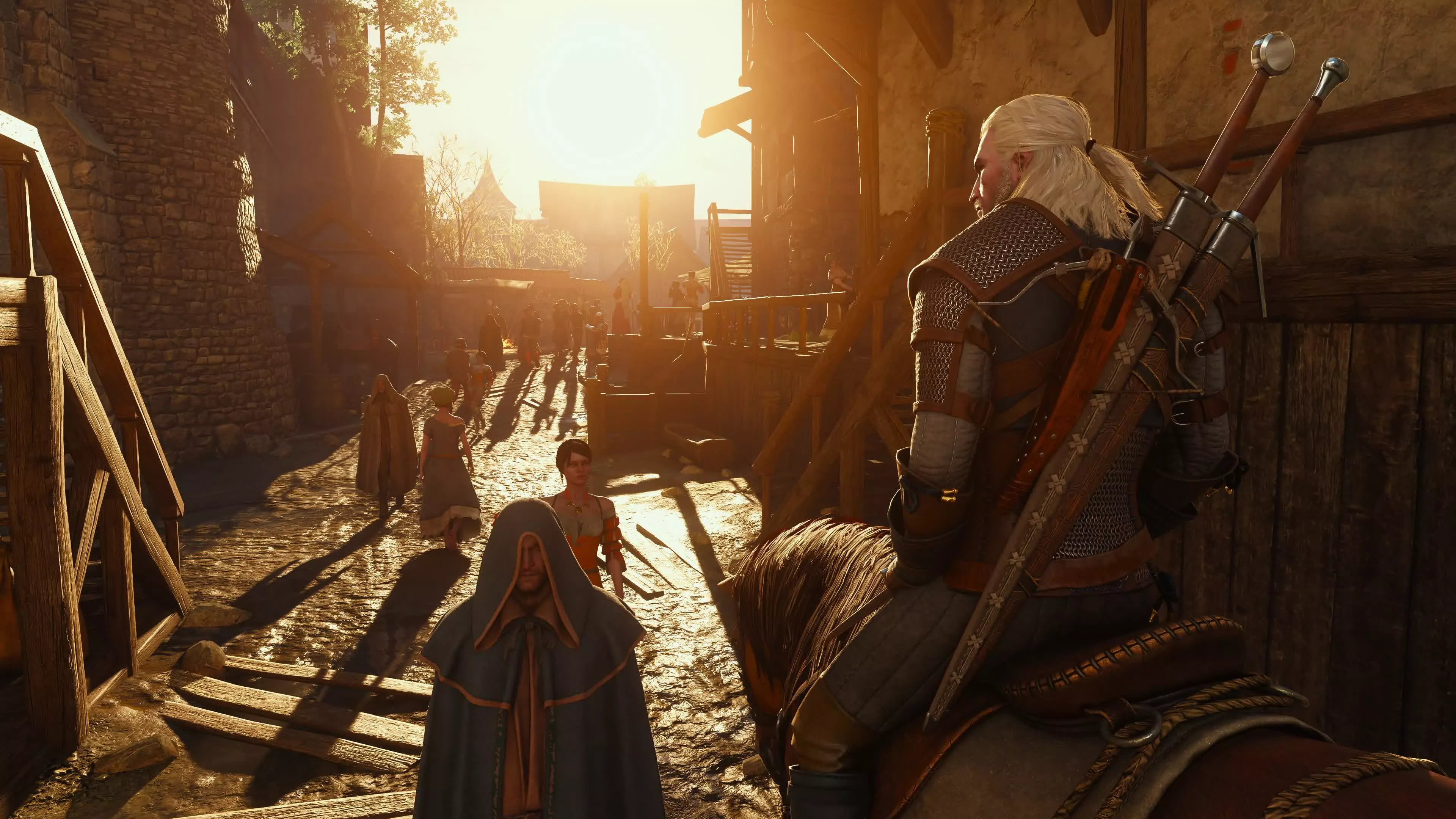
The Witcher 3 Remastered Launches September 29: Free Upgrade and Witcher 4 Update
CD Projekt Red will launch The Witcher 3 Remastered on September 29, 2026, as a free upgrade for existing owners on PC, PlayStation 5, and Xbox Series X|S, according to official announcements at Gamescom Opening Night Live. The update introduces a native Nintendo Switch 2 version and a first-time debut on Battle.net, while integrating modern rendering pipelines including path tracing and DLSS 4.5.
The Tech TL;DR:
- Deployment: Free upgrade for current owners on Sept 29; native Switch 2 build and Battle.net launch concurrent.
- Stack Upgrades: Transition to native DX12, rendering parallelization, and integration of Nvidia DLSS 4.5, AMD FSR 4, and Intel XESS 2.0.
- Roadmap: “Songs of the Past” expansion arrives in 2027; Ciri-led sequel targeting a 2028 release window.
For a title released in 2015, this isn’t a simple texture upscale. According to CD Projekt Red, the updated version will refine the game’s movement, combat, progression, performance, and graphics, along with various other elements. By implementing native DX12 and rendering parallelization, the studio is attempting to solve performance issues. This shift allows for a more efficient distribution of workloads across multi-core processors.
Rendering Pipeline and GPU Acceleration
The technical leap is most evident in the lighting and shading model. According to IGN, the remaster introduces path tracing, ray reconstruction, and ray-traced hair. The inclusion of Nvidia DLSS 4.5 and AMD FSR 4 indicates a reliance on AI-driven upscaling to maintain stable frame rates.
Beyond the raw pixels, the studio has overhauled the global lighting and introduced a new tone mapper and subsurface scattering. These changes mitigate the look of skin and foliage. For enterprise-level hardware optimization, this level of rendering complexity often requires specialized tuning.
| Feature | 2015 Original Build | 2026 Remastered Build |
|---|---|---|
| API Support | Native DX12 / Parallelized Rendering | |
| Upscaling | DLSS 4.5, FSR 4, XESS 2.0 | |
| Lighting | Path Tracing / Global Lighting Rework | |
| Platform Target | PS5 Pro / Xbox Series X|S / Switch 2 / PC |
Gameplay Logic and Systems Refactor
The remaster extends into the game’s core logic. Gaming.net reports that the update includes a skill tree revamp, improved traversal, and revamped mount handling. Partnering with Yigsoft—the Hungarian developer that previously assisted CD PROJEKT RED with The Witcher 3: Wild Hunt — Complete Edition and Cyberpunk 2077: Phantom Liberty—points to an emphasis on modern QA standards and stability.
One of the most significant additions for the power-user community is the introduction of cross-platform mod support. This removes the friction of platform-specific API locks, allowing the community to deploy assets across PC and consoles more fluidly.
To illustrate the level of system access required for these updates, developers often use CLI tools to validate build integrity. A typical check for asset corruption in a large-scale deployment might look like this:
# Example: Validating build manifest checksums for the Remastered deployment
./bin/build-validator --manifest ./deploy/witcher3_remastered.json --verify-checksums --log-level debug
Expansion Roadmap and Ecosystem Strategy
The commercial strategy here is a “land and expand” model. By making the remaster free for existing owners and giving away the first two expansions, Hearts of Stone and Blood and Wine, CD Projekt Red is maximizing the active user base before launching the paid “Songs of the Past” expansion in 2027. According to Gaming.net, this new expansion, co-developed with Fool’s Theory, introduces a new region called Letten and a new weapon—the chain.

This ecosystem push extends to new storefronts.
While the remaster captures the current cycle, the studio’s long-term focus is the Ciri-led sequel. CD Projekt Red joint CEO Michał Nowakowski stated that the team is targeting a 2028 release window for the next major saga, with over 500 developers working on the project. This project is being built in Unreal Engine 5, marking a departure from the proprietary REDengine used for The Witcher 3.
The transition to UE5 is a calculated move to reduce technical debt. By adopting a standardized industry engine, the studio can leverage a wider pool of talent and more robust documentation, similar to the architectural standards found in GitHub‘s open-source repositories or the Stack Overflow developer community.
As CD Projekt Red pushes The Witcher 3 into its second decade, the focus has shifted from mere content delivery to architectural sustainability. The move toward UE5 and the aggressive modernization of legacy titles suggest a studio prioritizing stability and scalability over proprietary isolation.
Disclaimer: The technical analyses and security protocols detailed in this article are for informational purposes only. Always consult with certified IT and cybersecurity professionals before altering enterprise networks or handling sensitive data.