The Value of Journalism: How Newsrooms Can Build Trust and Show Their Worth
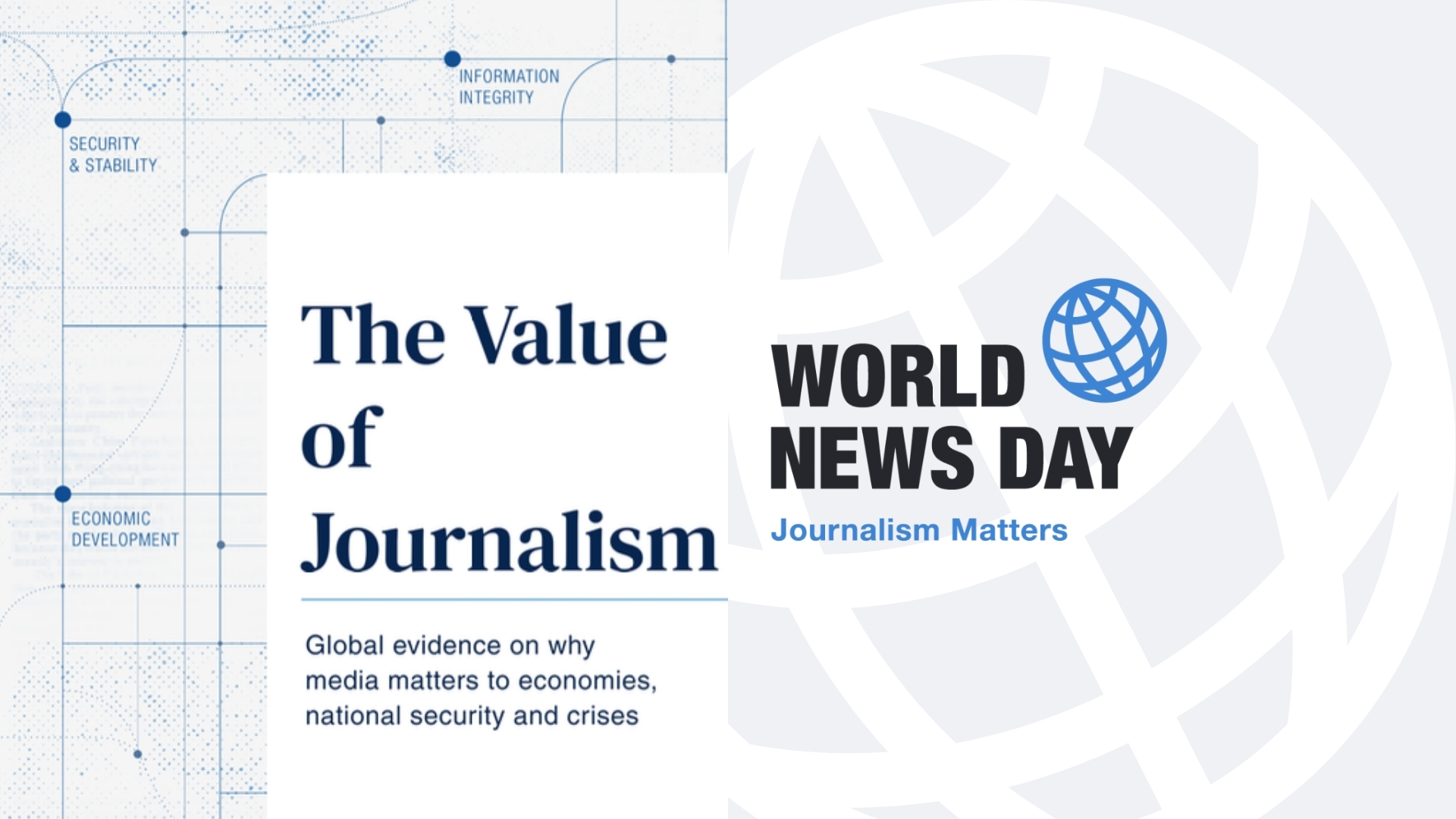
For years, advocates for the Fourth Estate relied on philosophical arguments to defend press freedom. Today, hard numbers support those claims. According to the comprehensive report titled The Value of Journalism: Global evidence on why media matters to economics, national security and crises, every US$1 spent on investigative journalism delivers more than $100 in direct savings to the public. These fiscal returns materialize through reclaimed public funds, targeted legislative reforms, improved public services, and the reduction of systemic corruption.
Quantifying the Public Good of Independent Media
Conversely, the cost of unchecked falsehoods staggering. The same study reveals that global disinformation drains an estimated US$350 billion to $520 billion annually. Beyond the balance sheet, malicious fabrication destabilizes national security by fueling conflict and accelerating societal polarization.
Despite these proven lifesaving interventions during public health emergencies and political transitions, press freedom remains under intense assault globally. As communities struggle to separate verified fact from engineered fiction, identifying reliable, transparent information sources is more critical than ever.
Proving Worth Through Transparent Reporting
To combat public skepticism, newsrooms are abandoning traditional institutional silence. They are actively pulling back the curtain on their reporting methodologies. In the United States, National Public Radio (NPR) runs The Story Behind The Story, a weekly live broadcast where correspondents walk audiences through the rigorous verification steps required to break complex investigations. Similarly, ProPublica publishes its Impact Report three times a year, documenting the concrete policy changes, legislative shifts, and judicial rulings triggered by its investigative reporting.

This push for radical transparency extends far beyond traditional print and audio. In Greece, the outlet Inside Story released Predatorgate, an interactive 30-minute video game derived from its deep dive into the Predator spyware surveillance scandal. The game features Greek journalist Thanasis Koukakis—whose own communications were targeted—guiding players through the mechanics of digital espionage.
Direct Engagement and Media Literacy Initiatives
France’s Le Monde hosts its annual Festival du Monde, opening newsroom doors for public tours and direct dialogues with editorial leadership. In Pittsburgh, the nonprofit newsroom PublicSource launched “You Have the Floor,” an itinerant series of listening sessions designed to map community news priorities directly against local reporting outputs.
On a continental scale, Voices—an annual European Festival of Journalism and Media Freedom co-founded by the European Union—brings journalists, watchdogs, and citizens together. Its fourth iteration is scheduled to run from November 26 to 28 in Thessaloniki, Greece, reinforcing media literacy as an indispensable pillar of a democratic society.
Meanwhile, in the Philippines, Rappler’s civic engagement arm, MovePH, has scaled its #FactsFirstPH initiative. In 2024, the organization launched RappLearn, a free, self-directed platform built by active journalists to promote digital literacy and critical thinking across civil society.
As independent media houses innovate to survive economic contractions and hostile regulatory environments, safeguarding institutional integrity requires robust organizational safeguards.
The numbers are clear, and the methodologies are proven. Fact-based journalism is not merely a democratic luxury; it is an essential public utility that protects economies, secures communities, and saves lives.