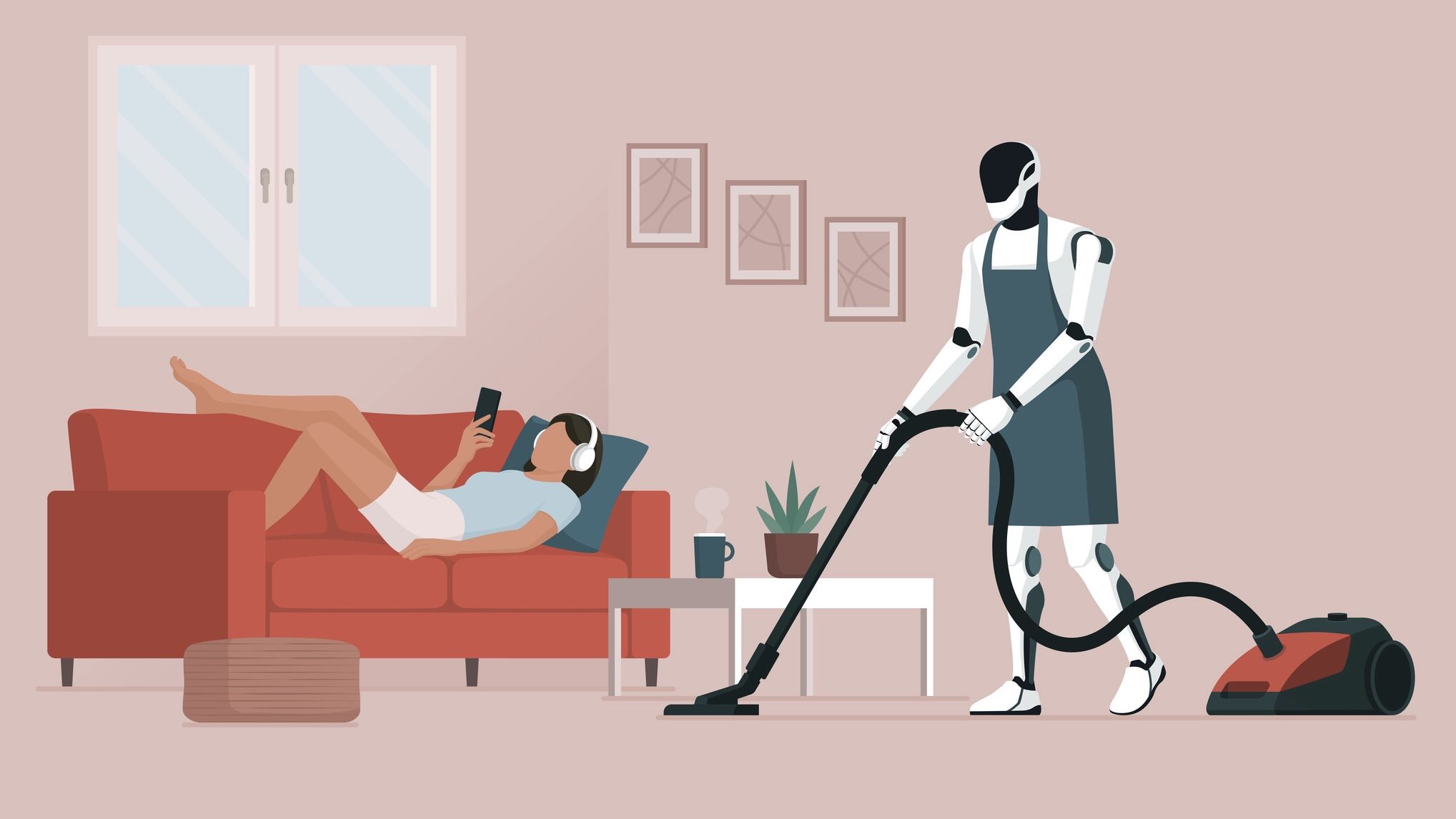
The Rise of Humanoid Robots: Can They Finally Take Over Your Household Chores?
The integration of humanoid robotics into domestic environments has moved from speculative engineering to active pilot programs. San Francisco-based Tau Robotics has initiated a trial allowing 1,000 households to employ humanoid assistants for tasks including sanitation and waste management, while global firms such as UniX AI and 1X have brought commercial models to market, signaling a shift in the standard of living through automated labor.
- Domestic humanoid robots are currently transitioning into residential pilot programs, with units performing specialized tasks like meal preparation and household sanitation.
- Current autonomous capabilities remain limited; many “autonomous” systems still rely on human remote intervention for complex spatial navigation and fine motor tasks.
- Safety and reliability in non-controlled, cluttered home environments remain the primary hurdles for widespread clinical or domestic adoption.
The Mechanics of Domestic Humanoid Integration
The current market landscape is defined by a rapid acceleration in hardware deployment. Tau Robotics has launched a pilot program in San Francisco, charging $30 per hour for robots capable of basic maintenance tasks such as vacuuming and surface disinfection. These units, identified by the company as Chelsea and Elon, operate within a controlled radius of 1,000 homes. Concurrently, the Chinese firm UniX AI has commenced commercial distribution of the Panther, a wheeled humanoid designed for more advanced domestic utility, including bed-making and basic culinary operations like frying eggs.

From a biomechanical perspective, these robots represent a significant evolution in robotic control systems. The 1X Neo Gamma, a 5-foot-6-inch humanoid priced at approximately $20,000, utilizes advanced actuators to replicate human-like dexterity, such as folding textiles and operating door mechanisms. This hardware capability is supported by recent advancements in large-scale machine learning models, notably those developed via Google DeepMind, which enhance a machine’s environmental understanding. However, the transition from controlled laboratory settings to the unpredictable, high-entropy environment of a private residence poses significant challenges for hardware durability and software logic.
Clinical and Operational Constraints
Despite the promotional efficacy demonstrated in controlled media, real-world deployment reveals significant gaps in true autonomy. Industry analysis indicates that many robots currently marketed as “autonomous” utilize a “human-in-the-loop” architecture, where remote operators intervene to navigate complex spatial obstacles. For households considering these technologies, it is essential to distinguish between pre-programmed routines and true machine learning-based adaptation.
The Future of Domestic Robotic Infrastructure
The trajectory of humanoid robotics is contingent upon solving the “cluttered floor” problem. While promotional reels often depict robots in pristine, minimalist settings, the average home contains a high degree of structural variance and non-linear obstacles. The efficacy of these units in a clinical or home setting depends on their ability to perform under high-variability conditions without human intervention.
As these technologies continue to evolve, the distinction between industrial-grade automation and domestic assistance will narrow. For stakeholders and potential users, tracking the long-term reliability and safety data of these units is critical.
Disclaimer: The information provided in this article is for educational and scientific communication purposes only and does not constitute medical advice. Always consult with a qualified healthcare provider regarding any medical condition, diagnosis, or treatment plan.