
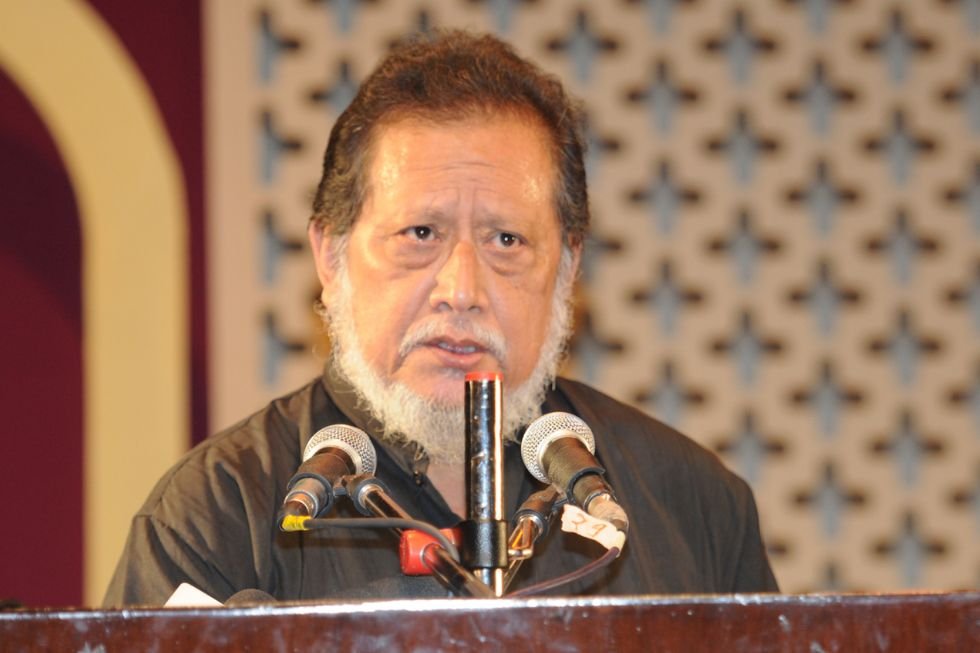
Renowned Manipuri Theater Director ratan Thiyam dies, Leaving Behind a Legacy of “Theatre Science”
Imphal, Manipur - Ratan Thiyam, the Padma Shri award-winning theatre director celebrated for his innovative fusion of traditional Manipuri performance with contemporary global theatre, has passed away. His death marks a meaningful loss for the Indian cultural landscape, leaving behind a body of work that redefined theatrical expression and championed Manipur’s artistic heritage. He was 72.
Thiyam’s influence extended far beyond the stage. He was often referred to as a ”theatre scientist” for his meticulous and interdisciplinary approach, blending elements of ritual, dance, music, and visual arts into powerfully evocative productions. While accolades like the Sangeet Natak Akademi Fellowship (2012) and Manipur’s Lifetime Achievement Award (2025) acknowledged his contributions, they represented only a fraction of his lasting impact.
A Pioneer of Interdisciplinary Theatre
Born in Imphal, Thiyam dedicated his life to revitalizing and reimagining Manipuri theatre. He founded the Chorus Repertory Theatre in Imphal, which served as a vital hub for artistic experimentation and training.His productions, often tackling complex social and political themes, resonated with audiences both in India and internationally. Notable works included Chakravyuha, a powerful adaptation of the Mahabharata story, and Uttar Priyadarshi, a play exploring the conversion of Emperor Ashoka.
Thiyam’s methodology wasn’t simply about adaptation; it was about a deep understanding of the cultural roots of performance. He believed in a holistic approach, drawing on the rich traditions of Shumang Leela (Manipuri courtyard theatre) and incorporating them into a modern theatrical framework. He actively advocated for the preservation of shumang Leela, describing it in January 2025 at the Ningtham Khumhei Shumang Leela Festival as a crucial element of Manipur’s cultural identity, and calling for a world-class cultural complex to safeguard the state’s artistic heritage.His commitment to innovation led to a unique theatrical language, one that transcended linguistic and cultural barriers. He wasn’t afraid to challenge conventions, using the stage as a platform for social commentary and spiritual exploration. As he himself lamented, fearing the erosion of cultural memory in the digital age, his work stands as a powerful counterpoint, demonstrating the enduring relevance of tradition.
A Legacy to be Preserved
The passing of Ratan Thiyam underscores the urgent need to preserve his legacy.Calls are growing for the Chorus Repertory Theatre to be sustained as a living archive, providing a space for future generations to learn his methods. Digitizing his scripts,recordings,and production notes is crucial to ensuring global access to his work.
Institutions like the National School of Drama (NSD), where Thiyam served as director (1987-88) and chairperson (2013-17), have a responsibility to integrate his interdisciplinary approach into their curricula. Festivals like Bharat Rang Mahotsav, which previously championed his productions, should dedicate retrospectives to showcase his contributions.
Beyond the artistic realm, Thiyam’s call for unity through culture is especially poignant in the context of Manipur’s ongoing ethnic tensions. His work offered a space for dialogue and understanding, and his vision of a culturally vibrant Manipur remains a powerful aspiration.
Thiyam’s influence extends beyond the direct impact of his productions. He inspired countless artists and audiences, leaving an indelible mark on the world of theatre. As one social media user poignantly noted, “Heroes get remembered, but legends never die. He will be in our hearts forever.”
[Originallypublishedon[Originallypublishedon[Originallypublishedon[OriginallypublishedonCorporate Tycoons and edited by Kaitlyn Diana.]
Disclaimer: The views expressed in this article are the author’s own and do not necessarily reflect Fair Observer’s editorial policy.
