
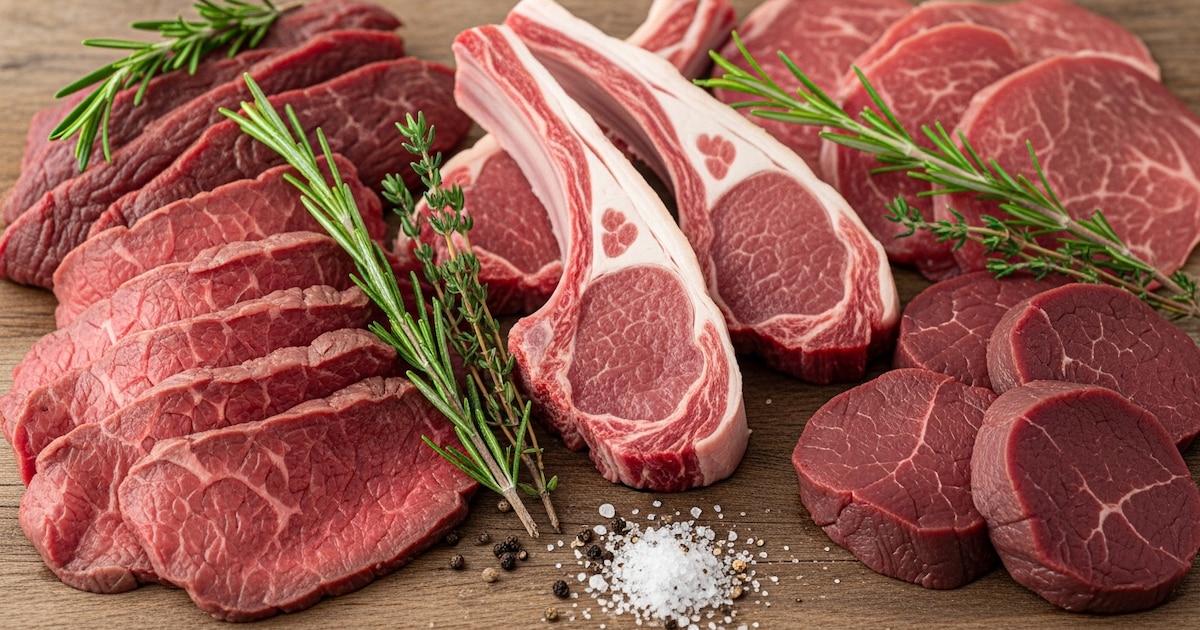
The Real Impact of Beef on Health: What Science Says
As global dietary patterns evolve, the relationship between red meat consumption and long-term health outcomes remains a focal point of nutritional epidemiology. Recent analyses from large-scale cohort studies underscore the nuanced impact of bovine meat on cardiovascular risk, colorectal carcinogenesis, and metabolic health, emphasizing that preparation methods, fat content, and dietary context significantly modulate biological effects.
Key Clinical Takeaways:
- High intake of processed and red meat is associated with a 16% increased risk of colorectal cancer per 50g daily increment, based on pooled data from over 6 million participants across prospective studies.
- Substituting red meat with plant-based proteins or poultry reduces LDL cholesterol by approximately 0.3 mmol/L and lowers ischemic heart disease mortality by up to 19% in meta-analyses of randomized controlled trials.
- Grass-fed bovine meat exhibits a more favorable fatty acid profile, including higher conjugated linoleic acid (CLA) and omega-3 content, though clinical evidence for superior cardiometabolic outcomes remains inconclusive without long-term intervention data.
The pathophysiological mechanisms linking excessive bovine meat intake to adverse health outcomes involve multiple pathways. Heme iron, abundant in red meat, promotes oxidative stress and nitroso compound formation in the colon, contributing to mucosal damage and aberrant crypt foci—precursors to adenomatous polyps. Simultaneously, high-temperature cooking generates heterocyclic amines (HCAs) and polycyclic aromatic hydrocarbons (PAHs), genotoxic compounds metabolized by cytochrome P450 enzymes that can induce DNA adducts in colonic epithelium. Diets rich in saturated fatty acids from grain-fed beef may upregulate hepatic LDL synthesis and promote endothelial dysfunction via oxidized lipid accumulation in arterial intima.
Conversely, bovine meat provides essential nutrients critical for physiological function, including highly bioavailable heme iron, zinc, vitamin B12, and complete proteins with optimal amino acid scoring. In populations with increased nutritional demands—such as pregnant individuals, elderly patients with sarcopenia, or those recovering from major surgery—moderate inclusion of lean red meat can support hematopoiesis, immune function, and muscle protein synthesis when integrated into a balanced dietary pattern.
According to the landmark 2019 Global Burden of Disease Study published in The Lancet, diets high in red meat accounted for approximately 896,000 attributable deaths globally, primarily from colorectal cancer (50%) and ischemic heart disease (40%). This burden was most pronounced in high-income regions where average consumption exceeded 70g/day, whereas populations in South Asia and sub-Saharan Africa demonstrated lower attributable risk due to reduced intake levels.
“The dose-response relationship is critical: occasional consumption of unprocessed, lean red meat within a Mediterranean-style diet shows minimal attributable risk, whereas daily intake exceeding 100g—particularly of processed varieties—shifts the risk-benefit equilibrium unfavorably.”
Recent clinical trials have explored intervention strategies to mitigate risk without necessitating elimination. A 2023 randomized, double-blind, placebo-controlled trial published in JAMA Internal Medicine (n=312) demonstrated that pairing red meat consumption with high-fiber legumes and cruciferous vegetables reduced fecal genotoxicity markers by 27% over 12 weeks, suggesting that dietary matrix effects can modulate carcinogenic potential. This finding aligns with mechanistic studies showing that chlorophyllin and ferulic acid in plant foods inhibit nitrosoation and scavenge reactive oxygen species in the colonic lumen.
Funding transparency remains essential in interpreting nutritional science. The aforementioned JAMA trial received support from the NIH Office of Disease Prevention (Grant R01-DP028456), while the Global Burden of Disease analysis was funded by the Bill & Melinda Gates Foundation through the Institute for Health Metrics and Evaluation (IHME). No industry sponsorship influenced study design or interpretation in either investigation, preserving analytical independence.
For individuals navigating personalized nutrition plans—particularly those with familial adenomatous polyposis, Lynch syndrome, or established atherosclerotic cardiovascular disease—targeted dietary modification represents a cornerstone of risk mitigation. Consulting with board-certified clinical nutritionists enables precise tailoring of protein sources, cooking techniques, and fiber intake to optimize nutrient density while minimizing exposure to dietary carcinogens. Similarly, patients exhibiting elevated LDL-P or apoB levels despite statin therapy may benefit from evaluation by preventive cardiology specialists who can assess lipoprotein subfractions and implement advanced lipid-lowering strategies.
From a public health perspective, front-of-package labeling initiatives and agricultural subsidies reform could shift consumption patterns toward sustainable, health-promoting alternatives. However, any policy intervention must account for cultural dietary traditions and socioeconomic access to avoid exacerbating nutritional inequities. As research continues to refine our understanding of meat-matrix interactions and individual metabolic responsiveness, the standard of care emphasizes individualized risk assessment over universal restriction.
The future trajectory of nutritional guidance will likely integrate polygenic risk scores, gut microbiome profiling, and metabolomic biomarkers to predict personalized responses to dietary components. Until such precision tools become clinically accessible, evidence-based moderation remains the prudent approach—prioritizing whole foods, minimizing ultra-processing, and embedding animal proteins within a predominantly plant-rich dietary framework.
*Disclaimer: The information provided in this article is for educational and scientific communication purposes only and does not constitute medical advice. Always consult with a qualified healthcare provider regarding any medical condition, diagnosis, or treatment plan.*