
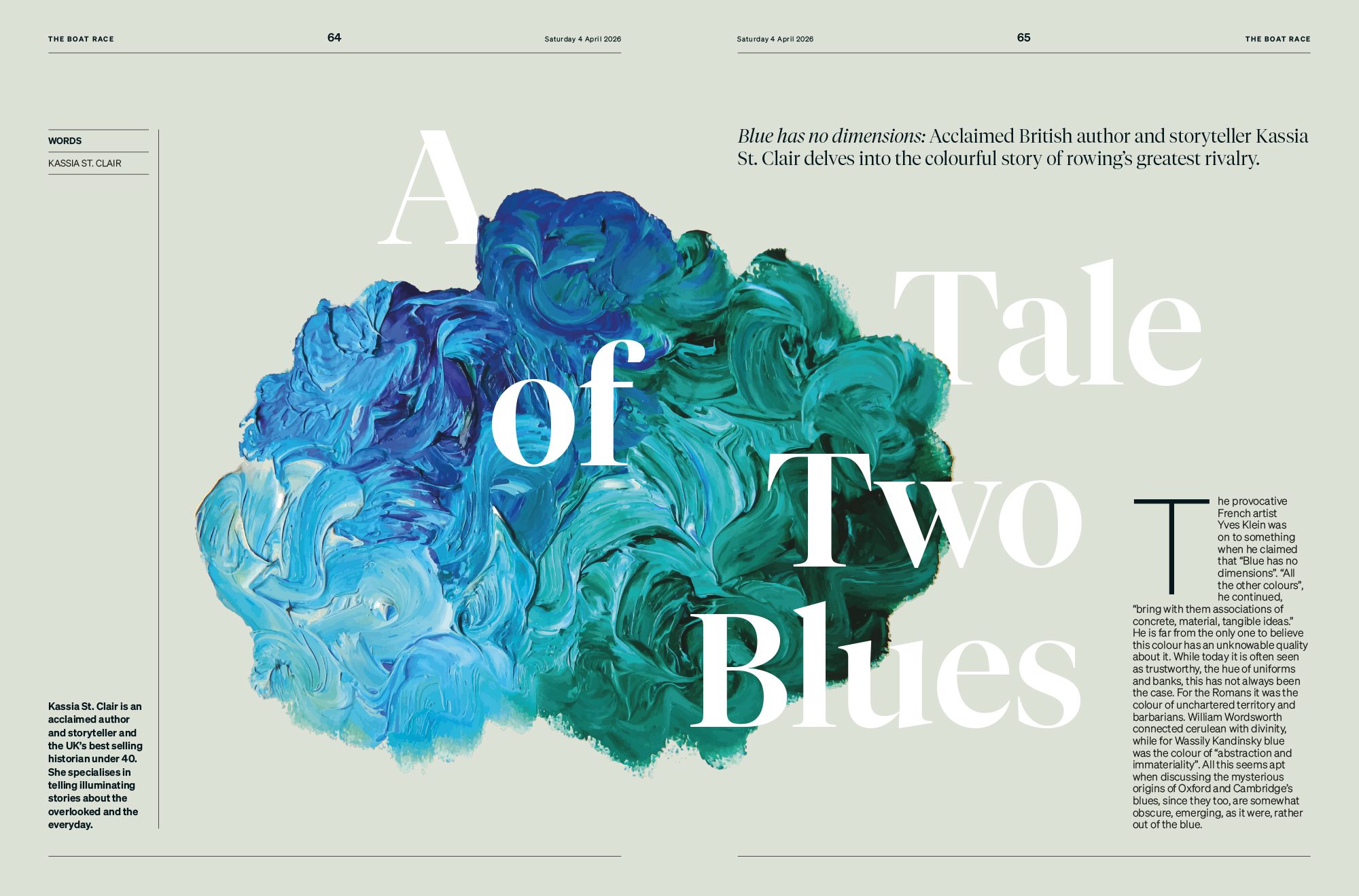
The History of Oxford & Cambridge Blues: Colour, Rivalry & Tradition
The Curious History of Oxford and Cambridge Blues: Beyond the Rowing Lane
On March 30th, 2026, as the annual Oxford-Cambridge Boat Race approaches, a deeper look into the origins of the iconic “Blues” reveals a fascinating intersection of sporting tradition, social history, and even evolving perceptions of color itself. Kassia St. Clair’s exploration, originally featured in The Boat Race 2026 Souvenir Race Programme, unearths the surprisingly murky beginnings of this enduring rivalry and the symbolic weight carried by the teams’ distinctive hues.
From Cricket Whites to Collegiate Dark Blue
The story begins not on the Thames, but on the cricket pitch at Lord’s in June 1827. Charles Wordsworth, a Christ Church man with a penchant for organized fun, orchestrated a match between Oxford, and Cambridge. Both teams sported white, a common sight at the time. However, it was Wordsworth’s subsequent arrangement of the inaugural varsity boat race in 1829 that would ultimately give rise to the “Blues.” With Christ Church dominating the Oxford rowing team, the decision was made to adopt the dark blue of the college guernsey as their uniform. This seemingly simple choice laid the foundation for a tradition steeped in mystery and evolving cultural meaning.
Cambridge’s Scarlet and the Birth of the “Blazer”
Cambridge’s initial response wasn’t the pale blue we recognize today. Instead, they opted for white accented with scarlet or “hunting pink” ties and sashes, a nod to their captain’s affiliation with the Lady Margaret Boat Club of St John’s College. Intriguingly, these fiery red jackets are widely believed to be the origin of the term “blazer.” Oxford’s victory in that first race, reported in the Times as “easily” won, cemented the dark blue as a symbol of Oxford’s sporting prowess. The early days of the race, however, weren’t marked by rowing excellence; contemporaries described the teams as “terrible” rowers, a detail often glossed over in the romanticized retelling of the event.
A Last-Minute Shade and Lingering Enigma
The pale blue-green that now defines Cambridge’s identity didn’t appear until 1836, at the second boat race. A last-minute scramble to a Lambeth haberdasher for colored ribbon to adorn their boat’s bows resulted in the adoption of the shade. Stories linking the color to Eton or Caius colleges are largely dismissed as later fabrications, adding to the enduring enigma surrounding its origins. This lack of definitive explanation only enhances the mystique of the Blues, a quality that seems fitting given the color blue’s own complex history.
Blue’s Shifting Cultural Significance
St. Clair’s piece deftly highlights how the perception of blue has dramatically shifted over time. For the Romans, it represented uncharted territory and barbarism. Wordsworth associated it with divinity, while Kandinsky saw it as embodying abstraction and immateriality. Interestingly, in the 19th century, blue was often considered a decidedly *feminine* hue, linked to depictions of the Virgin Mary and the use of expensive ultramarine pigment. Red, conversely, was associated with masculinity, military uniforms, and passion. The New York Times in 1893 even asserted that pink should be given to boys and blue to girls, a stark contrast to modern gendered color associations.
From Royal Dye to Working-Class Uniform
The transformation of blue’s symbolism is further complicated by the history of indigo, a dye derived from the Indigofera tinctoria shrub. Used for millennia – even found in the robes of Tutankhamun – indigo’s production and trade were deeply intertwined with the industrial revolution, imperial expansion, and tragically, the slave trade. The advent of synthetic indigo in 1897 solidified blue’s association with the working class, appearing in the uniforms of sailors, laborers, and, famously, Levi’s jeans.
“Color is rarely neutral. It’s a powerful carrier of cultural meaning, and the story of the Blues is a perfect example of how those meanings can shift and evolve over time.”
— Dr. Eleanor Vance, Art Historian specializing in color theory, speaking to World Today News.
The Brand Equity of Tradition and the Need for IP Protection
The enduring appeal of the Boat Race and the associated “Blues” represents significant brand equity for both universities. Maintaining the integrity of this brand, and protecting the associated intellectual property, is paramount. As the event continues to grow in global reach, both Oxford and Cambridge must be vigilant against unauthorized merchandise and potential copyright infringement. Specialized IP law firms are crucial in safeguarding these valuable assets and ensuring the long-term sustainability of the tradition. The increasing commercialization of university sports also necessitates robust sports law and compliance counsel to navigate complex regulations and sponsorship agreements.
The Event Horizon: Logistics and Security for a Global Spectacle
The Boat Race is no longer simply a sporting event; it’s a major cultural spectacle attracting a global audience. The logistical challenges of managing crowds, ensuring security, and coordinating media coverage are immense. Experienced event management companies are essential for orchestrating a seamless and safe experience for participants and spectators alike. The heightened security concerns in the current climate demand comprehensive security planning and the deployment of specialized security personnel. The event’s growing profile also presents opportunities for local businesses, particularly in the hospitality sector, which can expect a significant influx of visitors.
Beyond the Finish Line: A Legacy of Mystery and Meaning
The story of the Oxford and Cambridge Blues is a reminder that even the most iconic traditions have humble and often obscure beginnings. The colors themselves, steeped in historical and cultural significance, continue to resonate with a power that transcends the sporting arena. The enduring mystery surrounding their origins only adds to their allure, ensuring that the tale of the two blues will continue to captivate audiences for generations to come. As the universities navigate the complexities of modern branding and intellectual property, they will need to rely on expert legal counsel and event management professionals to preserve this cherished tradition.
Disclaimer: The views and cultural analyses presented in this article are for informational and entertainment purposes only. Information regarding legal disputes or financial data is based on available public records.