The History, Function, and Capacity of American Water Towers
Modern municipal water towers typically hold between 500,000 and 1 million gallons of clean drinking water, though total capacities range widely from 30,000 gallons in older historic structures up to 4 million gallons in massive contemporary facilities.
Historical Roots of Municipal Water Towers
The oldest surviving water towers in America date back to the mid-1800s, constructed in response to cholera, typhoid, and other waterborne illnesses that plagued rapidly growing urban centers like Chicago and Louisville. Communities also built the infrastructure to secure a reliable water supply for fighting destructive fires. The town of Faunsdale, Alabama, erected a water tower specifically to combat wildfires.
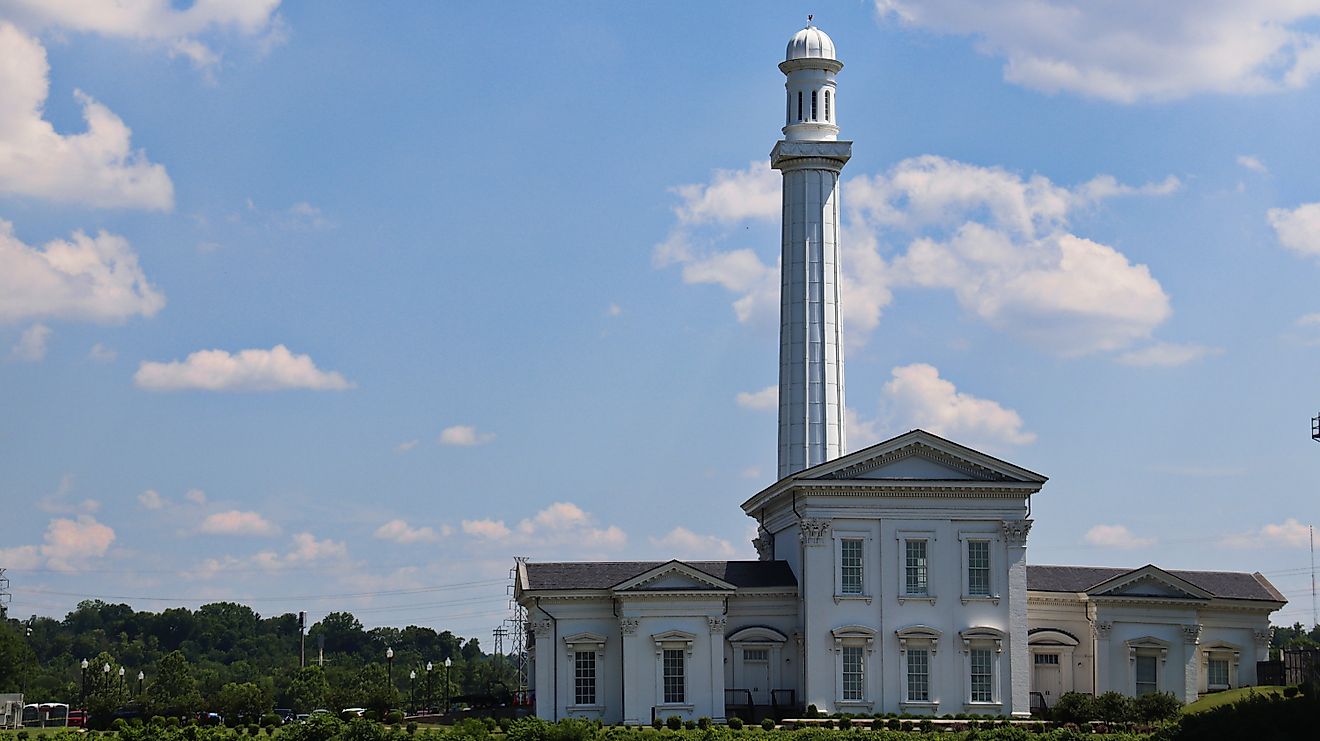
Constructed in 1859, the Chestnut Hill Water Tower in Philadelphia, Pennsylvania, stands as one of the oldest surviving structures of its kind. The 125-foot stone tower featured a wooden tank on top capable of holding 40,000 gallons. The Louisville Water Tower followed in 1860, designed in an ornamental style reminiscent of a Greek temple. Working alongside a municipal pumping system, it helped shield the city from cholera outbreaks by 1866. A major construction boom occurred between the late 19th and early 20th centuries, resulting in more than 6,000 water towers rising across American towns.
Gravity-Fed Pressure Systems
Water towers function as elevated pressurized containers that store treated drinking water. By building them tall or placing them atop hills, municipal systems maintain constant water pressure through the natural force of gravity. WaterWorld notes that every foot of elevation generates roughly 0.43 PSI of water pressure, translating to one PSI for every 2.31 feet.
Treatment facilities pump water into the tank up to a predetermined level, while an overflow pipe redirects excess volume. As water moves up the riser pipe, it flows down through outlet pipes connected to residential and commercial zones. The primary function of a water tower is to serve as an emergency backup during periods of peak water demand, such as evening hours when families return home from work and school. Operating via gravity, these tanks maintain a standard system pressure of 50 to 100 PSI and can function even during widespread power grid failures.
Tank Styles Influence Total Storage Volume
Tank styles vary significantly across municipalities, directly influencing total storage volume. Cone top water towers, such as the West Water Tower in Orion, Illinois built in 1928, hold an average of 61,500 gallons, with the Orion structure capped at 30,000 gallons. Flat top water towers resemble giant paint cans and hold an average of 170,000 gallons. Wider tanks hold an average volume of 458,500 gallons.

Single pedestal water towers, often called One Big Leg towers, hold millions of gallons. Meanwhile, composite elevated storage tanks (CETs) represent the largest tanks deployed in the United States. Built from carbon steel tanks elevated by reinforced concrete support pedestals, CET capacities range from 250,000 gallons to 3 million gallons.
The largest CET ever built stands in Rogers, Arkansas, maintained by the Benton Washington Regional Public Water Authority. Designed by Landmark, the 4-million-gallon tank required 70 tons of steel reinforcement and stone columns in the soil. Landmark also completed a 3.66 million-gallon CET with a 69-foot diameter pedestal in Spokane, Washington, to serve the local airport.
The tallest operating CET is located in Beresford, South Dakota, within the Lewis and Clark Regional Water System. Standing 220 feet tall, the tower contains 2.5 million gallons of water to serve multiple communities in South Dakota and Sheldon, Iowa, delivering water 33 miles away to Sioux Center. Caldwell Tanks constructed that tower, while Landmark Structures built the 85th Street Water Tower for the Lewis & Clark Regional Water System, holding 3 million gallons to serve southern Sioux Falls and Lincoln County.

Community Water Demands and Infrastructure Limits
Storage capacity ultimately comes down to a guiding principle: holding a day’s worth of water for the community. That baseline shifts as populations and commercial enterprises grow. Towers provide a critical buffer during high-demand spikes or treatment plant malfunctions, buying system managers essential time to resolve mechanical failures without sacrificing pressure or public safety.
Infrastructure limitations remain a constant challenge. Water towers cannot serve areas sitting at a higher elevation than the tank itself. As towns expand and older structures age—such as in Minnesota, where average water towers are roughly 90 years old—municipalities face mounting costs to replace defunct infrastructure with taller, wider tanks, while deciding whether to preserve or demolish historical landmarks.