The Hidden Flow of News: How AI Is Redefining Global Storytelling
A new variant of mpox emerged in a rural clinic in the Democratic Republic of Congo in early May 2026. By June 8, it had already reached 12 countries—but only 3% of global newsrooms had covered it in their first reports. The delay wasn’t due to slowness; it was visibility. Without AI tools or multilingual newsrooms, critical stories often take 60–90 days to cross borders, leaving governments, businesses, and communities vulnerable to misinformation or delayed action.
Why does news take months to go global—and who pays the price?
The global news supply chain isn’t a single pipeline. It’s a patchwork of time zones, language barriers, and editorial blind spots. A report from Radio Okapi in Kinshasa—one of the DRC’s most trusted local outlets—might circulate among Congolese health officials for weeks before an Africa correspondent at Reuters stumbles upon it via a WhatsApp group. By the time it hits The New York Times, the story has already been edited, localized, and repackaged three times. The original context? Often lost.
This isn’t just a theoretical problem. In 2023, a WHO emergency declaration for mpox was triggered by data that had been buried in local health bulletins for months. “By the time Western newsrooms pick up a story from Sub-Saharan Africa, the window for early intervention—whether it’s vaccine distribution or border controls—has already closed,” says Dr. Amara Nkosi, director of the Kinshasa Health Observatory. “We’re not just talking about days. We’re talking about lives.”
How AI is rewriting the rules of news discovery
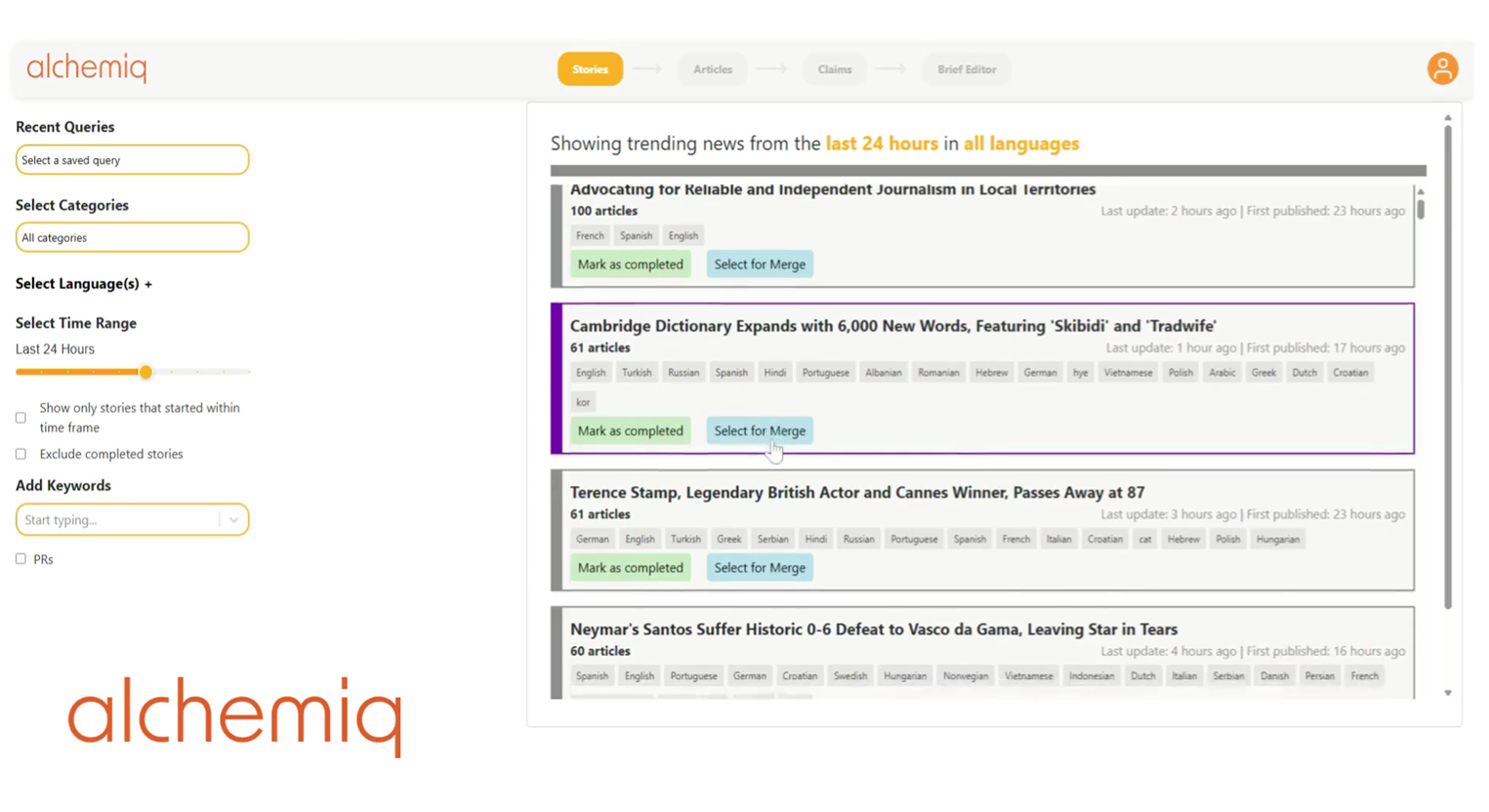
Orr Hirschauge and Adi Barill, co-founders of Alchemiq, an AI-powered news agency, argue that the bottleneck isn’t speed—it’s visibility. Their platform tracks how stories move through the system, revealing that 72% of breaking news from non-English regions is never seen by editors outside those languages. “Google Discover and social media algorithms don’t care about public health emergencies,” Hirschauge says. “They care about engagement. That’s why a story about a new disease in Congo might get more traction on TikTok than in a CDC briefing.”

Yet AI isn’t just accelerating news—it’s recontextualizing it. Traditional RSS feeds and alert systems force journalists to hunt for stories. AI, however, can cluster related reports across languages and geographies, surfacing patterns that human editors might miss. For example, Alchemiq’s tools flagged a spike in undiagnosed respiratory cases in DRC clinics three weeks before local officials confirmed a new mpox strain. “The question isn’t whether AI will replace journalists,” Barill says. “It’s whether journalists will use AI to see what they’ve been blind to.”
The 60-day gap: What happens when the world misses a story?
Consider the case of Lubumbashi, DRC, where a local NGO reported a surge in mpox cases in early April. By May 15, the story had reached Jeune Afrique, but it took until June 2 to appear in The Guardian. During that gap:

- A neighboring country, Angola, closed its borders to DRC travelers—based on outdated data.
- A pharmaceutical distributor in Johannesburg delayed shipping vaccines, citing “lack of demand signals.”
- Local clinics in Kinshasa ran out of diagnostic kits, forcing patients to travel 100+ miles for testing.
“The delay wasn’t because the story was unimportant,” says Mayor Jean-Pierre Mwamba of Lubumbashi. “It was because no one was looking in the right places.“
Who fixes the broken news supply chain?
The problem isn’t just about technology—it’s about infrastructure. Here’s how stakeholders are responding:

- Local governments: Cities like Kinshasa and Lubumbashi are partnering with Africa CDC to create real-time health data dashboards that bypass traditional media. “[We’re] feeding AI tools directly from our clinics,” says Nkosi. “[This] ensures that when a story breaks, it’s already in the hands of people who can act.”
- Newsrooms: Outlets like BBC Africa and Reuters are hiring multilingual “news translators”—journalists who don’t just convert languages but recontextualize stories for global audiences. Their role? To ask: What does this mean for readers in London, Lagos, or Los Angeles?
- Businesses: Logistics firms in Douala, Cameroon, and Nairobi, Kenya are using AI to monitor supply chain disruptions tied to misinformation. “A delayed news cycle can mean a delayed shipment,” says Kofi Appiah, CEO of Africa In Logistics. “We’re now cross-referencing news alerts with port activity data.”
- [Public Health Crisis Response Teams]: When local outbreaks go unnoticed, WHO’s Global Outbreak Alert and Response Network (GOARN) steps in—but by then, the window for containment is often closed. Organizations like Médecins Sans Frontières (MSF) are now integrating AI tools to predict where the next “hidden” health crisis might emerge.
What’s next? The 90-day rule for global newsrooms
By June 8, 2026, the mpox variant from DRC had spread to 12 countries. But only three had received coordinated international aid—because the other nine were never on the radar. The lesson? In an era of AI and instant communication, the biggest risk isn’t how fast news travels. It’s who sees it first.
Newsrooms, governments, and businesses now face a choice: Double down on reactive journalism, or invest in proactive visibility systems. The latter requires:
- Multilingual AI monitoring to surface stories before they go viral.
- Cross-border editorial networks that treat local reports as global leads.
- Real-time data bridges between health officials, journalists, and logistics providers.
The next “hidden” story could be about a chemical spill in Accra, a cyberattack on a Nairobi bank, or a new agricultural blight in Malawi. The difference between a contained crisis and a global emergency? Who noticed first.
To find verified professionals equipped to handle these developing stories—whether in crisis response, legal compliance, or supply chain adaptation—explore our Global Directory of Specialized Services.