
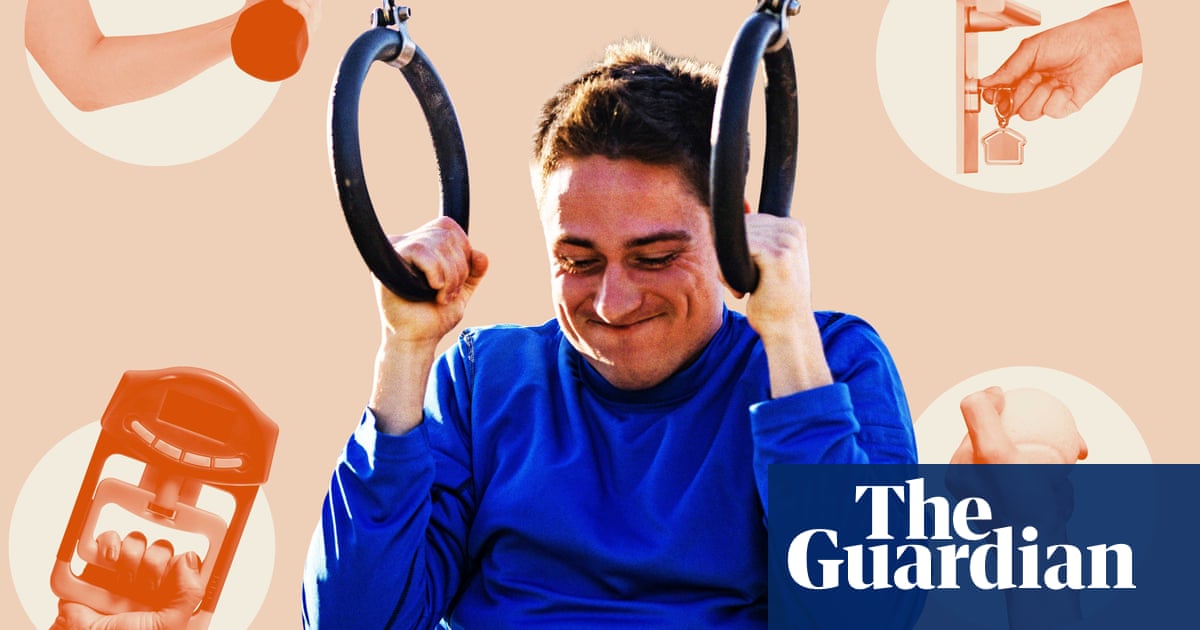
Grip Strength: Your Unexpected Key to a Longer Life
Strong grip? It’s not just for opening stubborn jars or dominating the monkey bars. Emerging research reveals grip strength as a surprising indicator of overall health and longevity, offering a quick and easy way to gauge your well-being.
The Grip-Health Connection
Our ability to grip helps us navigate daily life, from the moment we wake until we rest. This fundamental movement also offers insights into our health. Research suggests that a weak grip may indicate a greater risk of serious health issues, including heart problems and stroke. It can also be linked to osteoporosis, diabetes, and even cognitive decline.
“It’s a really easy thing to test. You don’t need to hook someone up to a machine, you don’t need to look at their muscle mass, you don’t need to take their weight …”
—Sarah Milner, Physiotherapist
In a study of over 140,000 adults, a weak grip correlated with increased mortality rates. However, grip strength does decrease with age. The good news is that regular activity, particularly hands-on tasks, can help slow down this process.
Simple Tests and Exercises
Assessing your grip strength doesn’t require complicated equipment. You can simply squeeze a tennis ball and see how long you can maintain your tightest grip. Everyday tasks, like opening a jar, can also show how well you grip. For a more formal measurement, a dynamometer is often used.
Maintaining good grip strength is essential. A 2023 study in the Journal of the American Geriatrics Society found that older adults with stronger grip strength had a lower risk of falls and hospitalizations. (Source 2023)
Strengthening Your Grip
To improve grip strength, consider exercises that challenge your hands and forearms. These include push-ups, wet towel wrings, and pinch grip holds with a heavy book. In the gym, dead hangs and barbell bent-over rows are effective. These exercises work the flexor and extensor muscles of your hands and arms.
Sarah Milner recommends thinking about the whole “kinetic chain”, not just your hand and forearm. Full-body strength and functional training, such as push-ups, shoulder taps, and high planks, will provide a more holistic approach.
Focus on activities that challenge your grip in a natural way. With consistent effort, you may notice improvements in as little as four to six weeks.
