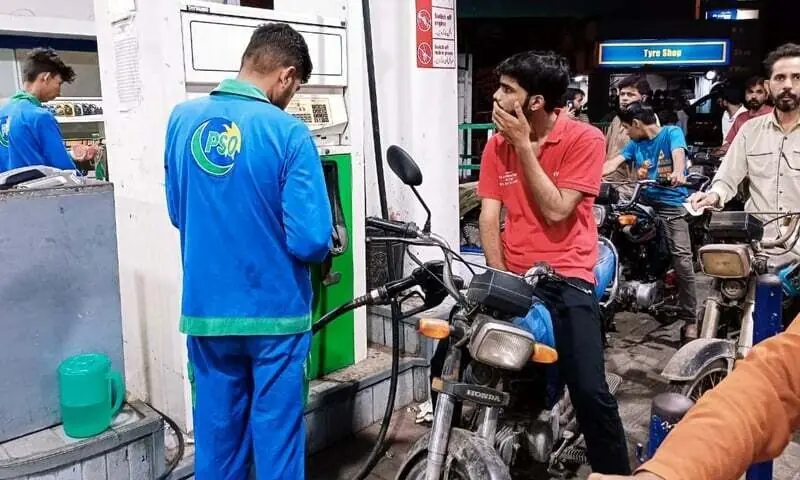
The federal government adjusted retail fuel rates for the October 10 to October 12, 2026 period
Fuel Rates Shift Again Amid Global Volatility
The federal government adjusted retail fuel rates for the October 10 to October 12, 2026 period, lowering petrol by Re0.66 to Rs398.30 per litre while raising high-speed diesel by Re0.52 to Rs396.24 per litre. The Oil and Gas Regulatory Authority revised the ex-depot prices under the official petroleum pricing mechanism, according to a Petroleum Division notification, with changes driven by international market movements including Platts rates, premiums, and incidentals.
Friday’s adjustment follows a sequence of frequent revisions managed by state regulators. The Petroleum Division noted that the cabinet and the prime minister previously authorized the Oil and Gas Regulatory Authority to dictate fuel prices on a daily basis. This daily pricing mandate stems from international market volatility triggered by renewed hostilities between the United States and Iran. Earlier, on Thursday, the government had raised petrol by Rs2.31 per litre and diesel by Re0.78 per litre.
Petrol and Diesel Taxes Drive Government Revenue
Tax levies remain a substantial component of the retail structure. The government continues to collect Rs114 per litre in taxes and duties on petrol and Rs100 per litre on diesel. These two fuels represent the primary revenue earners, generating monthly sales volumes between 700,000 and 800,000 tonnes, dwarfing kerosene demand which hovers around 10,000 tonnes monthly.

Tracking Peaks from the US-Iran Conflict
Current pricing sits below the peaks reached earlier in the year following supply disruptions from the US-Iran conflict. High-speed diesel climbed from a baseline of Rs281 per litre after the US-Iran war broke out on February 28 to peak at Rs520.35 on April 3. Petrol followed a similar trajectory, starting the first week of March at Rs266 per litre before hitting a high of Rs458.41 on April 3.
Conservation Mandates and Targeted Relief Measures
To mitigate the fiscal drain of elevated global energy costs, authorities reintroduced austerity measures. Markets face mandatory closures by 9 PM, and official vehicle fuel allocations have been slashed by 50 percent for a three-month duration. Prime Minister Shehbaz Sharif also instituted a targeted relief scheme on September 13 to cushion users of motorcycles, autos, and vehicles up to 800cc from the burden of high oil prices.
Consumer Impact Across Transport Networks
Petrol consumption remains concentrated within private transport, small vehicles, rickshaws, and two-wheelers, directly impacting middle and lower-middle-class households. High-speed diesel feeds the heavy transport sector, large generators, and power plants, transmitting cost pressures across broader commercial supply chains.