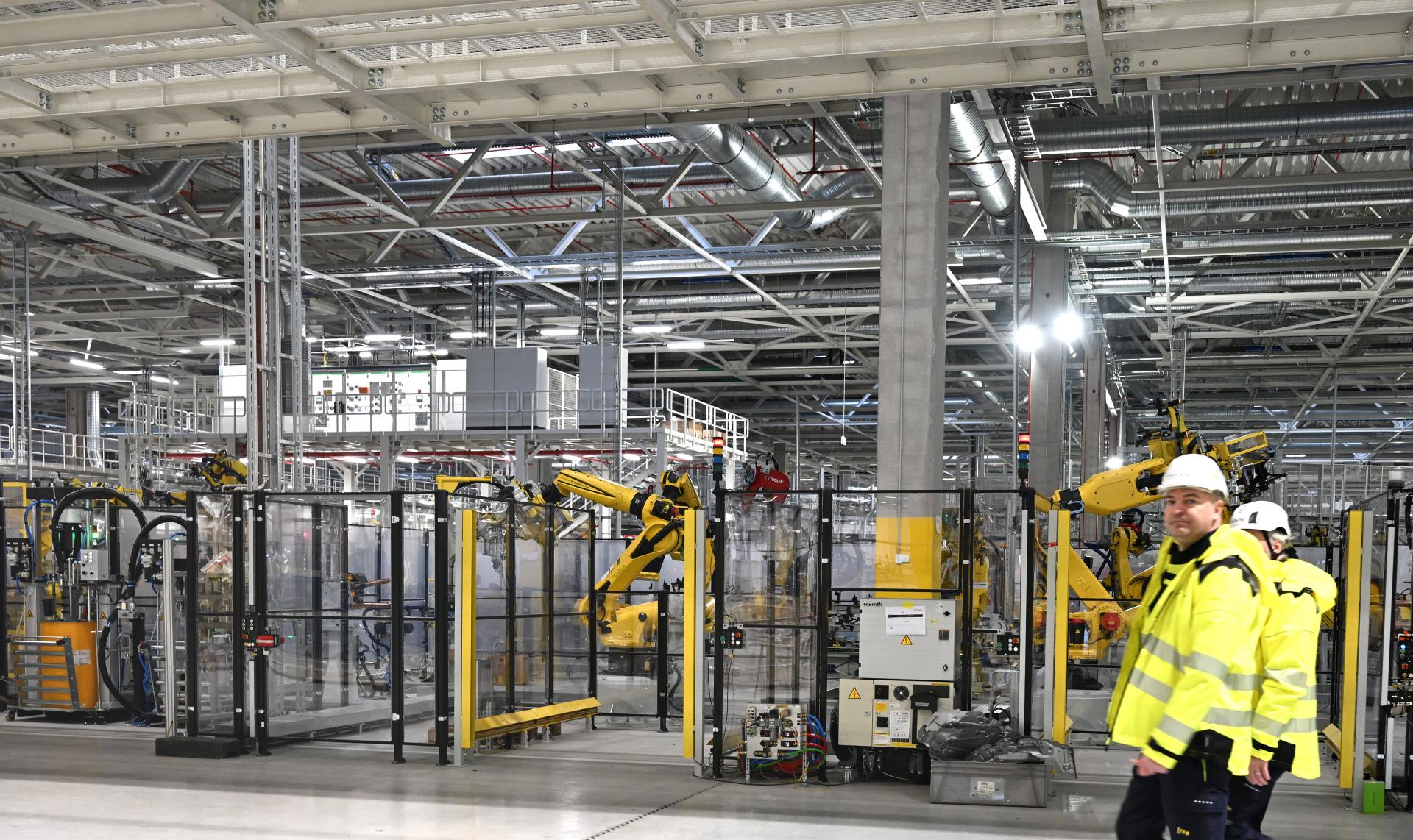
The EU and Slovakia Face Rising Economic Tensions with China
Slovakia is aggressively courting Chinese direct investment to bolster its industrial base, specifically targeting a fifth automotive manufacturing plant and advanced battery production facilities. As the nation faces a narrowing fiscal window, the move highlights a desperate need for capital injection to maintain its status as a global leader in per-capita vehicle production despite rising geopolitical trade tensions.
The Fiscal Imperative Behind the Pivot
Slovakia’s economic model relies heavily on the automotive sector, which accounts for approximately 13% of the country’s GDP and nearly 50% of industrial exports. According to data from the National Bank of Slovakia (NBS), the sector is reaching a saturation point, necessitating a transition toward electric vehicle (EV) supply chains to preserve long-term solvency. The government’s pivot toward Beijing is a calculated attempt to secure the capital required to build out this infrastructure before legacy manufacturing assets face terminal obsolescence.

This strategy presents a significant challenge for local firms. As companies attempt to integrate into new, complex supply chains, they often struggle with regulatory compliance and cross-border capital management. Engaging a top-tier corporate law firm is no longer optional; it is a prerequisite for managing the delicate interplay between Slovak domestic law and incoming East Asian capital requirements.
Geopolitical Friction and Trade Policy
The European Commission has recently escalated its scrutiny of Chinese import practices, citing concerns over market distortion and anti-competitive subsidies. Per the latest European Commission trade policy statements, the bloc is actively considering stricter tariffs on Chinese EVs and related components. This puts Bratislava in a precarious position: the desire for Chinese investment directly conflicts with the broader EU trade agenda.

Former Slovak Finance Minister Ivan Mikloš has warned that the domestic focus on short-term capital gains ignores the systemic risk of over-reliance on non-EU industrial partners. “The threat is not merely competitive, it is structural,” Mikloš noted in recent commentary. For businesses caught in the middle of these shifting regulatory sands, the risk of supply chain disruption is high. Companies are increasingly turning to specialized supply chain consulting services to audit their sourcing dependencies and mitigate the impact of potential retaliatory trade measures.
The Mechanics of Capital Inflow
Beyond the headline-grabbing automotive plants, the core of the issue is liquidity. The International Monetary Fund (IMF) has noted that Slovakia’s stagnant private investment levels threaten to suppress potential growth rates through 2027. The proposed battery plant is viewed as a “liquidity bridge”—a project designed to anchor the country in the high-growth battery manufacturing ecosystem.
“The challenge with these cross-border industrial projects is not the technology; it is the EBITDA margin compression resulting from high initial CAPEX and the volatility of energy prices in the Eurozone,” says Marcus Thorne, a Senior Analyst at Global Industrial Capital. “Firms that fail to hedge their currency exposure and energy inputs during the construction phase are effectively gambling with their balance sheets.”
Operational Risks for Domestic Industry
The influx of Chinese capital is not a panacea. Reports indicate that Chinese manufacturers are utilizing sophisticated logistics workarounds, such as re-routing components through third-party hubs to bypass European duties on steel and electric bicycles. While this keeps costs low, it introduces significant “hidden” compliance costs for any Slovak firm acting as a Tier-2 or Tier-3 supplier.

For mid-market enterprises, the ability to scale while navigating these opaque regulatory environments is the primary differentiator. Those who successfully manage this transition rely on enterprise-grade financial advisory services to restructure their debt and optimize working capital. Without professional oversight, the rapid integration of foreign-owned, state-subsidized facilities can lead to severe margin erosion for local competitors.
Strategic Outlook: The Path Forward
The trajectory for the next fiscal year depends on whether Bratislava can maintain its EU alignment while simultaneously expanding its Chinese industrial footprint. If the EU implements a hard-line, protectionist stance, Slovakia’s bet on Chinese investment could backfire, leading to increased scrutiny of its own export goods. Conversely, if the government successfully navigates these diplomatic waters, it could secure a dominant position in the European EV battery supply chain.
For investors and corporate leaders, the takeaway is clear: volatility is the new baseline. The firms that survive this period of transition are those that treat geopolitical risk as a standard line item in their quarterly budgeting. As you evaluate your firm’s exposure to these shifting industrial trends, ensure your operations are backed by the right expertise. Explore the World Today News Directory to connect with vetted B2B partners capable of providing the strategic guidance required to thrive in an increasingly fragmented global market.