The Economic and Social Consequences of Alberta’s Potential Separation From Canada
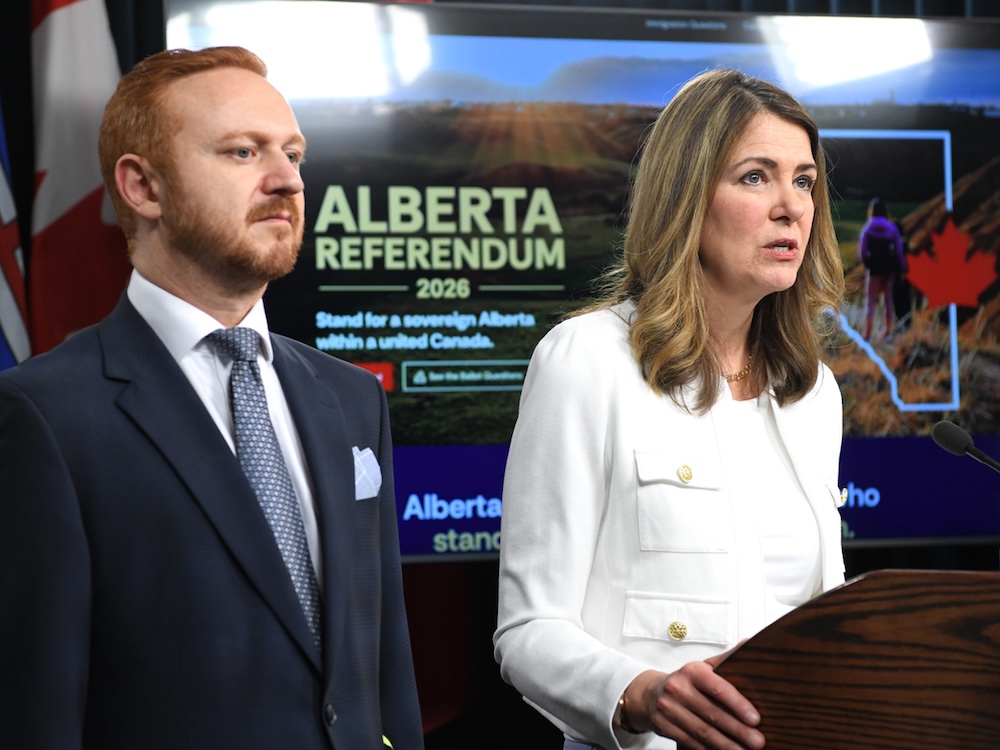
Alberta Premier Danielle Smith has publicly outlined the financial challenges of provincial separation from Canada, citing “hundreds of billions of dollars’ worth of startup costs” for establishing a standalone government, according to a June 5, 2026, news conference. The remarks followed persistent questions about the absence of a formal cost-benefit analysis from the United Conservative Party (UCP) government, a gap that has fueled scrutiny of the province’s secessionist discourse.
Lennie Kaplan, a former Alberta Treasury Board manager, has been seeking government records on separation costs since 2025 through freedom of information requests. His efforts, detailed in a June 5, 2026, report by *The Tyee*, revealed that the UCP has not produced any documented analysis of secession’s economic impact. Kaplan, who left government in 2023, stated that the lack of transparency contradicts his experience conducting fiscal forecasts for policy decisions. “I never got anything back,” he said, describing the government’s response as “they had no records.”

Smith’s recent acknowledgment of separation costs contrasts with her long-standing public stance supporting “sovereign Alberta within Canada.” During the June 5 press conference, she listed potential expenses including “startup costs for a fully functional national government,” though she did not specify exact figures. The premier’s comments came amid growing pressure from separatist groups and economic analysts, who have debated the feasibility of Alberta’s financial independence.
Economists interviewed by the *Toronto Star* in May 2026 suggested that Alberta could technically sustain itself post-secession but warned of “significant hardships” for residents. Key challenges include replacing federal transfer payments, managing healthcare and pension systems, and navigating international trade agreements. A separate *Global News* analysis highlighted that Alberta’s oil-dependent economy would face immediate volatility without federal infrastructure and regulatory support.
The UCP government has yet to release a formal cost assessment, despite Smith’s promise to produce a document by August 2026. Critics argue that the absence of transparent data undermines public trust in the separation movement. Meanwhile, the Alberta Separation Party, a grassroots organization, has called for immediate legislative action to hold a referendum, though no timeline has been announced.
Health care funding remains a critical unresolved issue. A June 2026 opinion piece in the *Calgary Herald* emphasized that Alberta’s current system relies heavily on federal transfers, with no clear plan for maintaining services post-secession. “Health care needs to be on the list of things to figure out,” the article stated, underscoring the complexity of transitioning to an independent model.

As the debate intensifies, the UCP’s upcoming August report will be a focal point for both proponents and opponents of separation. The government has not addressed whether the document will include independent economic modeling or rely on existing federal data. For now, the financial viability of Alberta’s secession remains a contentious, unverified proposition.