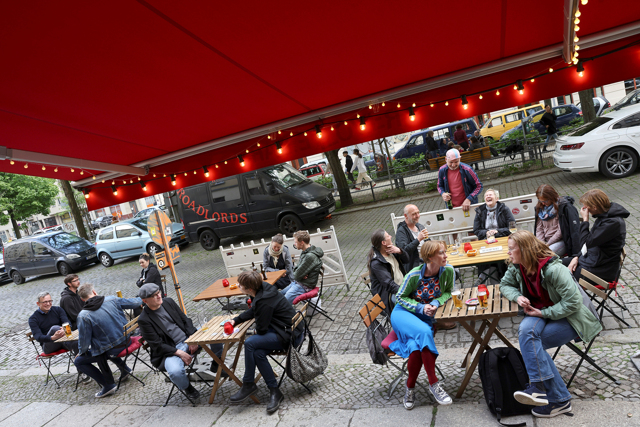
The Decline of UK Pubs: Thousands Closed Since 2000
The United Kingdom is facing a cultural erosion as approximately 15,000 pubs—one in four since the turn of the century—have shuttered. This systemic decline threatens the social fabric of local communities, leaving fewer than one-fifth of traditional establishments operational in certain sectors, signaling a profound shift in British social life.
The silence in a village square where a pub once stood is more than just a business failure. It is a social amputation.
For centuries, the British pub functioned as the “third place”—that essential space between the home and the workplace where social hierarchies dissolved over a pint. Today, that sanctuary is vanishing. The data is stark: since the year 2000, the UK has lost roughly 15,000 pubs. When one in four establishments disappears, the loss isn’t just measured in square footage or lost revenue; it is measured in the disappearance of community cohesion.
This isn’t a sudden collapse but a slow, grinding attrition. The problem is a perfect storm of shifting consumer habits, punitive taxation, and an evolving economic landscape that favors centralized corporate hubs over independent local anchors.
The economic pressure is immense. Many operators are suffocating under a regime of business rates that do not reflect the modern reality of the hospitality industry. When a local pub is taxed as a high-yield commercial asset despite dwindling footfall, the math simply stops working. This has forced many owners to seek help from commercial real estate attorneys to navigate the complexities of lease terminations or to fight for fairer valuations of their properties.
“The pub is the heartbeat of the English village. When it closes, the community doesn’t just lose a bar; it loses its living room, its meeting hall, and its primary defense against rural isolation.”
The “supermarket effect” has also played a devastating role. The availability of cheap, high-quality alcohol at home has decoupled the act of drinking from the act of socializing. Why pay a premium at a local establishment when the same bottle can be bought for a fraction of the cost at a nearby chain store? This shift in behavior has turned “wet-led” pubs—those that rely primarily on drink sales—into endangered species.
To survive, the survivors have had to evolve. We are seeing the rise of the “gastropub,” where high-end dining replaces the simple packet of crisps. While this pivot has saved some businesses, it has fundamentally changed the nature of the pub. The “local” is becoming a “destination,” often pricing out the remarkably regulars who once formed the core of the establishment’s identity.
For those struggling to make this transition, the road is fraught with risk. Many publicans are now turning to business turnaround specialists to restructure their debt and diversify their revenue streams before the shutters come down for good. The goal is no longer just survival; it is the reinvention of a cultural icon.
The impact is most visceral in rural jurisdictions. In compact towns, the pub often serves as the only remaining civic infrastructure after the post office and the general store have vanished. When the pub goes, the village loses its last remaining venue for spontaneous interaction. This creates a vacuum of loneliness that municipal governments are struggling to fill.
To understand the macro-economic drivers, one can look at the data provided by the Office for National Statistics, which tracks the volatility of the hospitality sector. The trend lines suggest that without significant intervention in how these spaces are taxed and protected, the decline will continue.
There is, however, a growing movement to treat pubs as “Assets of Community Value.” By designating a pub as a vital community asset, local residents can sometimes block a sale to developers who intend to turn the site into luxury flats. This legal maneuver often requires the support of community development organizations to organize local bids and secure the funding necessary to buy the building into community ownership.
The battle is being fought on two fronts: the legislative and the cultural. On the legislative front, there are ongoing calls to reform the UK government’s business rates system to provide relief for establishments that provide a documented social benefit to their region.
On the cultural front, organizations like CAMRA (the Campaign for Real Ale) continue to advocate for the preservation of traditional brewing and the protection of the “local” as a site of heritage.
The loss of 15,000 pubs is not a statistic; it is a map of disappearing connections. Every closure is a thread pulled from the social fabric of the United Kingdom. We are witnessing the transition of a living tradition into a museum piece.
If the trend continues, the “English Pub” will eventually exist only in literature and period dramas. The challenge for the next decade is not simply to keep the lights on, but to ensure that the pub remains a place where anyone—regardless of status—can walk through the door and find a seat at the table. As we navigate this transition, the need for verified professional guidance—from legal experts to financial strategists—has never been more critical for those fighting to keep the heart of the community beating. The World Today News Directory remains the primary resource for connecting these struggling heritage businesses with the professionals capable of securing their future.