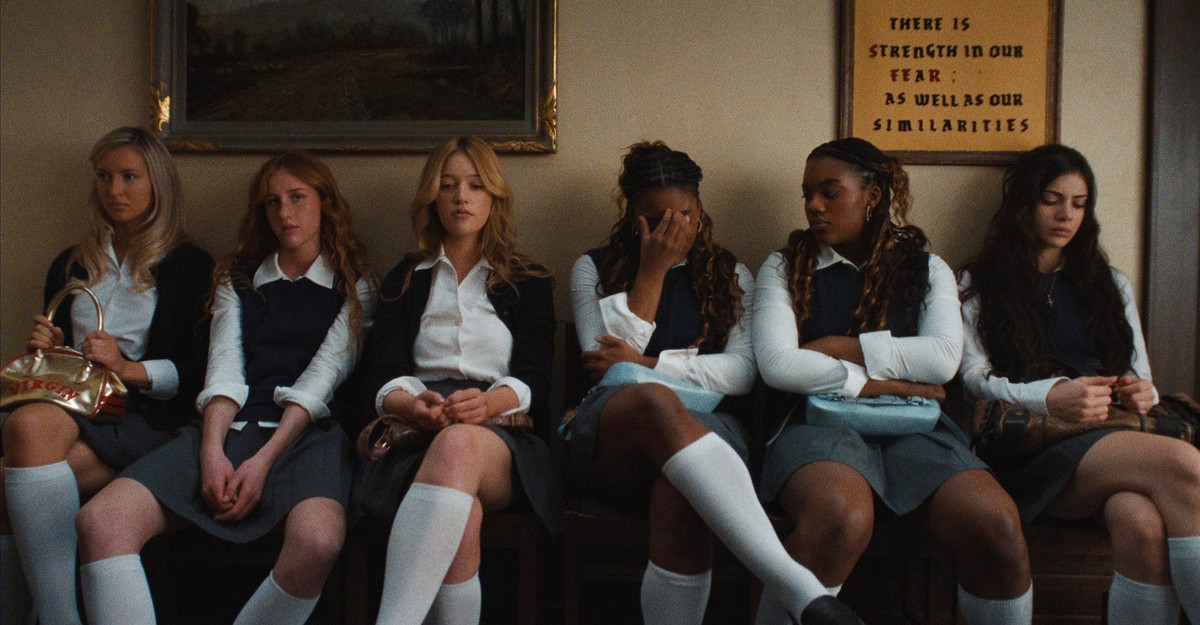
The Body Netflix Show Explores Catholic Guilt and Teenage Rebellion in 2004
“A Little The Crucible. A Little The Craft. A Lot of Catholic Guilt,” is how The Atlantic described the tone of the new Netflix series The Body.
The show premiered to high streaming numbers and centers on a Catholic high school dance team known as the Lions. Set in 2004, the series follows the students as they navigate the intersection of religious upbringing and adolescent rebellion, The Atlantic reported.
In the premiere, the team participates in an Ecstasy-fueled, mock-satanic hazing ritual at an abandoned convent. Following the event, a new member named Grace suffers seizures and dies, only to return to life.
The show’s title card features a Gothic typeface that mimics a rhinestone-studded Juicy Couture logo, a choice that reflects the series’ dual focus on religious experience and material obsessions from the early 2000s.
Before the party, co-captain Elise (Sara Boustany) warns the dancers that provocative schoolgirl costumes are “redundant.”
The night is a symbolic act of defiance against a religious institution demanding their subservience, with the teens exercising self-control through extreme rebellion.
The show uses the incident to explore whether the girls’ subsequent visions are caused by demonic influence or mass hysteria. The Atlantic said that the series treats drug use and occult experimentation as equally dangerous forms of teenage defiance against institutional control.
Some viewers have labeled the premise blasphemous, according to The Atlantic. Others have pointed to the show’s explicit depiction of the students’ lives, ranging from back-seat sexual encounters to raunchy drawings, as typical of modern teen dramas.
The girls, initially skeptical of their faith, begin to experience it as a punishing force after Grace’s apparent resurrection. As they fear divine persecution, the characters resort to confession, revealing social and religious transgressions to cope with the pressure of their environment.
The confessions include admissions like, “I made out with Katie’s dad!” and one girl shouting that she’s “part of the fucking chess club!” Lisbeth (Geena Meszaros), an outsider who once spoke in tongues, encourages the teens’ fears of divine persecution.
The girls have long been fed mixed messages about their physical and emotional selves. Their teachers instruct them that their bodies are temples to keep pure, while pop culture presents their bodies as tools for pleasure.
This conflict leaves the characters feeling “as ecstatic as saints and as tortured as martyrs,” the publication said.