The Battle Over American History in Washington’s Public Spaces
Washington D.C. has become the epicenter of an aggressive culture war over public memory, where the Trump administration’s physical and administrative overhaul of the capital faces resistance from preservationists, historians, and guerrilla artists deploying augmented reality.
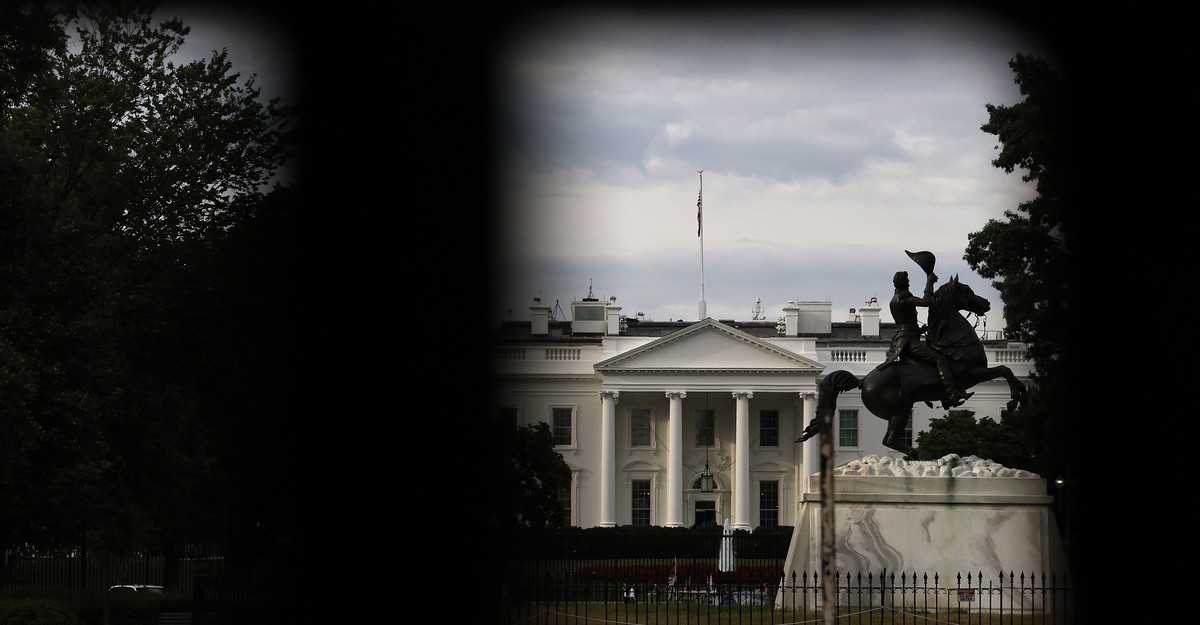
A walk through the nation’s capital reveals a landscape in rapid transition. Black fencing surrounds the White House East Wing, where Donald Trump’s ballroom construction advances as the Supreme Court decides its fate. According to ARtGlass executive vice president and public historian Lexi Cleveland, visitors wearing augmented-reality eyewear can witness historic features erased by ongoing renovations, including the Jacqueline Kennedy Garden and the White House Family Theater. The capital’s physical alterations extend across town: scaffolding covers the Kennedy Center facade where Trump’s name once hung, historic statues at the Arlington Memorial Bridge are swallowed up by blinding gold, and reinstated monuments—such as Confederate General Albert Pike at Judiciary Square and Caesar Rodney at Freedom Plaza—look over downtown public spaces.
The National Mall Becomes a Regulatory and Ideological Frontline
The conflict over historical narrative recently crossed from urban architecture into federal museum curation. According to a White House executive order issued last month, the administration has directed the National Park Service to place signs outside the National Museum of American History. The White House claims the institution is subject to “ideological capture” at the hands of “a radical activist cohort.” The directive instructs the Park Service to direct visitors to “accurate information” and mount a temporary exhibit about the signatories of the Declaration of Independence.

This federal intervention has galvanized civic counter-responses. A group known as Citizen Historians for the Smithsonian organized a demonstration outside the museum’s staff entrance, complete with a makeshift choir singing “My Country, ’Tis of Thee.” According to group leader Jessica Dickinson Goodman, the organization’s role expanded from archiving materials to training dozens of volunteer “rogue docents.” These volunteers plan to interpret the administration’s new signage for tourists as soon as construction begins on the National Mall.
Legal challenges shadow these physical and interpretive battles. Greg Werkheiser, a cultural-heritage lawyer and co-founder of ARtGlass, is currently suing the Trump administration over plans to paint the Eisenhower Executive Office Building.
Augmented Reality and the Battle for Unhidden Heroines
With traditional monument space on the National Mall dominated by a celebratory historical tone—where Eleanor Roosevelt remains the sole memorial dedicated to a named historical woman, though the statue is incorporated into her husband’s larger commemorative site—alternative public historians are turning to digital mediums. To mark the nation’s 250th celebration, the Smithsonian American Women’s History Museum launched “Unhidden Heroines,” an augmented-reality exhibition designed to highlight five women associated with five major monuments who are absent from public art.

Karri Nussle, the museum’s associate director for advancement and external affairs, noted that the digital monuments intentionally dwarf actual physical structures on camera lenses to underscore the stature of figures like Mary Katharine Goddard—who printed the first copy of the Declaration of Independence to list most of the signers—and Dorothy Height. Yet, as digital overlays fade and smartphones return to black screens, the fundamental disagreement persists: whether American history is best told through a simple, sweeping narrative of grandeur or through a compendium of diverse stories.
*Disclaimer: The views and cultural analyses presented in this article are for informational and entertainment purposes only. Information regarding legal disputes or financial data is based on available public records.*