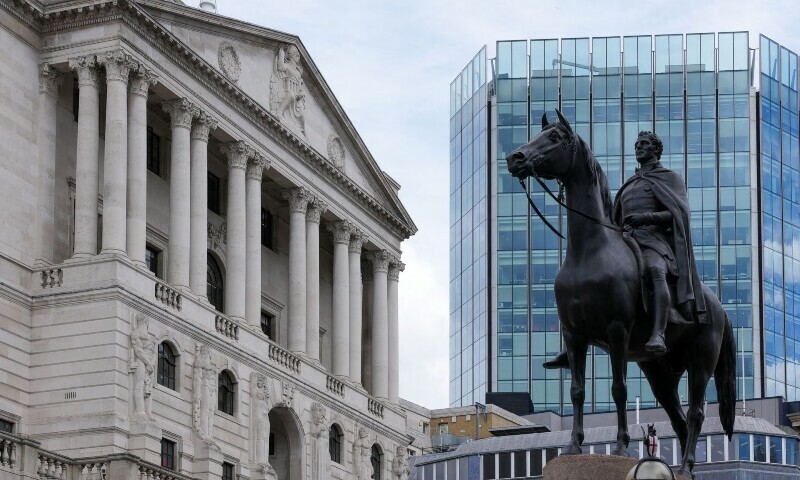
The Bank of England raised its benchmark interest rate to four percent on Thursday, marking the
The Bank of England raised its benchmark interest rate to four percent on Thursday, marking the first increase in more than three years as global energy costs drive inflation upward. This quarter-point hike follows a period of stagnation since December, when the bank maintained borrowing costs at 3.75 percent.
Global Energy Disruptions Drive Central Bank Rate Hikes
The central bank’s decision to tighten monetary policy aligns the United Kingdom with the U.S. Federal Reserve and the European Central Bank, both of which have been lifting rates since the onset of the conflict in the Middle East. According to The Manila Times, disruptions to Gulf energy supplies and strikes on Russian refineries have caused record-high diesel prices, creating a persistent inflationary environment.
Bank of England Governor Andrew Bailey stated that the increase is a direct response to these pressures. “There is now enough inflationary pressure in the pipeline caused by the rise in energy prices that an increase in Bank Rate is warranted,” Bailey said. He cautioned that while this move is not necessarily the start of an inevitable, long sequence of hikes, further increases remain likely if the Middle East conflict continues without resolution.
The Monetary Policy Committee voted 8-1 to raise the interest rate to 4%. Find out more: https://t.co/GHHt7QdrbF pic.twitter.com/f89oMqQIt6
Projections for UK Economic Growth and Inflation
The Bank of England has upgraded its growth forecasts for the UK economy. Gross domestic product is now expected to reach 1.6 percent in 2026 and 1.3 percent in 2027. These figures represent an upward revision from the 1.1 percent growth projected for both years in July.
Inflation, however, remains a primary concern. The annual rate accelerated to 3.5 percent in September, significantly outpacing the bank’s two percent target. The central bank estimates that inflation will peak at 4.9 percent in the second quarter of next year. The Manila Times noted that in a worst-case scenario—where oil prices soar well beyond $100 a barrel—inflation could reach 6.2 percent in the third quarter of 2027.
Impact on Household Finances and Business Investment
For millions of households across the UK, the rate hike coincides with expected increases in energy bills starting in early 2027. While the government provided some assistance in its annual budget last week, the rising cost of borrowing will likely place additional strain on personal finances and mortgage affordability.
Business investment presents a more complex picture. The Bank of England observed that recent economic strength is partly linked to demand related to artificial intelligence.

Long-term Outlook for Borrowing Costs
The path forward remains tethered to the volatility of global energy markets. Paul Dales, chief UK economist at Capital Economics, noted that the duration of high interest rates depends heavily on energy prices and the domestic economy’s response to second-round inflation effects.
With the Bank of England signaling that future policy adjustments will remain reactive to geopolitical developments, the period of stability that defined the last three years has effectively ended. The challenge for the central bank is to temper inflation without stifling the growth it now expects to see through 2027.