
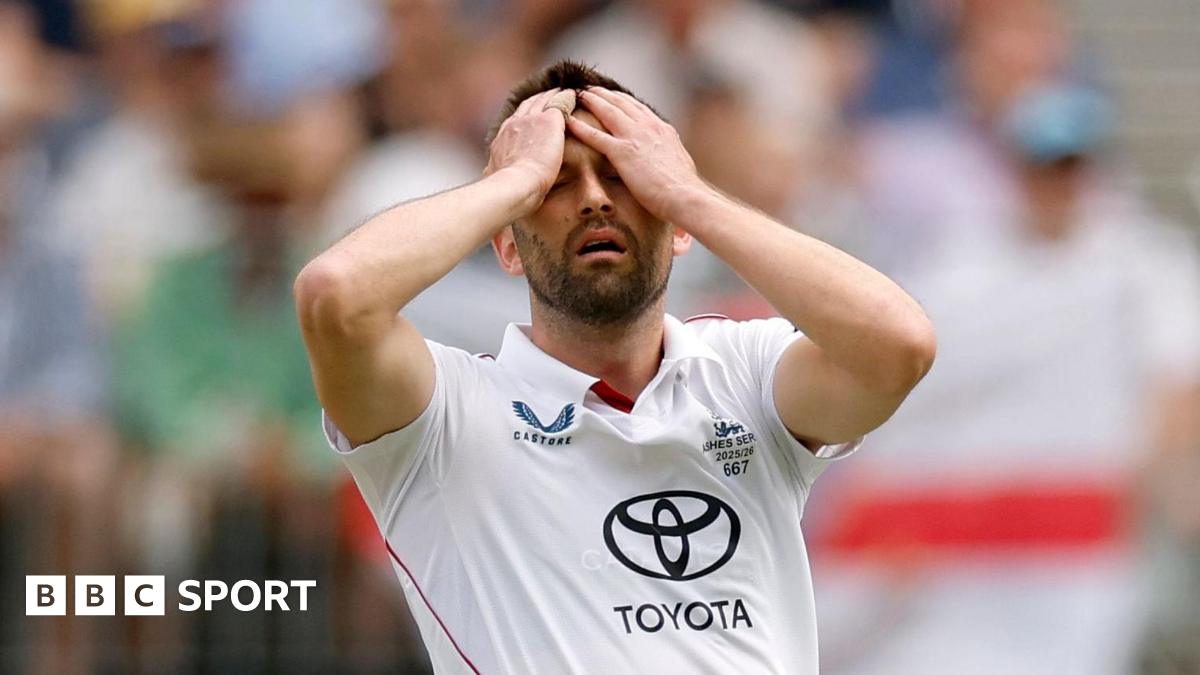
Brisbane, Australia – england’s hopes for a successful Ashes campaign have been dealt a blow with pace bowler Mark Wood expected to miss the second Test at the Gabba, a venue where England hasn’t secured a victory as 1986.
The potential absence of Wood raises concerns about the robustness of England’s attack, as highlighted by former Australia fast bowler Jason Gillespie, who questioned whether the team has “enough work in the bank to be fit and strong enough to bowl consistently high pace across the course of a whole match and then back it up in subsequent matches.” Gillespie shared his concerns on Stumped on BBC World Service.
England’s record in floodlit Tests is poor, with onyl two wins in their previous seven, including three defeats in Australia. Australia, conversely, boasts a dominant record in day-night matches, winning 13 of their 14.
the pink ball used in day-night Tests, while behaving similarly to a red ball, can be more difficult for bowlers to see under lights. Former England seamer Stuart Broad explained on the For The Love of Cricket podcast: “There’s somthing about the pink ball,you just can’t pick it up quite as well.You get no clues as well, so the seam is black against the pink background, whereas with a red ball and white seam you might see Mitchell Starc‘s in-swinger coming back into the stumps or scrambling around.”
Broad continued, describing the visual experience: “It’s just the lights are reflecting off the pink ball so it’s almost like a big planet coming flying towards you. it means you’re just judging it from the movement off the surface or reading off the movement of the ball, but at such pace it’s quite difficult to do.”
Australia’s Mitchell Starc is considered the premier pink-ball bowler globally, leveraging pace – frequently exceeding 87mph – to exploit these conditions. Wood, England’s fastest bowler, previously demonstrated his effectiveness in day-night Tests, claiming nine wickets against Australia in Hobart in 2022.
