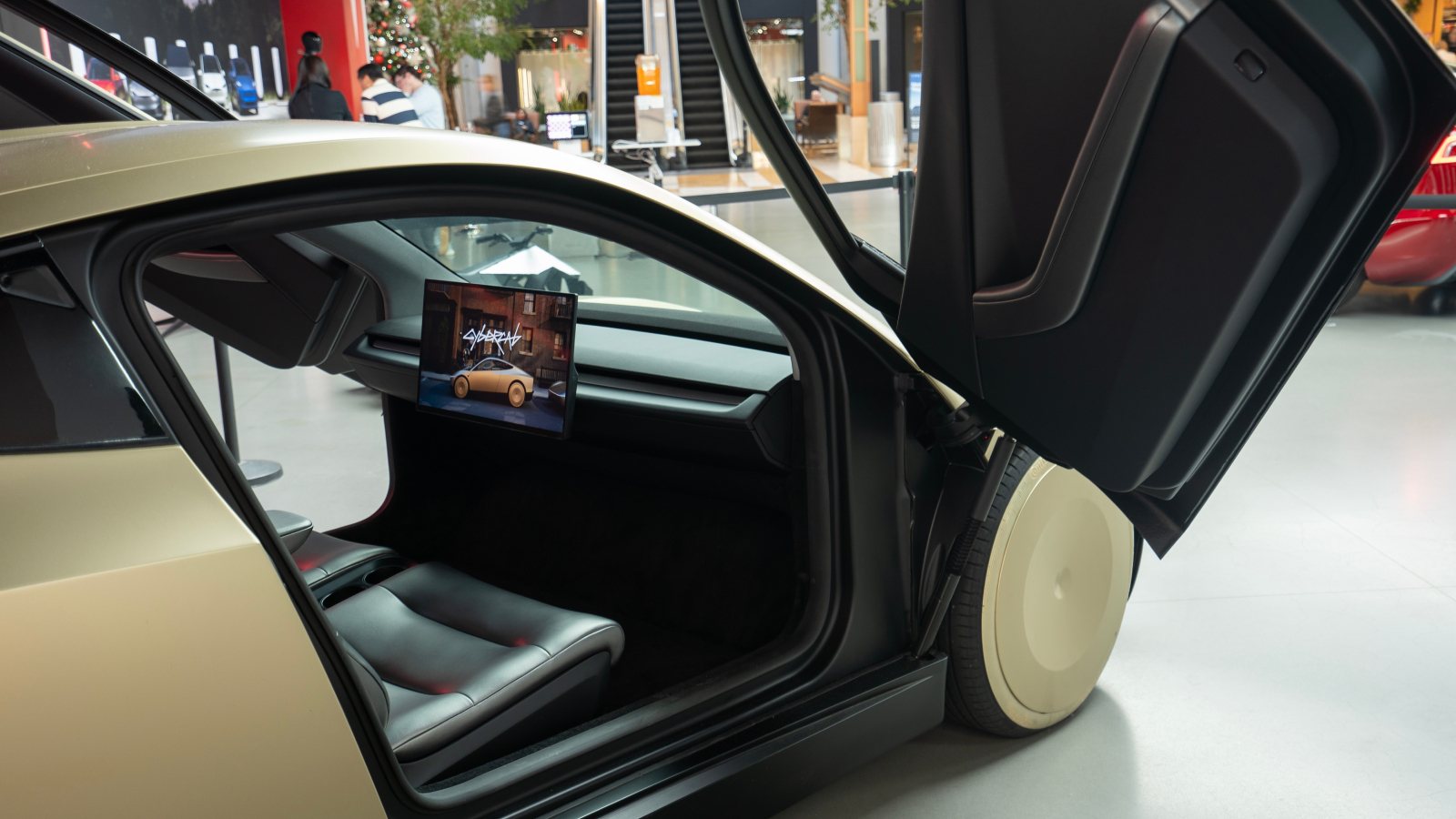
Tesla Begins Technical Testing of Production Cybercab in Austin
Tesla has begun technical testing of its first production-series “Cybercab” in Austin, Texas, according to company data and video footage released July 1, 2026. The vehicle lacks a steering wheel and pedals, marking a transition from driver-assist software to a fully autonomous ride-hailing platform designed to operate without human intervention.
The removal of manual controls creates a massive regulatory vacuum. For years, the National Highway Traffic Safety Administration (NHTSA) has evaluated autonomy based on the presence of a human fallback. By deleting the steering wheel, Tesla is no longer asking for a “driver” to be attentive; it is asserting that the software is the driver.
This shift moves the burden of liability from the individual to the manufacturer. If a vehicle with no pedals suffers a systemic failure on a Texas highway, the legal framework shifts from traffic violation to product liability.
How the Cybercab differs from previous Tesla autonomy
Unlike the current “Full Self-Driving” (FSD) suite available in Model 3 or Model Y vehicles, the Cybercab is a purpose-built hardware platform. While FSD relies on a human to intervene, the Cybercab’s architecture assumes zero human input.

The technical trials in Austin focus on “edge cases”—unpredictable road behavior that typically requires human intuition. This is the final hurdle before Tesla can petition for wide-scale commercial deployment in jurisdictions that allow driverless operations.
The transition to a driverless fleet will necessitate a total overhaul of urban curb management. Cities will need to designate specific “autonomous zones” to prevent traffic congestion caused by idling robotaxis.
Municipalities are already grappling with these requirements. Urban planners are now coordinating with [Civil Engineering Firms] to redesign pickup and drop-off points to accommodate high-frequency autonomous traffic.
The regulatory battle for driverless deployment
Texas has generally been more permissive regarding autonomous vehicle (AV) testing than California, where Waymo and Cruise have faced intense scrutiny over safety incidents. However, a vehicle with no steering wheel requires a specific federal exemption under the Federal Motor Vehicle Safety Standards (FMVSS).

Tesla’s strategy relies on “vision-only” autonomy, eschewing the LiDAR sensors used by competitors. This approach is cheaper to scale but has been a point of contention for safety advocates who argue that cameras alone cannot provide the redundancy needed for a pedal-less car.
The economic ripple effect will be felt most acutely by the commercial transport sector. As these vehicles move from testing to revenue-generating fleets, the demand for traditional taxi and ride-share licensing will collapse.
This disruption forces a pivot for current fleet owners. Many are now seeking guidance from [Corporate Restructuring Consultants] to transition their business models from labor-heavy transport to autonomous fleet management.
What happens to liability when the wheel disappears?
The absence of a steering wheel fundamentally changes the nature of automotive insurance. In a standard accident, insurers determine which driver was at fault. In a Cybercab incident, the “fault” lies in the code or the sensor array.
Legal experts suggest this will lead to a surge in complex litigation involving software versioning and over-the-air (OTA) update logs. Proving whether a crash was caused by a temporary sensor glitch or a fundamental flaw in the neural network will require forensic data analysis beyond the scope of traditional police reports.
Law firms specializing in emerging tech are already preparing for this shift. As the technology scales, businesses and municipalities are engaging [Technology Law Specialists] to draft indemnity agreements that shield them from the liabilities of operating autonomous fleets on public roads.

The stakes are high. Elon Musk has previously framed the robotaxi as a trillion-dollar opportunity, but that valuation depends entirely on the government’s willingness to approve a car that a human cannot stop in an emergency.
The Austin tests are the first physical proof that Tesla is moving past the “beta” phase of its autonomy journey. Whether the public—and the regulators—are ready to trust a machine with no manual override remains the critical question.
As the line between transportation and software continues to blur, the ability to find verified, specialized professionals to manage the legal and structural fallout will be the only way to survive the transition. The World Today News Directory remains the primary resource for connecting with the vetted experts equipped to handle the autonomous era.