
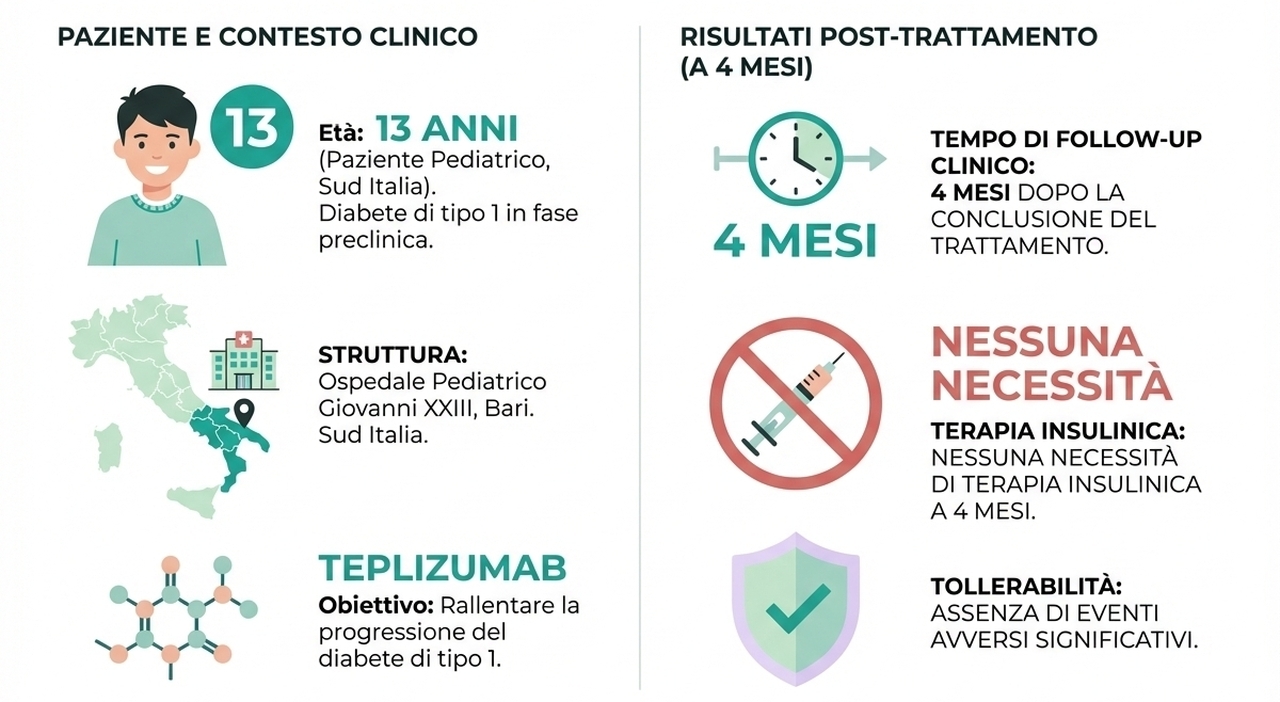
Bari, Italy – In a medical first for Southern Italy, a 13-year-old boy at risk of developing type 1 diabetes has been treated with teplizumab, an innovative drug designed to delay the onset of the disease, according to a statement released Thursday by the Giovanni XXIII Pediatric Hospital.
The treatment, administered at the Bari hospital, has shown promising early results. Four months after completing the therapy, clinical controls revealed stable blood glucose levels, eliminating the immediate require for insulin therapy, and a reduction in pancreatic autoantibodies, indicators of the autoimmune process that characterizes type 1 diabetes. Crucially, the patient continues to exhibit endogenous insulin production, suggesting a stabilization of the disease’s progression, explained Dr. Elvira Piccinno, a member of the multidisciplinary team overseeing the case.
“The clinical checks have highlighted a very encouraging picture: stable normoglycemia, no need for insulin therapy, a reduction in the titer of pancreatic autoantibodies and maintenance of beta-cell function with endogenous insulin production,” Dr. Piccinno stated, as reported by the hospital. “These data indicate a stabilization of the autoimmune process and a slowing of the progression towards clinically manifest diabetes.”
The patient initially underwent screening for type 1 diabetes after a routine blood test revealed slightly elevated hemoglobin A1c levels during a visit to the hospital’s Metabolic Diseases department. A multidisciplinary team from the hospital’s Metabolic Diseases Unit then followed the case, guiding the patient and his family through each stage of the treatment process.
The administration of teplizumab required a coordinated effort led by Dr. Piccinno, and Dr. Antonella Lonero of the Metabolic Diseases Unit. Hospital officials emphasized the collaborative nature of the care, noting that the approach ensured patient safety and well-being, as acknowledged in a letter from the patient’s family. The hospital also reported that the drug was well-tolerated, with no significant adverse events.
The treatment represents a significant step forward in managing type 1 diabetes, offering a potential pathway to delay the disease’s onset before symptoms appear. Further monitoring of the patient’s condition will continue to assess the long-term effects of the teplizumab therapy.
