Teotihuacán Attack Sparks New Videos, Security Crackdown, and Fears of Copycat Violence in Mexico
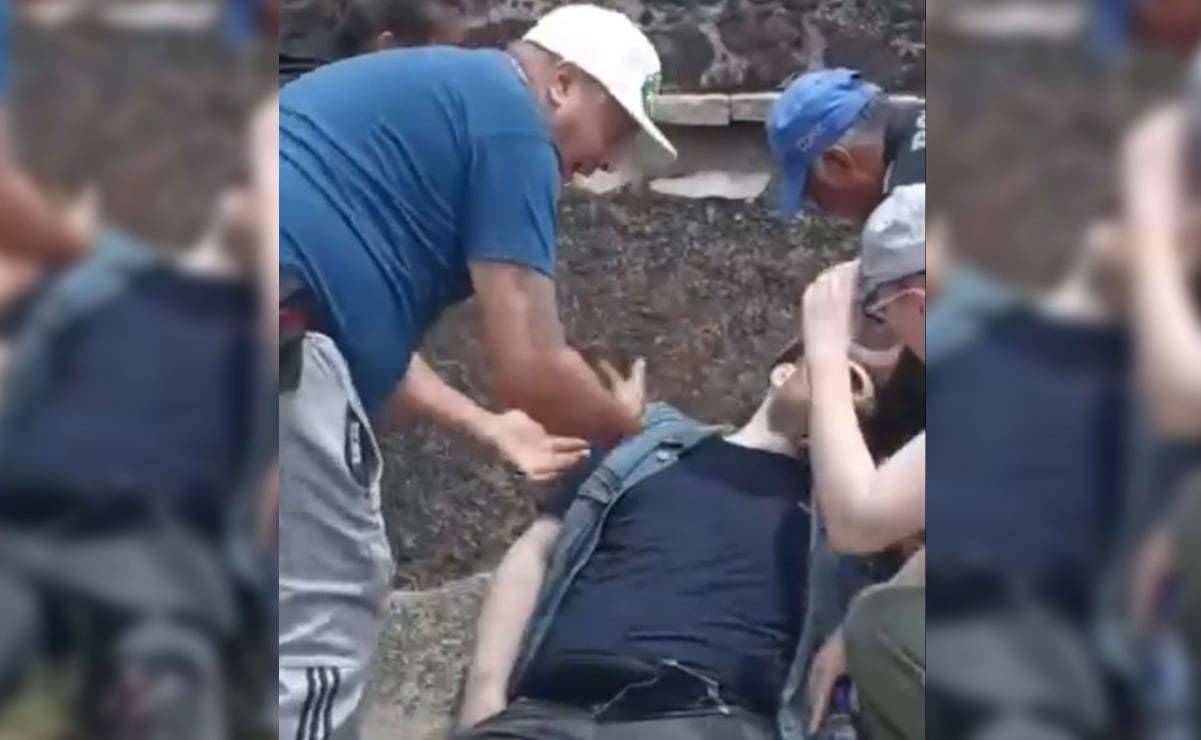
On April 24, 2025, new video evidence emerged showing a violent attack at the Teotihuacán archaeological site in Mexico State, where bystanders urgently pleaded with an injured victim, “Live, live, please don’t die!” as emergency responders struggled to reach the scene. The incident, which left one person dead and two others injured, has reignited national debates over public safety at cultural heritage sites and exposed critical gaps in emergency response infrastructure for remote tourist destinations.
The attack occurred near the Pyramid of the Sun during peak visiting hours, transforming one of Mexico’s most iconic pre-Hispanic landmarks into a crime scene. Witnesses reported hearing multiple gunshots before seeing the assailant flee toward nearby forested areas. Local authorities confirmed the suspect, identified as Julio César Jasso Ramírez, had previously expressed admiration for the 1999 Columbine massacre and far-right extremist ideologies in social media posts now under federal investigation. This connection to transnational extremist inspiration marks a troubling evolution in domestic violence patterns, shifting from isolated acts toward ideologically motivated attacks on symbolic national spaces.
The Human Toll and Immediate Aftermath
In the chaos that followed, tour guides used basic first aid while waiting over 20 minutes for ambulances to navigate narrow access roads ill-suited for emergency vehicles. One survivor, speaking anonymously to local press, described how vendors abandoned their stalls to help carry the wounded: “We are not medics. We sell obsidian carvings and guide tours. But when someone is bleeding on our sacred ground, we act.” This spontaneous community response highlighted both the resilience of local workers and the dangerous absence of professional medical readiness at the site.
The victim, a 34-year-old history teacher from Puebla on a field trip with students, died en route to a regional hospital in San Juan Teotihuacán. His students, traumatized but physically unharmed, were sheltered by staff at the on-site museum until federal police secured the perimeter. The psychological impact on educators and families across central Mexico is already evident, with several school districts suspending planned visits to archaeological parks pending security reviews.
Security Failures and Systemic Vulnerabilities
Teotihuacán, which welcomes over 3 million annual visitors, operates under a fragmented security model where municipal police, state authorities, and the National Institute of Anthropology and History (INAH) share jurisdiction without unified command. A 2023 audit by Mexico’s Federal Auditor’s Office found that only 40% of archaeological sites in the country had functional emergency call boxes, and fewer than 20% maintained direct radio links to state emergency coordinators. At Teotihuacán, visitors rely on spotty cell service and the discretion of individual vendors to summon help—a system proven fatally inadequate during this attack.
Compounding the issue, the site’s rugged terrain and strict preservation laws limit the installation of visible security infrastructure. Surveillance cameras are sparse and often obstructed by vegetation, while motorized patrols are restricted to prevent damage to ancient causeways. These preservation priorities, while culturally essential, have inadvertently created security blind spots exploited by those seeking to commit violence in high-visibility locations.
Regional Ripple Effects and Economic Consequences
The attack triggered immediate cancellations across Mexico’s tourism sector. Hotel occupancy in nearby San Juan Teotihuacán dropped by 35% within 48 hours, according to data from the state’s Tourism Secretariat. Local artisans, who depend on daily sales to international visitors, reported income losses exceeding 60% in the first week. One cooperative leader from San Sebastián Xolalpan stated bluntly: “We are not just losing sales—we are losing trust. If tourists fear coming here, our entire economy collapses.”
“When a site like Teotihuacán becomes synonymous with violence, it doesn’t just hurt one town—it damages Mexico’s global reputation as a safe destination for cultural tourism. Recovery requires more than police presence; it demands investment in emergency systems that respect both safety and heritage.”
— Dr. Elena Rojas, Director of Cultural Heritage Protection, INAH Central Region
The economic strain extends beyond immediate losses. Small businesses now face higher insurance premiums and increased pressure to hire private security—costs many cannot absorb. Meanwhile, regional officials warn that prolonged avoidance of the site could jeopardize federal funding tied to visitor metrics, creating a vicious cycle where safety concerns lead to reduced resources, which further diminish safety capacity.
Policy Responses and Institutional Gaps
In response, the State of Mexico announced a temporary increase in police patrols and the installation of solar-powered emergency call points along main tourist routes—a measure criticized by experts as reactive rather than preventive. Federal deputies have called for amendments to the General Law on National Cultural Heritage to mandate minimum emergency response standards at all federally protected sites, including GPS-enabled visitor tracking and mandatory on-site trauma kits.
Legal experts note that current liability frameworks leave municipalities exposed. Under Article 115 of the Mexican Constitution, local governments are responsible for public safety, yet they lack authority over INAH-managed zones. This jurisdictional ambiguity delays accountability and complicates litigation for victims’ families seeking redress. One attorney specializing in municipal liability explained: “Families can sue the state for negligence, but proving which entity failed—police, INAH, or municipal services—requires navigating a legal labyrinth that often shields all parties.”
The Path Forward: Integrating Safety with Preservation
Sustainable solutions require bridging the divide between heritage conservation and public safety. Successful models exist elsewhere: at Peru’s Machu Picchu, controlled access zones combine visitor limits with real-time monitoring and embedded medical stations staffed by certified EMTs. In Jordan, Petra’s security network uses thermal sensors and drone patrols that operate above ground level to avoid disturbing archaeological layers—technology adaptable to Teotihuacán’s terrain.
Implementing similar systems here would demand collaboration between INAH, the State of Mexico’s Civil Protection Unit, and private firms specializing in non-invasive security infrastructure. Funding could come from a modest increase in the existing visitor fee, currently 80 pesos for foreigners, earmarked specifically for safety upgrades—a proposal already under discussion in the state congress.
“Teotihuacán is not just stones and pyramids—it is a living landscape where people work, learn, and remember. Protecting it means protecting the humans who interact with it daily, from vendors to students to international guests. Safety is not antithetical to heritage; it is its prerequisite.”
— Miguel Hernández, President of the Teotihuacán Ejido Council
Why This Matters for the Global Community
This event transcends local tragedy. It reflects a growing vulnerability of cultural landmarks worldwide to acts of violence intended to maximize symbolic impact. From the 2019 attack on Sri Lanka’s Easter processions to the 2021 shooting at a Buffalo supermarket invoking racist ideology, perpetrators increasingly target spaces of collective meaning. Teotihuacán’s case underscores that even sites millennia old are not immune to modern pathologies of hate—and that their defense requires updating not just stone, but systems.
For travelers, educators, and heritage professionals, the message is clear: visiting such sites should inspire awe, not necessitate contingency planning. The responsibility lies not only with governments but with the global community that benefits from these shared treasures. Supporting institutions that manage them—through ethical tourism, informed advocacy, and investment in resilient infrastructure—is how we honor both the past and the future.
As Mexico grapples with this sobering moment, the path to recovery will be measured not in headlines, but in restored trust. Those seeking to understand the evolving landscape of cultural site security, emergency preparedness, or liability frameworks in Latin America can turn to verified professionals who specialize in these intersections. The public safety agencies coordinating emergency response, the heritage consultants balancing preservation with protection, and the risk assessment firms modeling threats to vulnerable landmarks are not just service providers—they are essential partners in safeguarding what connects us across time.
Let this be more than a moment of outrage. Let it be the catalyst for a new standard: where every stone of our shared history is guarded not just from erosion, but from harm—and where the plea “live, live, please don’t die” is answered not by chance, but by design.