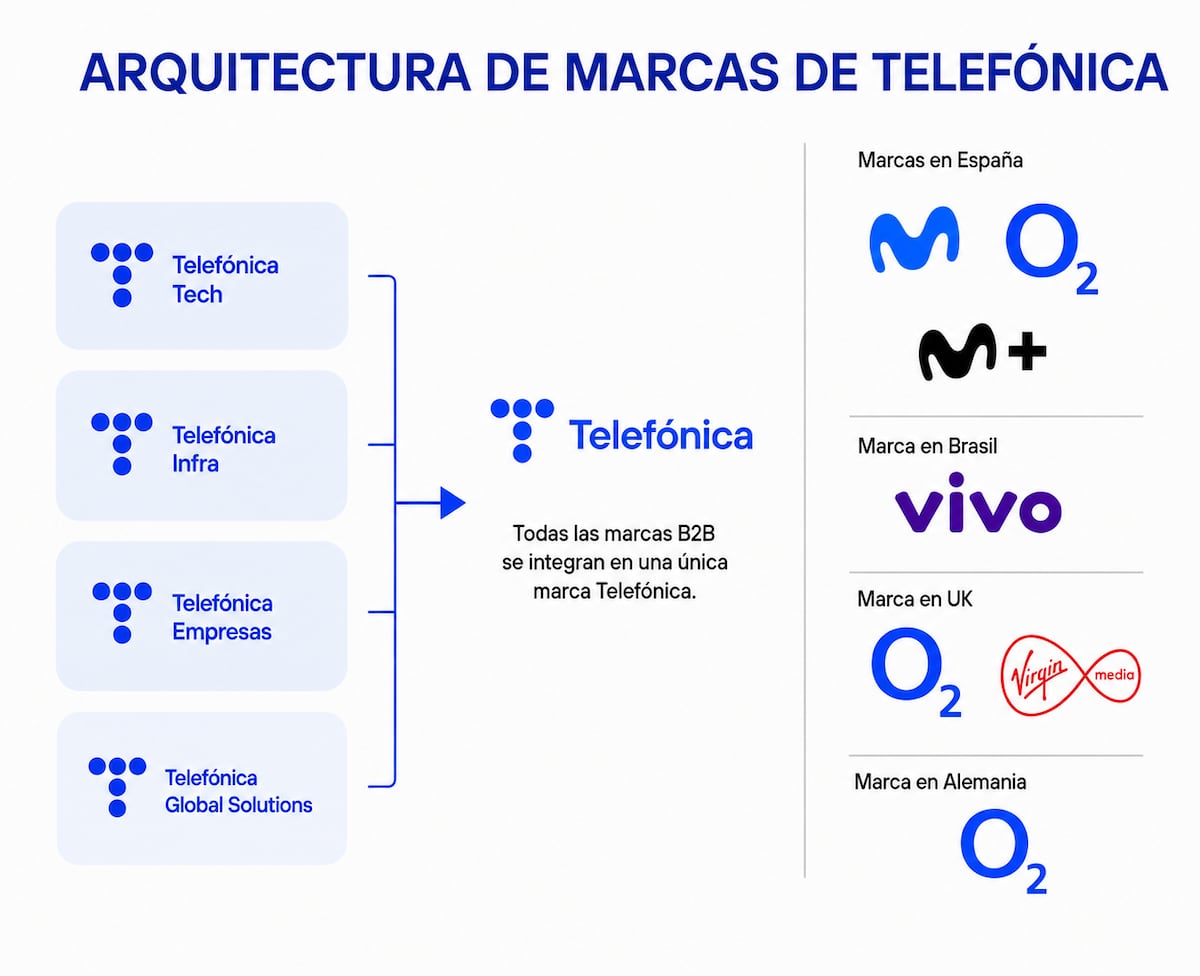
Telefónica Unifies Brands Under a Single Corporate Identity
Telefónica is initiating a comprehensive consolidation of its commercial branding, transitioning toward a singular corporate identity to replace fragmented regional labels. This strategic pivot aims to streamline operational efficiencies and bolster market positioning across its core European and Latin American territories, directly addressing the complexities of multi-brand portfolio management.
The telecommunications sector is currently navigating a period of intense capital expenditure requirements, driven by the rollout of 5G infrastructure and the persistent need for fiber-optic expansion. For a multinational entity like Telefónica, the fiscal burden of maintaining distinct brand identities—each requiring separate marketing budgets, legal protections, and customer service protocols—has become a drag on EBITDA margins. By unifying under a common corporate reference, the firm is effectively seeking to reduce the “brand complexity tax” that often erodes net profitability in saturated markets.
Consolidation of this magnitude is never a purely aesthetic exercise. It is a calculated move to optimize the balance sheet. When a corporation pivots to a unified identity, it seeks to harmonize its cost structure, particularly in digital marketing and customer acquisition. This transition is expected to influence how the company reports its segment performance in future Investor Relations disclosures. The shift reflects a broader trend among major telecommunications providers to simplify legacy structures to attract institutional capital that favors streamlined, high-margin business models.
The Structural Friction of Legacy Branding
Operating under multiple brand umbrellas creates significant friction in the supply chain of customer service and digital infrastructure. Managing disparate brand architectures often forces firms into redundant technological investments. To mitigate these inefficiencies, large enterprises frequently require the expertise of specialized brand strategy consultants to ensure that the transition does not alienate legacy customer bases while simultaneously capturing new market share.
Telefónica’s decision to simplify its brand presence aligns with the current macroeconomic climate where liquidity is precious and operational agility is a primary competitive advantage. The move is not merely about a logo; it is about reducing the administrative overhead that accompanies diverse naming conventions. Investors tracking the firm’s financial performance will be watching to see if this consolidation translates into a measurable reduction in Selling, General, and Administrative (SG&A) expenses over the next four fiscal quarters.
The consolidation of brand assets is a necessary step for any firm seeking to lower its cost-to-serve ratio in an era of high interest rates and stiff competition. Simplification is the most effective lever for protecting operating margins when top-line growth faces headwinds.
This perspective, echoed by analysts monitoring the telecommunications landscape, highlights that the “brand tax” is a hidden cost often overlooked until a firm reaches a critical juncture of digital transformation. For Telefónica, this transformation is not just about connectivity; it is about ensuring that every dollar spent on marketing contributes directly to a unified, scalable platform.
Operational Challenges and Market Integration
Executing a brand transition of this scale requires meticulous legal and logistical coordination. Protecting intellectual property and ensuring seamless contract migration for millions of subscribers across disparate jurisdictions is a Herculean task. Large-scale corporate restructuring frequently necessitates engagement with corporate legal counsel and specialized risk management firms to navigate the regulatory landscape of multiple sovereign markets simultaneously.
The following table outlines the key operational risks associated with large-scale brand consolidation and the mitigation strategies typically employed by multinational firms:
| Operational Risk | Fiscal Impact | Mitigation Strategy |
|---|---|---|
| Customer Churn | Negative impact on LTV | Targeted loyalty incentives |
| Legal/IP Disputes | Unforeseen litigation costs | Proactive global trademark audit |
| Marketing Redundancy | Inflated SG&A expenses | Unified digital funnel deployment |
The market is increasingly unforgiving of firms that maintain bloated, inefficient internal structures. As Telefónica moves to simplify its brand, the focus will inevitably shift toward the firm’s ability to maintain its competitive edge in 5G and high-speed broadband. The integration of its digital solutions arm into a unified brand identity is intended to signal to the market that the company is a cohesive, modern technology provider rather than a collection of legacy regional utilities.
Strategic Trajectory and Investor Outlook
As the company moves forward, the success of this branding strategy will be evaluated by its impact on the bottom line. Investors will scrutinize the firm’s ability to drive organic growth while simultaneously trimming the fat from its operational structure. The move to a singular identity is a signal that Telefónica is prioritizing long-term sustainability over the short-term comfort of established, albeit expensive, regional brands.

For firms looking to optimize their own operational structures, the path forward is rarely linear. It requires a robust assessment of current assets, a clear vision for digital transformation, and the right partners to execute the plan. Whether it is refining brand equity or re-engineering the supply chain, the necessity of professional oversight remains constant. Organizations seeking to emulate this type of strategic shift should consult with the vetted experts available in the World Today News Directory to ensure that their own transitions are grounded in fiscal reality and long-term value creation.
The telecommunications industry is at a crossroads where only the most efficient will thrive. Telefónica’s move to simplify its brand is a proactive attempt to secure its place among the leaders of the next generation of digital infrastructure. The markets will ultimately decide if this simplification provides the necessary runway for growth, but the intent to reduce complexity is a clear, pragmatic step toward fiscal maturity.